Elevator Code Update Requirements: A Complete Comparison and Decision Guide
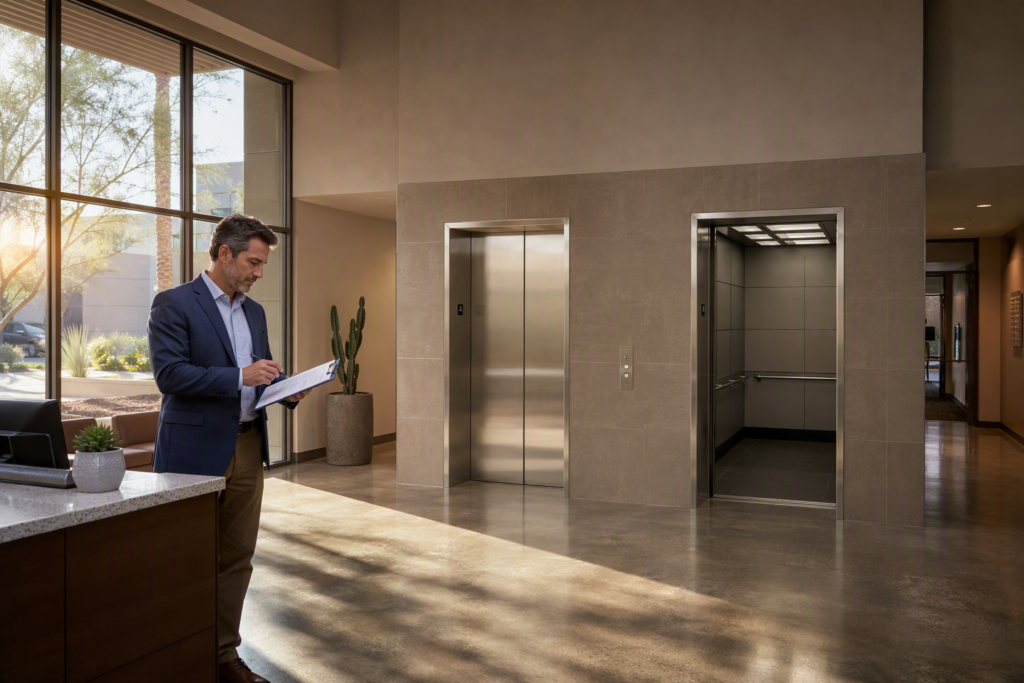
Navigating elevator code update requirements involves balancing regulatory deadlines, equipment condition, budget, and long-term building needs. Key decision factors include which code edition your jurisdiction has adopted, whether your elevator has been modified since installation, the type of use (commercial, residential, healthcare), and whether upgrades are triggered by a specific event such as a renovation, inspection failure, or change of occupancy. Arizona Elevator Solutions recommends a formal compliance assessment before committing to any upgrade path.
What Are Elevator Code Update Requirements?
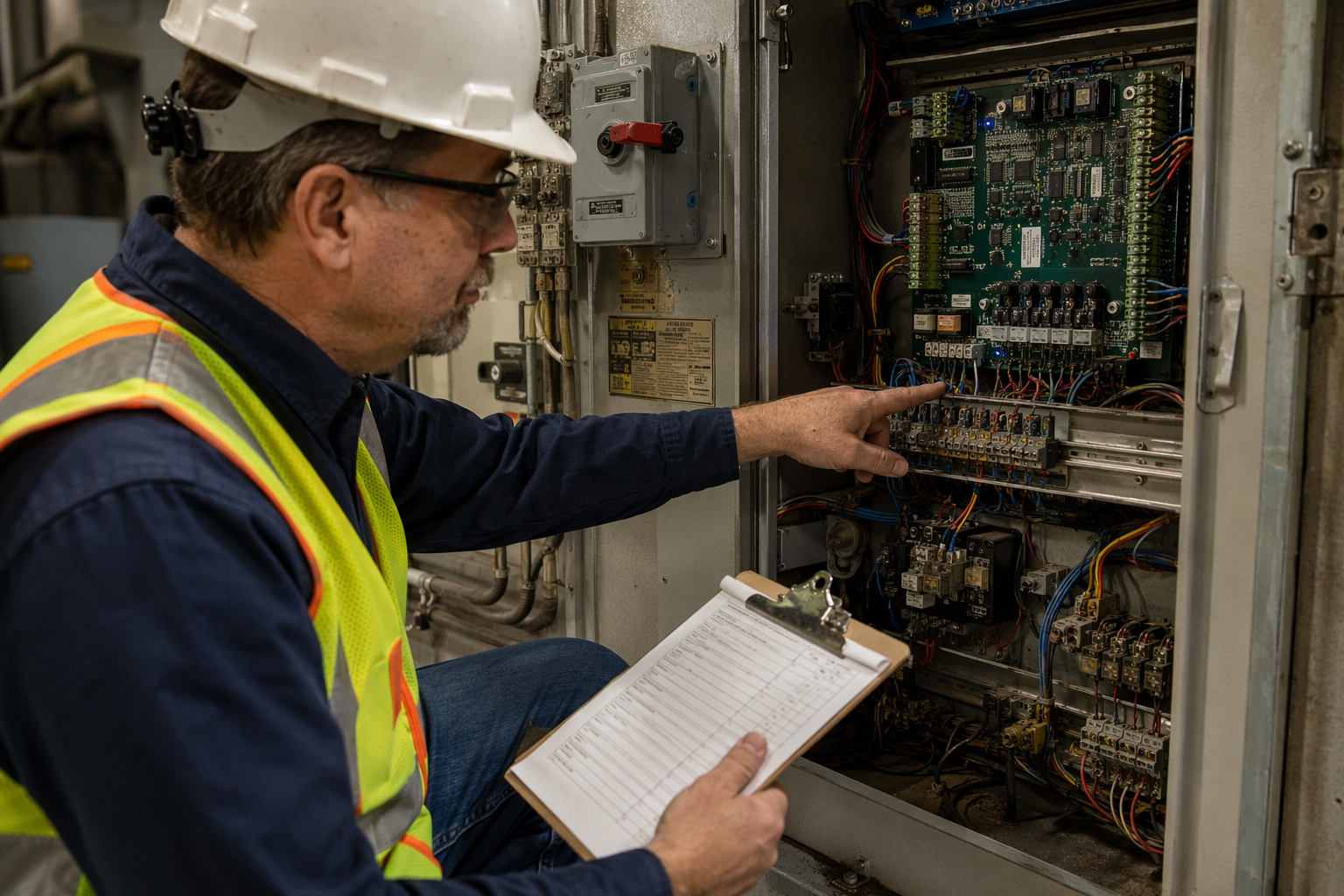
Elevator code update requirements refer to the legally enforceable standards that govern the design, installation, operation, inspection, and ongoing maintenance of elevators and escalators. In the United States, the foundational document is the ASME A17.1 Safety Code for Elevators and Escalators, which is updated on a periodic cycle. Individual states and municipalities then adopt specific editions of this code, often with local amendments, creating a patchwork of compliance timelines across jurisdictions.
Arizona building owners must also align with ADA (Americans with Disabilities Act) accessibility requirements, which mandate features such as cab dimensions, control height, auditory signals, and Braille markings. Failure to comply with applicable code editions can result in elevator shutdowns, fines, liability exposure, and failed insurance audits.
What Triggers an Elevator Code Update Requirement?
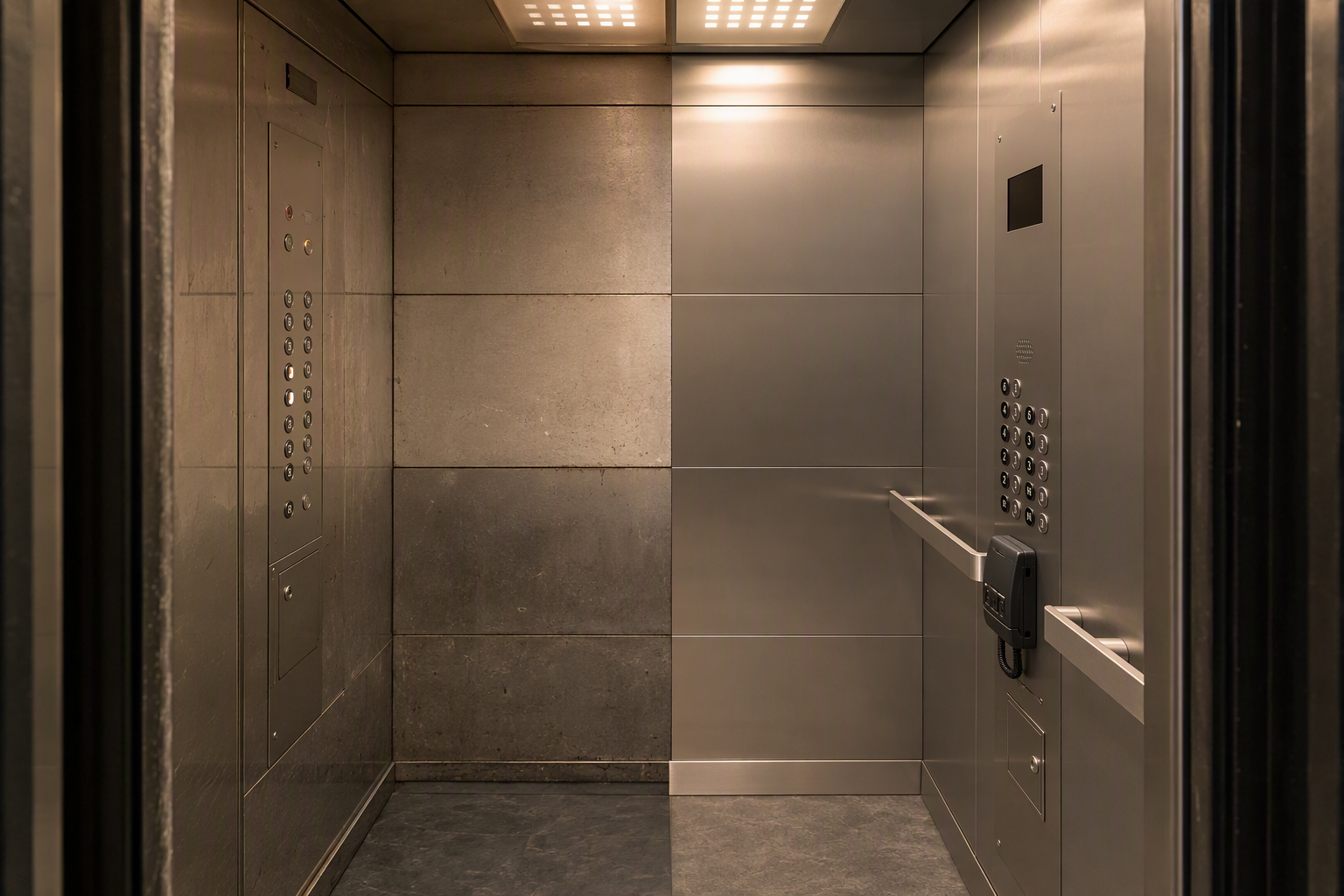
Not every elevator requires an immediate overhaul. Code updates are most commonly triggered by one or more of the following circumstances:
- Routine periodic inspection failure — when an inspection reveals components that no longer meet the currently adopted code edition
- Alteration or modernization — any significant modification to an existing elevator typically requires bringing the altered systems into compliance with the current code
- Change of building occupancy or use — converting a building from office to medical, for example, may impose different elevator requirements
- Jurisdiction-wide code adoption — when a state or local authority formally adopts a newer edition of ASME A17.1, existing elevators may be given a compliance window
- ADA complaints or facility audits — accessibility deficiencies identified through an ADA review can require immediate remediation
- Insurance or lender requirements — financial institutions and insurers increasingly require documented code compliance as a condition of coverage or financing
How Do Arizona Elevator Code Requirements Compare to Federal Standards?
Arizona adopts versions of ASME A17.1 through the Arizona Department of Occupational Safety and Health (ADOSH), which operates under OSHA guidelines for public employee safety and enforces elevator safety statewide. Building owners should verify the currently adopted code edition directly with ADOSH or a certified inspection authority, as adoption lag between a new ASME edition and state adoption is common across all jurisdictions.
Federal ADA requirements apply independently of ASME adoption status and are not subject to the same adoption-cycle delays. This means a building could be ASME-compliant under the locally adopted edition while still carrying ADA deficiencies that require separate remediation.
What Are the Main Types of Elevator Code Updates?
Comparison Table: Types of Elevator Code Updates
| Update Type | Governing Standard | Typical Trigger | Scope | Compliance Timeline |
|---|---|---|---|---|
| Safety device upgrades | ASME A17.1 | Inspection failure, alteration | Safeties, buffers, governors | Varies by jurisdiction |
| ADA accessibility retrofit | ADA Standards | Complaint, audit, renovation | Controls, signage, cab dimensions | Immediate upon identification |
| Fire service modernization | ASME A17.1 | Fire code inspection, alteration | Phase I/II firefighter service | Varies by local fire code |
| Machine room / MRL conversion | ASME A17.1 | Modernization project | Drive system, controls, hoistway | Project-specific |
| Emergency communications update | ASME A17.1 / ADA | Inspection, ADA audit | Two-way communication systems | Varies; often short compliance window |
| Seismic compliance | ASME A17.1 | Jurisdiction adoption, renovation | Guide rails, counterweights, anchorage | Often tied to renovation permits |
What Are the Pros and Cons of Each Compliance Approach?
Comparison Table: Reactive vs. Proactive Code Compliance
| Factor | Reactive Compliance (Fix When Cited) | Proactive Compliance (Scheduled Modernization) | Phased Compliance Program |
|---|---|---|---|
| Cost control | Unpredictable; emergency pricing common | Budgetable over time | Best long-term cost distribution |
| Downtime risk | High — shutdowns likely | Low — work planned around building needs | Moderate — phased scheduling |
| Regulatory risk | High — fines and liability exposure | Low — ahead of deadlines | Low to moderate — depends on phase timing |
| Equipment longevity | Low — piecemeal fixes may mismatch components | High — integrated system upgrades | Moderate — improves over time |
| ADA alignment | Often missed until complaint | Addressed comprehensively | Can be sequenced into early phases |
| Best suited for | Buildings with tight near-term budgets | Buildings planning renovation or ownership transition | Multi-elevator or multi-building portfolios |
What Is the Step-by-Step Process for Achieving Elevator Code Compliance?
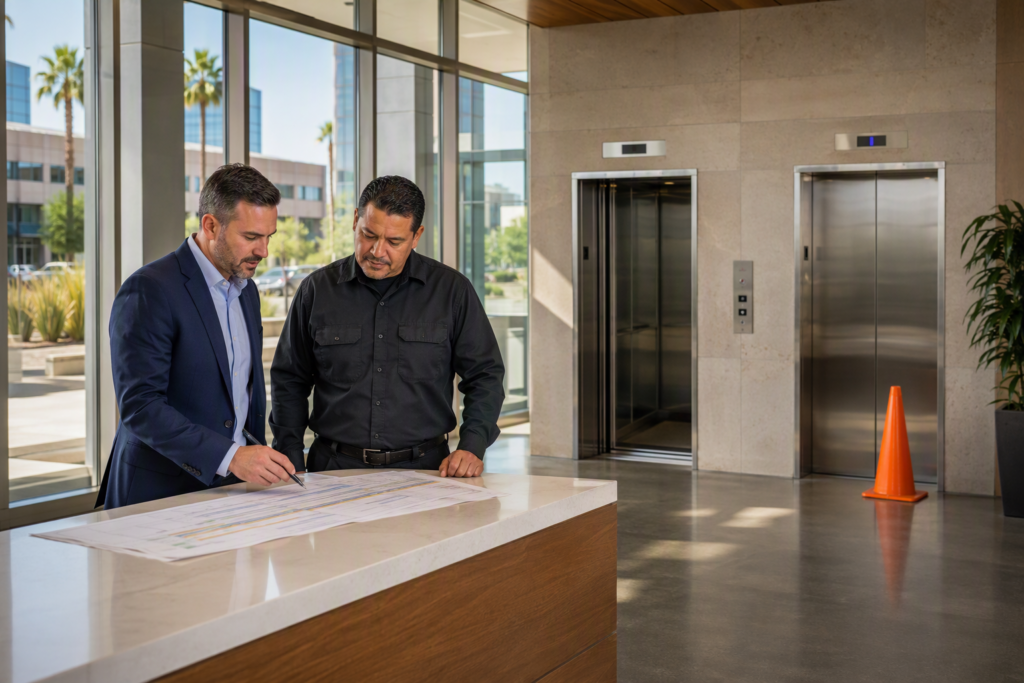
- Commission a compliance assessment. Engage a qualified elevator service provider such as Arizona Elevator Solutions to inspect all elevator equipment against the currently adopted code edition in your jurisdiction and applicable ADA standards.
- Obtain a written deficiency report. Document every non-compliant condition, the applicable code section from ASME A17.1 or other governing standard, and the risk category (safety-critical, accessibility, or administrative).
- Verify your jurisdiction’s adopted code edition. Confirm with ADOSH or the local authority having jurisdiction (AHJ) which edition is currently enforced and whether any local amendments apply.
- Prioritize by risk and deadline. Safety-critical deficiencies and those with hard regulatory deadlines must be addressed first; accessibility and administrative items may have a longer remediation window.
- Obtain permits before work begins. All modernization, alteration, or major repair work typically requires permits from the AHJ. Arizona Elevator Solutions coordinates this process on behalf of building owners.
- Execute upgrades with certified personnel. Ensure all work is performed by licensed elevator mechanics and inspected by a licensed third-party elevator inspector as required by Arizona statutes.
- Schedule post-completion inspection. After upgrades, a formal inspection must be passed and a new certificate of operation issued before the elevator is returned to service.
- Establish an ongoing maintenance and inspection schedule. Periodic inspections are required by ASME A17.1 and Arizona law; a documented maintenance program helps prevent future compliance lapses.
How Does ASME A17.1 Affect Existing Elevators?
The ASME A17.1 Safety Code for Elevators and Escalators distinguishes between new installations and existing equipment. Existing elevators are generally permitted to remain in service under the code edition in effect at the time of installation, a principle often referred to as “grandfather” status. However, this protection has important limits: any alteration, modernization, or repair classified as more than routine maintenance can require the altered portion — and sometimes the entire system — to be brought into compliance with the current adopted edition. Building owners often underestimate how broadly “alteration” is defined, making it critical to consult with a knowledgeable service provider before beginning any scope of work.
What Do ADA Requirements Add to Elevator Compliance?
The ADA operates on a separate legal track from ASME codes. Facilities subject to the ADA — which includes virtually all commercial buildings open to the public — must provide accessible elevator service. Key ADA elevator requirements include minimum cab dimensions, maximum control panel height, audible and visual floor indicators, Braille and raised-character signage, and accessible door timing. Unlike ASME code adoption cycles, ADA compliance obligations are ongoing and do not carry grandfathering provisions in the same way; failure to meet ADA standards is an independent legal exposure regardless of ASME compliance status.
How Do OSHA Requirements Intersect with Elevator Code Updates?
OSHA standards apply primarily to elevators used in workplaces, including freight elevators, construction hoists, and elevators in facilities where employees regularly use them. OSHA regulations address worker safety during both elevator operation and maintenance activities, including lockout/tagout procedures for elevator technicians. Arizona operates its own OSHA-approved state plan through ADOSH, meaning Arizona employers must comply with ADOSH standards, which are required to be at least as effective as federal OSHA standards. Building owners with freight or industrial elevators should evaluate both ASME and OSHA/ADOSH compliance simultaneously.
What Happens If an Elevator Fails a Code Inspection?
An elevator that fails a required periodic inspection is typically issued a non-compliance notice by the AHJ. Depending on the severity of the deficiency, the elevator may be:
- Placed on a corrective action notice with a defined remediation deadline while remaining in service
- Required to be taken out of service immediately for safety-critical deficiencies
- Subject to reinspection fees and administrative penalties
Building owners are responsible for ensuring that corrective work is completed, inspected, and documented before returning the elevator to service. Arizona Elevator Solutions can respond to failed inspection notices, coordinate required repairs, and arrange for the necessary reinspection.
What Is the Typical Timeline for an Elevator Code Compliance Project?
Comparison Table: Compliance Project Timelines by Scope
| Project Scope | Assessment Phase | Permitting Phase | Installation / Upgrade Phase | Inspection & Certificate Phase |
|---|---|---|---|---|
| Minor safety device replacement | 1–2 weeks | 2–4 weeks | 1–5 days | 1–3 weeks |
| ADA accessibility retrofit | 1–2 weeks | 2–6 weeks | 2–10 days | 1–3 weeks |
| Full cab modernization | 2–4 weeks | 4–8 weeks | 2–6 weeks | 2–4 weeks |
| Drive system / controls upgrade | 2–4 weeks | 4–10 weeks | 3–8 weeks | 2–4 weeks |
| Complete elevator modernization | 3–6 weeks | 6–12 weeks | 8–20 weeks | 2–6 weeks |
Note: Timelines are general industry estimates and vary based on equipment availability, permit queue times in specific Arizona jurisdictions, and building-specific conditions. Arizona Elevator Solutions provides project-specific timelines during the assessment process.
How Should Building Owners Choose Between a Full Modernization and Targeted Code Updates?
Decision Factors Table: Modernization vs. Targeted Updates
| Decision Factor | Favor Targeted Updates | Favor Full Modernization |
|---|---|---|
| Equipment age | Relatively new; deficiencies are isolated | Aging equipment with multiple systems at end of life |
| Number of deficiencies | One or two clearly defined items | Multiple systems requiring upgrade |
| Building plans | No major renovation planned | Renovation, ownership change, or repositioning planned |
| Parts availability | Replacement parts readily available | Legacy parts discontinued or scarce |
| Energy efficiency goals | Not a current priority | Building pursuing sustainability or LEED targets |
| Tenant or occupant profile | Low public-facing use | High traffic, healthcare, or ADA-sensitive tenants |
| Long-term cost outlook | Prefer lower near-term outlay | Prefer to reset the compliance and maintenance clock |
Why Should Arizona Building Owners Work with an Independent Elevator Service Provider?
Building owners in Arizona have a choice between the original equipment manufacturer’s service organization and independent certified service providers. Independent providers such as Arizona Elevator Solutions are not tied to a single manufacturer’s product line, which means assessments and recommendations are based on what the building actually needs rather than on proprietary upgrade packages. Independent providers are also typically more responsive to local regulatory nuances, AHJ relationships, and the specific mix of elevator brands and vintages found in Arizona’s diverse building stock.
Arizona Elevator Solutions specializes in elevator compliance assessments, code-driven modernization planning, permit coordination, and ongoing maintenance for commercial, residential, and specialty elevator installations throughout Arizona. The team works directly with building owners, property managers, and facility directors to develop compliance strategies that align with both regulatory requirements and operational budgets.
What Should Be Included in an Elevator Compliance Assessment Report?
A thorough compliance assessment report from a qualified provider should include:
- Identification of the elevator’s installation date, last modernization, and current operating certificate status
- Mapping of all current deficiencies to specific sections of the applicable ASME A17.1 edition
- Identification of any ADA accessibility gaps
- Risk classification for each deficiency (safety-critical, operational, administrative)
- Recommended remediation sequence and rationale
- A clear distinction between items required by the AHJ versus items recommended as best practice
- Equipment condition notes relevant to long-term planning (parts obsolescence, remaining useful life)
What Questions Should Building Owners Ask a Potential Elevator Service Provider?
Before engaging any elevator service provider for code compliance work, building owners should ask:
- Is the provider licensed to perform elevator work in Arizona under ADOSH requirements?
- Can the provider identify which edition of ASME A17.1 is currently adopted in the specific jurisdiction?
- Does the provider have experience coordinating permits with the relevant local AHJ?
- Is the provider independent or tied to a specific manufacturer’s upgrade packages?
- Can the provider supply references from comparable compliance projects in Arizona?
- Does the provider offer a written assessment report with code citations, not just a verbal opinion?
Get Expert Guidance on Your Elevator Code Compliance Requirements
Elevator code requirements are complex, jurisdiction-specific, and carry real legal and safety consequences for building owners who delay action. Whether facing a failed inspection, planning a renovation, or simply wanting to understand where your equipment stands, a professional assessment is the right first step.
Contact Arizona Elevator Solutions for a free elevator assessment. Call us at 480-319-7157 to schedule your consultation with the Arizona Elevator Solutions team today.
Need elevator service you can rely on? Arizona Elevator Solutions is ready to help.