How to Budget for Elevator Maintenance, Repair, and Modernization Costs in Your 2027 Capital Expenditure Plan
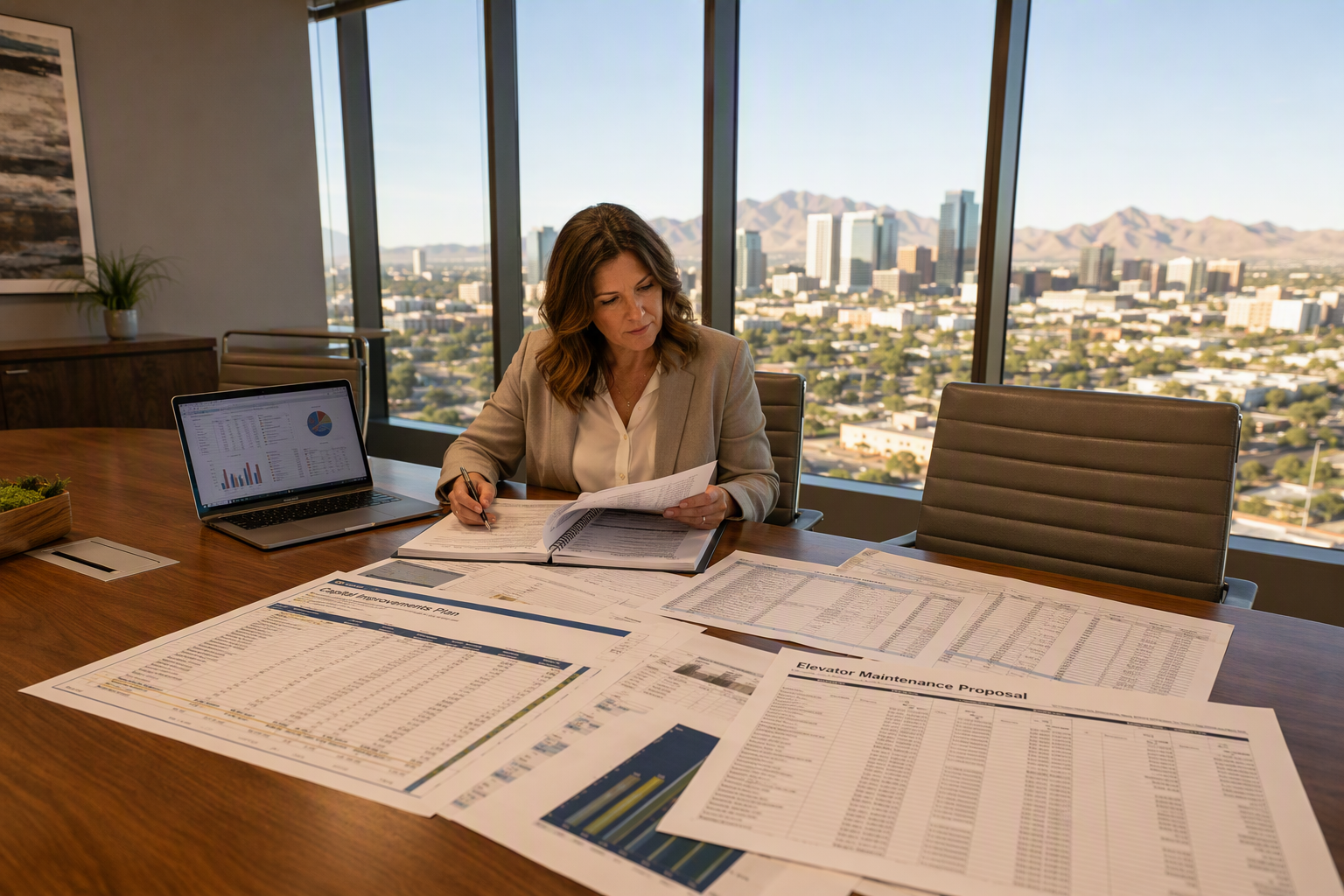
Elevator budgeting failures rarely come from surprise breakdowns alone — they come from capital plans that treat elevator systems as a single line item rather than a layered portfolio of maintenance, compliance, repair, and lifecycle investment. The questions below address every dimension a facility manager, HOA board, or property owner in Phoenix, Tucson, Scottsdale, or Mesa should resolve before submitting a 2027 capital expenditure proposal.
What Are the Three Core Budget Categories Every Elevator Capital Plan Must Include?
Every sound elevator capital plan must separate costs into recurring maintenance, unplanned repair reserves, and planned modernization capital, because each category behaves differently in cash flow, tax treatment, and procurement timeline.
Recurring maintenance covers preventive service visits, lubrication, adjustment, and the labor and minor parts included in a full-coverage maintenance contract. This is a predictable operating expense and should be line-itemed annually.
Repair reserves fund component failures that fall outside routine maintenance — rope replacement, controller board failures, door operator assemblies, hydraulic fluid leaks. Industry guidance consistently recommends setting aside a dedicated contingency for reactive repairs separate from maintenance contract costs.
Modernization capital addresses system-level upgrades: controller replacements, cab renovations, machine room-less (MRL) conversions, hydraulic-to-traction conversions, and ADA accessibility retrofits. These are capital expenditures with multi-year useful lives and should appear in the CapEx register, not the operating budget.
How Does Equipment Age Affect 2027 Elevator Budget Projections?
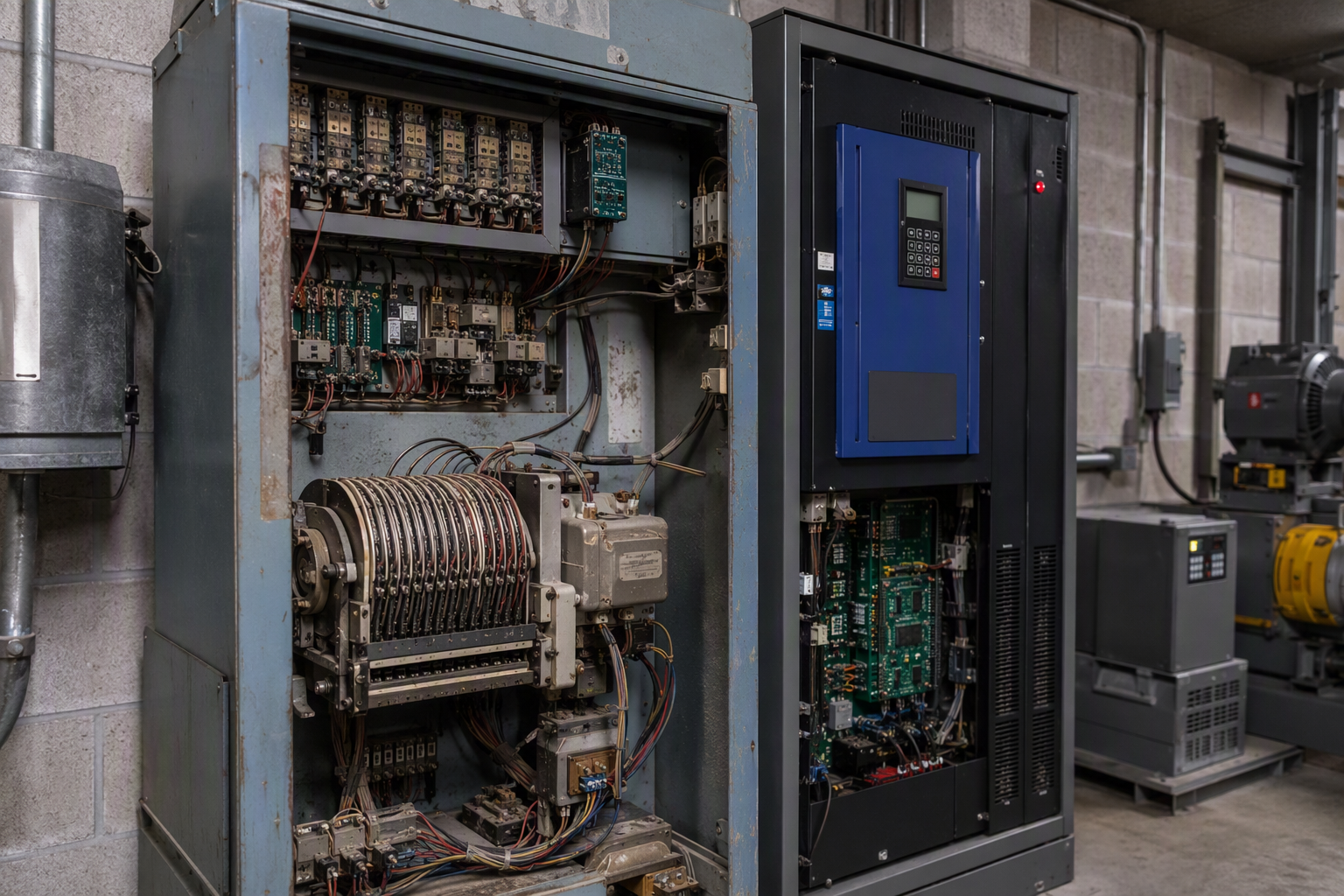
Equipment age is the single most reliable predictor of elevator cost escalation, because aging systems demand more frequent parts replacement, have obsolete components that are harder to source, and are more likely to trigger mandatory code compliance upgrades during routine inspections.
A generally accepted elevator lifecycle framework segments systems into three phases. Systems under roughly 15 years old typically require only standard maintenance and minor repairs. Systems between 15 and 25 years old enter a transition zone where component replacement costs rise significantly and modernization planning becomes urgent. Systems beyond 25 years old frequently require full modernization to maintain code compliance and operational reliability.
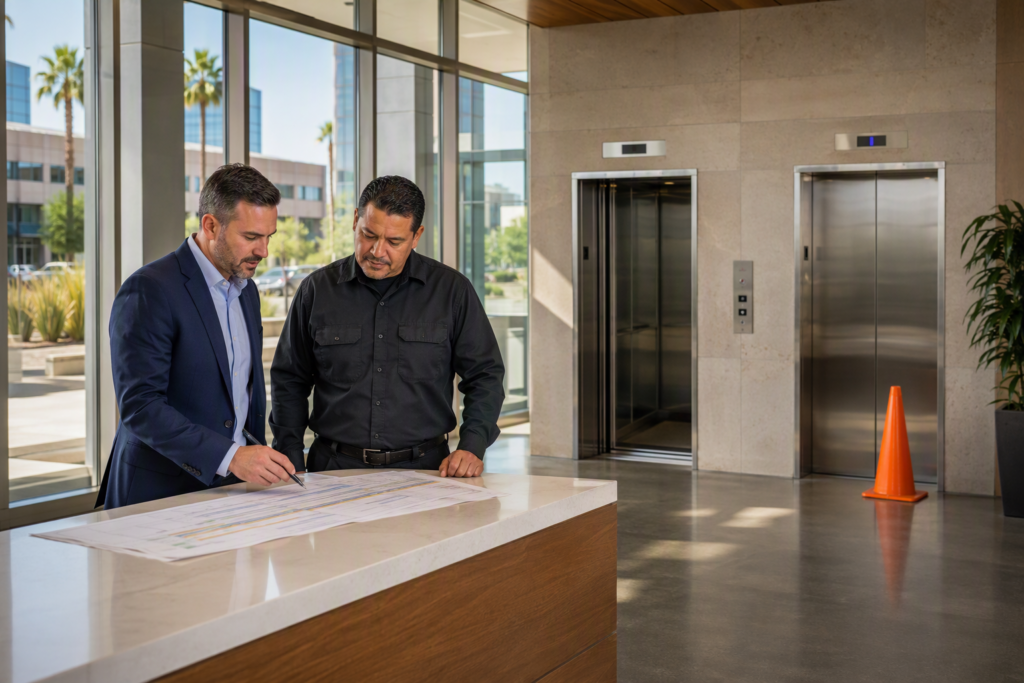
For Arizona properties with older equipment, budget planners should request a documented equipment condition assessment from a qualified elevator service provider. Arizona Elevator Solutions offers these assessments to building owners throughout Phoenix, Scottsdale, Mesa, and Tucson to support exactly this kind of multi-year capital planning process.
What Does a Full-Coverage Elevator Maintenance Contract Typically Include?
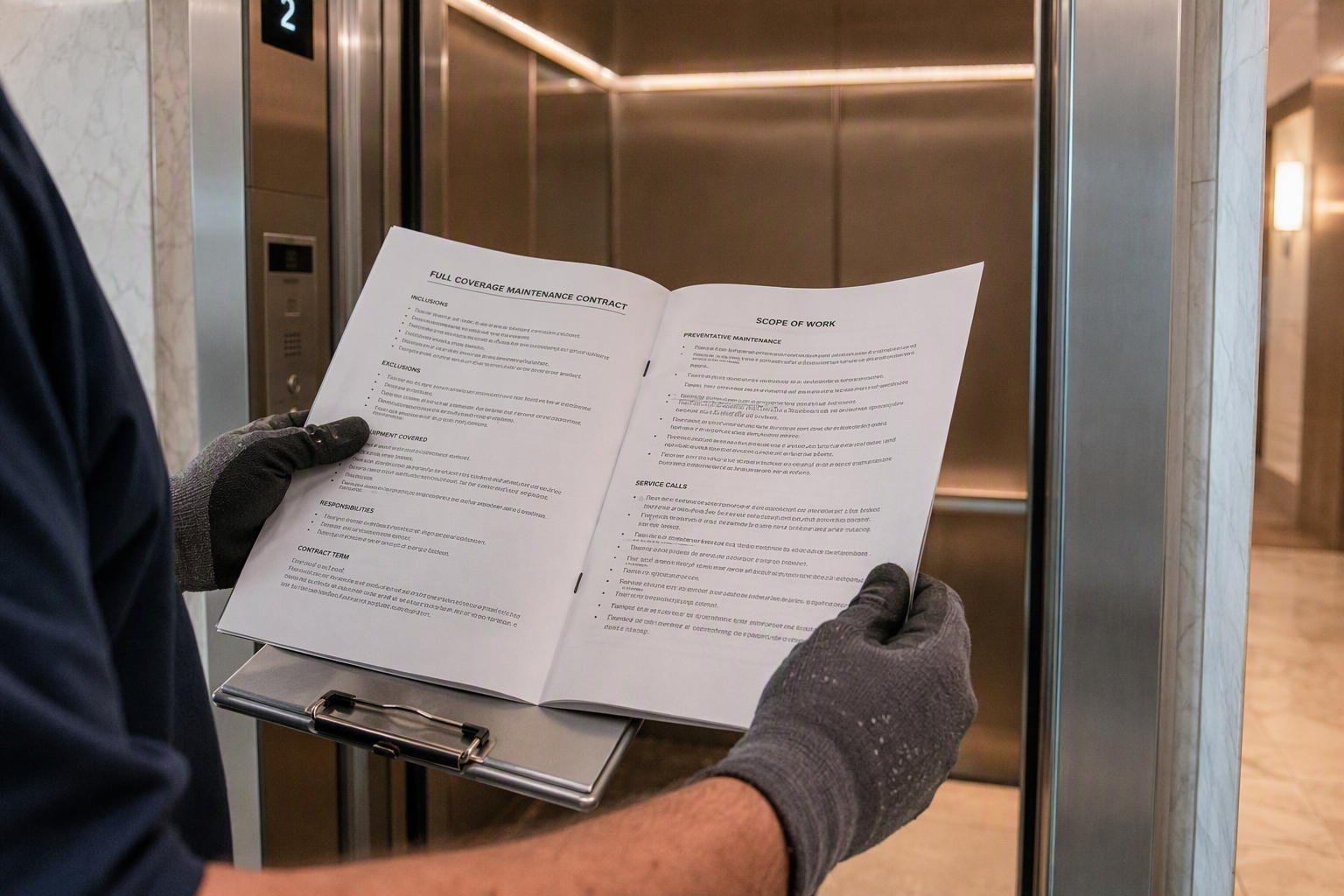
A full-coverage maintenance contract typically includes all scheduled preventive visits, lubrication and adjustment, and parts and labor for most component failures, with specific exclusions for vandalism, cab finishes, and major modernization components.
Contract tiers vary widely. An oil-and-grease (lubrication-only) contract is the lowest cost option but leaves the building owner financially exposed to all repair costs. A parts-and-labor (full coverage) contract shifts most repair risk to the service provider but carries a higher annual premium. A mid-tier examination-and-lubrication contract covers labor but not parts.
For 2027 CapEx planning purposes, a full-coverage contract is generally the most budget-predictable option for commercial and multifamily properties because it converts variable repair costs into a fixed annual line item. Budget planners should request detailed contract scope documents from prospective providers and confirm that the contract explicitly addresses Arizona Occupational Safety and Health Administration (OSHA) compliance requirements for periodic safety checks.
What Arizona-Specific Inspection and Compliance Requirements Drive Elevator Costs?
Arizona elevator owners are subject to state-level elevator safety requirements administered by the Arizona Department of Occupational Safety and Health (ADOSH), which adopts safety codes that align with federal ASME A17.1 Safety Code for Elevators and Escalators standards, creating mandatory periodic inspection and testing obligations that directly generate budget line items.
Arizona requires periodic inspections by a qualified elevator inspector at intervals established under state code. Failure to pass inspection can result in an elevator being taken out of service, which creates both direct remediation costs and significant operational disruption costs for building owners. Certificate of inspection fees, third-party witness testing fees, and any corrective work required to achieve compliance must all appear in the annual maintenance budget.
Budget planners in Phoenix, Mesa, Scottsdale, and Tucson should also account for Authority Having Jurisdiction (AHJ) requirements at the local municipality level, which can add permitting and plan-check fees when modernization or major repairs are performed. These fees are separate from ADOSH fees and vary by jurisdiction.
How Should ADA Compliance Costs Be Factored Into a 2027 Elevator Budget?
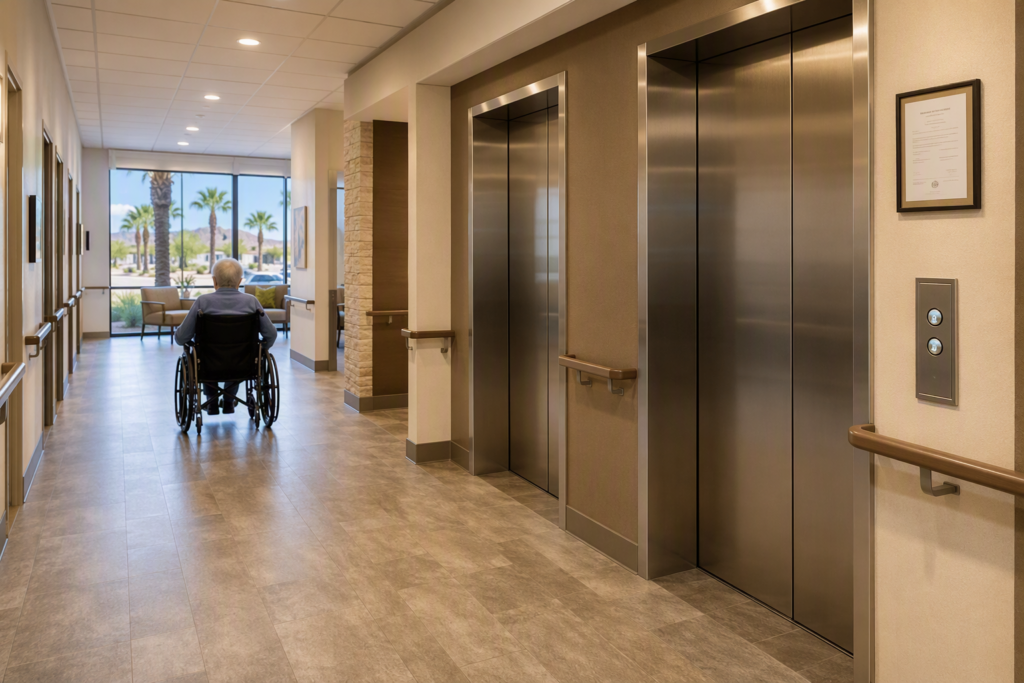
ADA compliance costs belong in the modernization capital category of your CapEx plan and should be treated as a legal obligation rather than an elective upgrade, particularly for commercial properties subject to Title III or government facilities subject to Title II.
Common ADA-driven elevator expenditures include: accessible cab controls at the correct mounting height, visual and audible floor arrival signals, Braille and raised character floor designations, door reopening devices, and adequate cab dimensions. For older equipment that has never been systematically audited for ADA conformance, a compliance gap assessment is a necessary precursor to accurate budgeting.
ADA compliance work can often be phased across multiple budget years, but any planned modernization project should be used as an opportunity to address all known ADA deficiencies simultaneously, because combining work reduces total project cost and minimizes downtime.
What Is a Realistic Reserve Fund Calculation for Elevator Repairs?
A realistic repair reserve calculation starts with an equipment condition assessment that identifies components approaching end-of-life, then assigns probability-weighted replacement costs to each component to establish an expected annual reserve contribution.
Without an equipment-specific condition report, a common approach used in reserve studies for HOAs and condominium associations is to calculate the estimated replacement cost of major elevator components and divide that cost by the remaining useful life of each component. This component-by-component approach produces a more defensible reserve fund target than applying a flat percentage to building value.
Arizona Elevator Solutions works with property managers and HOA boards across the Phoenix metropolitan area and Tucson region to produce equipment condition assessments that feed directly into reserve study calculations, helping associations meet their fiduciary duty to maintain adequate reserves.
How Do You Budget for Elevator Modernization Versus Full Replacement?
The decision between modernization and full replacement hinges on structural condition, component availability, code upgrade requirements, and total cost of ownership over a defined horizon — typically 15 to 20 years for a modernization investment.
Modernization typically involves replacing major systems — controller, machine, door operators, signals — while retaining the hoistway structure and cab shell. Full replacement involves complete removal and installation of a new system. Modernization is almost always less expensive and faster than full replacement when the hoistway and structural elements are sound.
For CapEx planning, both options require detailed scope-of-work proposals from qualified contractors. Budget planners should obtain multiple competitive proposals, confirm that each proposal fully addresses applicable ASME A17.3 Safety Code for Existing Elevators and Escalators upgrade requirements, and include a contingency allowance for unforeseen conditions discovered during construction.
What Cost Benchmarks Should Guide Elevator Budget Planning?
Reliable cost benchmarks for elevator budgeting must come from qualified contractor proposals based on site-specific conditions, but the table below provides a general framework for categorizing and comparing budget line items commonly encountered in Arizona commercial and multifamily properties.
| Budget Category | Typical Scope | Budget Horizon | Cost Driver Variables |
|---|---|---|---|
| Full-Coverage Maintenance Contract | Preventive visits, lubrication, parts and labor | Annual (operating budget) | Number of units, equipment age, contract tier |
| Inspection and Certificate Fees | State ADOSH inspection, local AHJ permits | Annual (operating budget) | Equipment type, jurisdiction, number of units |
| Repair Contingency Reserve | Component failures outside contract scope | Annual contribution to reserve | Equipment age, condition rating, component lifecycle |
| ADA Compliance Retrofit | Controls, signals, cab dimensions, Braille | CapEx (one-time or phased) | Existing compliance gaps, equipment accessibility |
| Controller Modernization | New controller, wiring, safety circuit upgrade | CapEx (15–20 year life) | Equipment type, floors served, code upgrade requirements |
| Machine/Drive Modernization | Motor, drive, machine replacement | CapEx (15–20 year life) | Drive technology, energy efficiency goals, traction vs. hydraulic |
| Cab Renovation | Finishes, lighting, flooring, handrails | CapEx or operating depending on scope | Design specifications, cab size, material selections |
| Full System Modernization | Controller, machine, doors, signals, cab | CapEx (15–20 year life) | Number of floors, drive type, code compliance scope |
| Emergency/Unplanned Repair | Rope replacement, hydraulic seal failure, etc. | Contingency reserve draw | Equipment condition, maintenance history |
Note: All cost figures must be obtained through site-specific proposals from qualified elevator contractors. The table above identifies budget categories and drivers only; no cost figures are presented because accurate figures depend entirely on site conditions, equipment specifications, and current market pricing in Arizona.
How Many Elevators and What Equipment Types Drive the Biggest Cost Differences?
The number of elevator units, the drive type (hydraulic, traction, MRL), and the number of floors served are the primary variables that differentiate total elevator portfolio cost, with hydraulic systems generally having different maintenance profiles than traction systems.
Hydraulic elevators, common in low-rise Arizona commercial and multifamily buildings, require oil management, seal maintenance, and periodic cylinder testing. Traction elevators, common in mid- and high-rise applications, require sheave, rope, and brake maintenance. Machine-room-less (MRL) traction systems have compact components with specific access and maintenance requirements distinct from traditional traction equipment.
Multi-unit portfolios benefit from consolidated maintenance contracts that cover all units under a single agreement, which can reduce per-unit administrative costs and ensure consistent documentation across the portfolio. Arizona Elevator Solutions serves multi-unit commercial portfolios throughout Phoenix, Scottsdale, Mesa, and Tucson with structured maintenance programs designed for portfolio-level management.
What Is the Role of an Elevator Condition Assessment in Capital Planning?
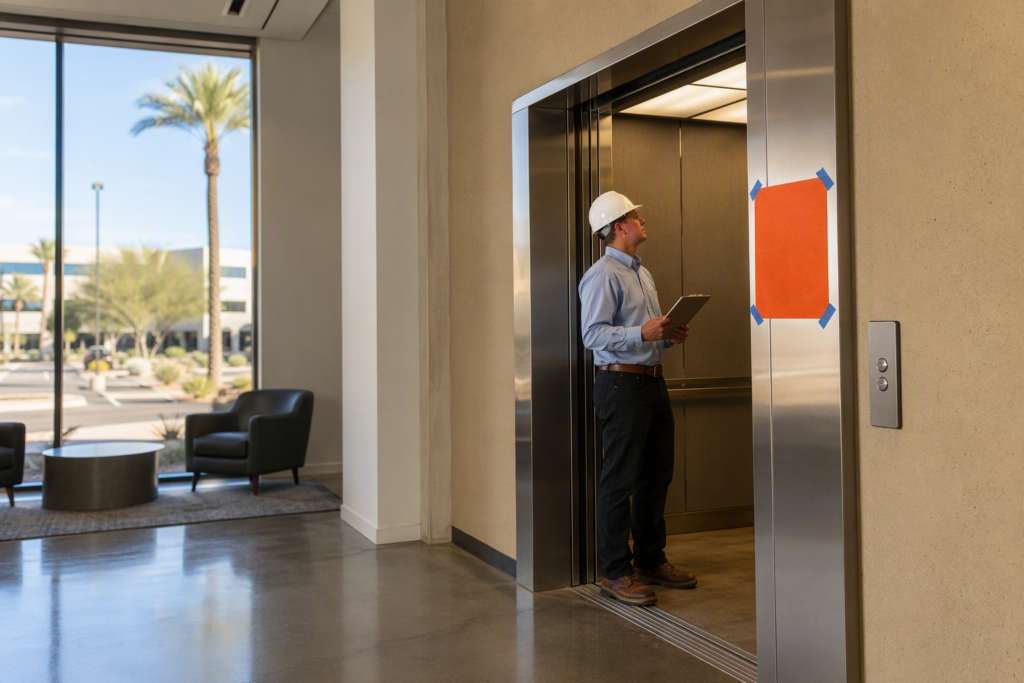
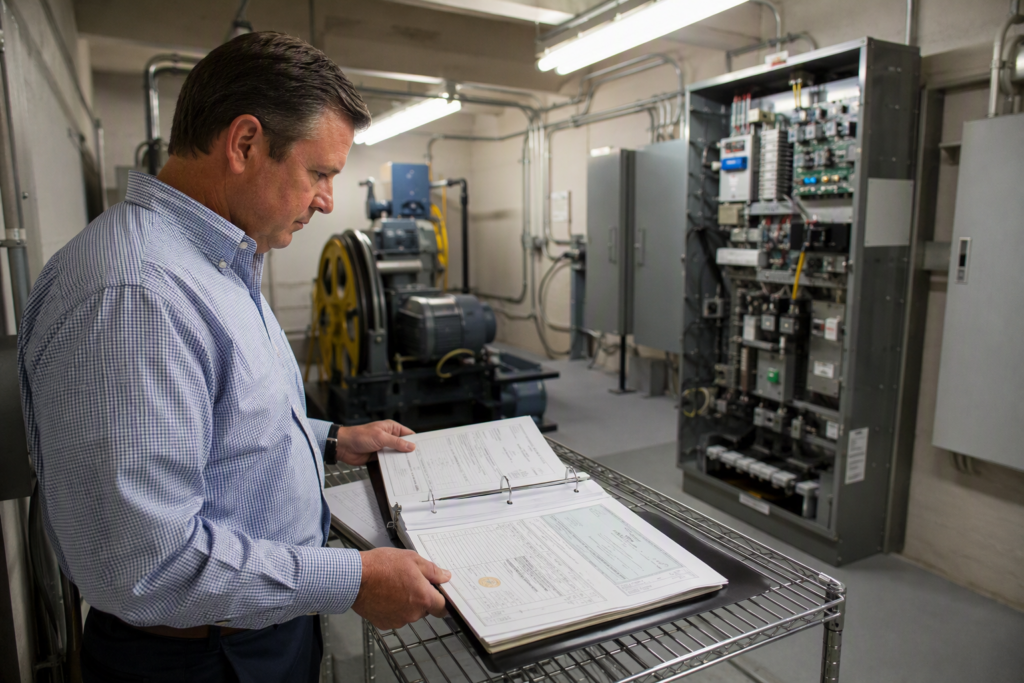
An elevator condition assessment is the foundational document for credible capital planning because it replaces assumption-based budgeting with equipment-specific findings that identify remaining useful life, code compliance gaps, and prioritized repair and modernization recommendations.
A thorough condition assessment should document the equipment age and manufacturer, current compliance status relative to applicable codes including ASME A17.1 and A17.3 and ADA requirements, the condition rating of major components, and a prioritized action list with estimated budget implications for each recommendation.
The output of an assessment should be formatted to integrate directly into a facility’s capital planning software or reserve study document. Budget planners presenting elevator capital needs to finance committees, HOA boards, or lenders will find that an independent assessment report substantially strengthens the case for funding allocation.
How Should Elevator Downtime Costs Be Included in a Capital Budget Justification?
Elevator downtime costs — tenant complaints, ADA accessibility violations, lost rental income, and staff time managing outages — are indirect costs that strengthen the business case for proactive maintenance and modernization investment and should be documented qualitatively in capital budget justifications.
For properties where elevator service is a legal accessibility requirement under the ADA, extended downtime can create legal exposure that materially exceeds the cost of the repair or maintenance investment being deferred. This risk should be stated explicitly in capital plan narratives submitted to building ownership or boards.
Quantifying downtime costs requires property-specific data: occupancy rates, tenant lease terms, ADA compliance obligations, and operational dependencies on vertical transportation. Including even a qualitative downtime risk section in a CapEx proposal significantly improves approval rates for elevator budget requests.
What Procurement Process Should Be Followed for Major Elevator CapEx Projects?
- Define scope: Work with a qualified elevator service provider or consultant to develop a detailed scope of work document that specifies equipment, code compliance requirements, and performance standards before soliciting bids.
- Obtain multiple proposals: Solicit at least three competitive proposals from licensed Arizona elevator contractors. Ensure each proposal responds to the same defined scope to enable accurate comparison.
- Evaluate technical qualifications: Review each contractor’s demonstrated experience with the specific equipment type and project scope. Verify that the contractor holds current Arizona contractor licensing and is authorized to perform work under ADOSH jurisdiction.
- Review contract terms: Examine warranty provisions, project timeline commitments, payment schedules, and change order procedures before executing any contract.
- Confirm permit and inspection coordination: Verify that the selected contractor will manage all required ADOSH permits, local AHJ permits, and third-party inspection coordination as part of the project scope.
- Establish budget contingency: Include a contingency allowance in the approved budget to address unforeseen conditions discovered during construction, which are common in modernization projects on older equipment.
- Plan for operational impact: Coordinate project scheduling with building operations to minimize tenant disruption, particularly in occupied residential or healthcare facilities.
How Far in Advance Should 2027 Elevator CapEx Projects Be Planned?
Major elevator modernization projects require a planning lead time of at least 12 to 18 months before the intended construction start date to allow adequate time for condition assessment, scope development, competitive procurement, permitting, and equipment lead times.
Equipment lead times for elevator components — particularly custom controllers, traction machines, and cab finishes — can extend planning timelines significantly. For a 2027 construction start, initiating the planning process in early-to-mid 2026 is advisable. For projects where an equipment condition assessment has not yet been completed, beginning the assessment process immediately provides the data needed to make 2027 budget decisions with confidence.
Permitting timelines in Arizona vary by municipality. Projects in Phoenix, Scottsdale, Mesa, and Tucson all involve local AHJ plan review processes with variable review periods that should be factored into project schedules. Experienced elevator contractors familiar with local AHJ processes can provide realistic permitting timeline estimates during the proposal stage.
What Energy Efficiency Upgrades Can Be Included in a 2027 Elevator CapEx Plan?
Energy efficiency improvements — variable-voltage variable-frequency (VVVF) drives, LED cab lighting, standby mode controls, and regenerative drive systems — can be incorporated into modernization scopes and often reduce ongoing operating costs in ways that strengthen the capital investment justification.
For Arizona properties subject to utility demand charges or pursuing sustainability certifications, elevator energy consumption is a legitimate focus area. Modern traction elevators with regenerative drives can return energy to the building electrical system during descent cycles, reducing net consumption. These features should be specifically requested in modernization scope documents to ensure contractors price them and building owners can evaluate the cost-benefit relationship for their specific property.
Energy upgrade costs should be documented separately within the modernization budget line to allow facility managers to demonstrate return on investment to ownership and finance committees, and to facilitate any utility rebate applications that may be available through Arizona utility providers.
How Does Elevator Maintenance History Affect Insurance and Liability Budgets?
Documented elevator maintenance history directly affects a property’s risk profile for insurance purposes, and gaps in maintenance documentation can complicate liability defense in the event of an injury claim, making consistent recordkeeping a financial risk management tool as well as a compliance requirement.
Under ASME A17.1 and Arizona regulatory requirements, elevator owners are required to maintain records of inspections, tests, and maintenance. Properties with complete, well-organized maintenance records are better positioned in liability situations and may qualify for more favorable insurance terms.
Budget planners should ensure that maintenance contracts with service providers include provisions for documented service reports delivered to the building owner after each visit, and that those records are stored in a retrievable system. The cost of documentation management is negligible relative to its risk management value.
What Questions Should Be Asked When Comparing Elevator Service Contractors in Arizona?
When comparing elevator service contractors for a 2027 maintenance or modernization engagement, building owners should ask specific questions about licensing, code expertise, documentation practices, and local service capacity rather than evaluating on price alone.
Key questions to ask prospective contractors include: Is the company licensed to perform elevator work in Arizona under ADOSH jurisdiction? Does the company have demonstrated experience with the specific equipment manufacturer and drive type on your property? How are inspection findings and corrective work documented and communicated to the building owner? What is the company’s process for managing ADOSH and local AHJ permits? Does the maintenance contract include provisions for 24-hour emergency response?
Arizona Elevator Solutions serves commercial, multifamily, and institutional property owners in Phoenix, Tucson, Scottsdale, and Mesa with elevator maintenance, repair, and modernization services designed to support exactly the kind of rigorous capital planning that complex properties require.
How Should Elevator Budgets Be Structured for HOA and Condominium Properties in Arizona?
HOA and condominium properties in Arizona must integrate elevator costs into both the operating budget for maintenance and inspection fees and the reserve fund study for long-term repair and replacement obligations, because Arizona law requires HOAs to conduct reserve studies that address major capital components.
A reserve study that inadequately funds elevator components creates financial risk for the association and potential liability for board members. Reserve study preparers should work from an equipment condition assessment provided by a qualified elevator contractor to assign accurate remaining useful life and replacement cost estimates to each elevator system component.
For Arizona HOA communities with hydraulic elevators in low-rise buildings or traction elevators in mid-rise towers, the reserve fund contribution required for elevator components can represent a significant percentage of total reserve funding. Boards should request updated elevator assessments when reserve studies are renewed to ensure cost estimates reflect current equipment condition rather than generic useful-life tables.
What Are the Most Common Elevator Budget Planning Mistakes to Avoid?
The most common elevator budget planning mistakes include treating maintenance and modernization as the same budget category, failing to account for code-triggered upgrade requirements during routine work, and deferring condition assessments until after a budget has already been submitted.
Other frequent errors include: underestimating permitting and inspection costs as budget line items, omitting ADA compliance retrofit costs from modernization scopes and discovering them mid-project as change orders, failing to include contingency allowances for modernization projects on older equipment, and allowing maintenance contracts to auto-renew without competitive review.
A budget plan that separates operating maintenance from capital repair reserves and planned modernization capital, is grounded in a current condition assessment, and is reviewed by a qualified elevator service provider before submission will substantially outperform one built from generic estimates or carryforward assumptions from prior years.
How Often Should Elevator Budgets Be Reviewed and Updated?
Elevator budgets should be reviewed annually at minimum, with a comprehensive reassessment triggered by any significant inspection finding, major unplanned repair, change in building occupancy or use pattern, or the approach of a major component’s end-of-life horizon.
Annual review should include: reconciliation of actual maintenance and repair spend against budget, review of inspection reports and any outstanding corrective actions, update of remaining useful life estimates for major components, and assessment of whether the current maintenance contract scope and tier remain appropriate for the equipment’s current condition.
For multi-year capital plans extending through 2027 and beyond, a formal budget update cycle tied to an equipment condition assessment every three to five years provides the most reliable foundation for long-range financial planning. Arizona Elevator Solutions can support this process with structured assessment services for properties in Phoenix, Scottsdale, Mesa, and Tucson.
What Role Does an Elevator Service Partner Play in Long-Term Capital Planning?
A qualified elevator service partner plays a critical role in long-term capital planning by providing the technical expertise, equipment condition data, code compliance knowledge, and project management capability that building owners and facility managers need to make credible, defensible capital investment decisions.
The right service partner does more than respond to breakdowns — they provide documented assessments, flag emerging compliance requirements under evolving editions of the ASME A17.1 Safety Code for Elevators and Escalators and applicable ADA requirements, and help building owners sequence repair and modernization investments to maximize value across a multi-year capital horizon.
Selecting a service partner based on local expertise, demonstrated technical capability, and transparent documentation practices — rather than on lowest initial contract price alone — is consistently associated with more predictable long-range elevator costs and fewer budget surprises.
Get a Free Elevator Assessment to Support Your 2027 Capital Plan
Contact Arizona Elevator Solutions for a free elevator assessment to support your 2027 capital expenditure planning. The team serves commercial, multifamily, HOA, and institutional properties throughout Phoenix, Tucson, Scottsdale, and Mesa, Arizona — providing the equipment condition data, compliance review, and modernization scoping that building owners and facility managers need to submit credible, fully-funded elevator capital plans.
Call Arizona Elevator Solutions today: 480-319-7157
Need elevator service you can rely on? Arizona Elevator Solutions is ready to help.