Elevator Events
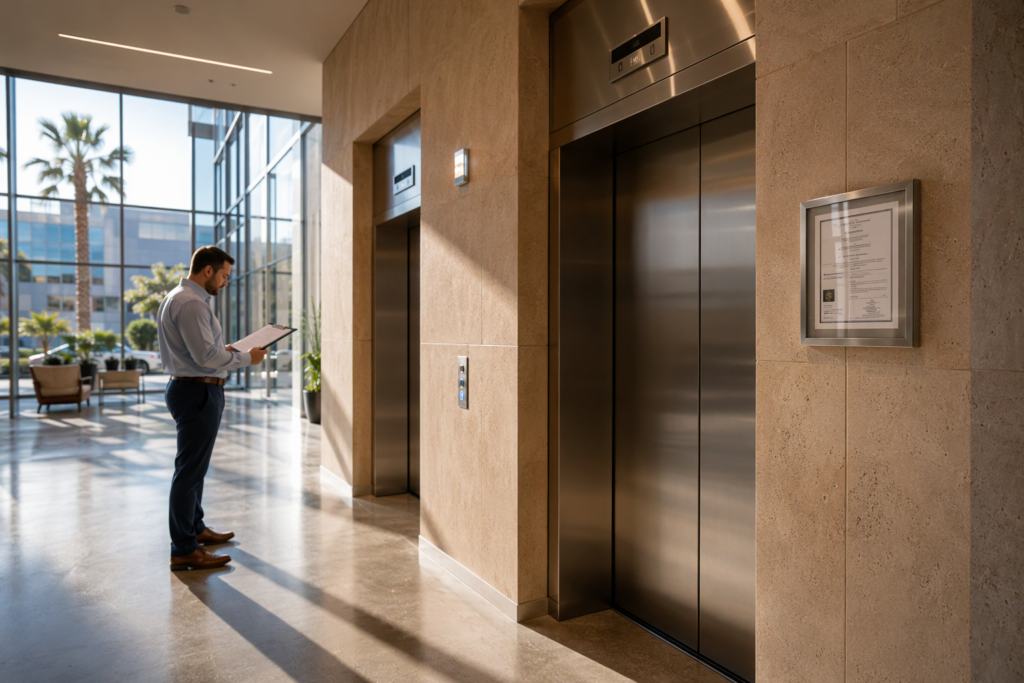
Elevator Events: A Complete Comparison and Decision Guide for Arizona Property Owners Quick Answer: “Elevator events” refers to any significant occurrence affecting a conveyance — from routine inspections and planned modernizations to emergency incidents and regulatory milestones — and deciding how to respond depends on the event type, Arizona compliance obligations under A.R.S. §§ 23-491 […]
What Equipment Is Needed For A Storage Facility Elevator?
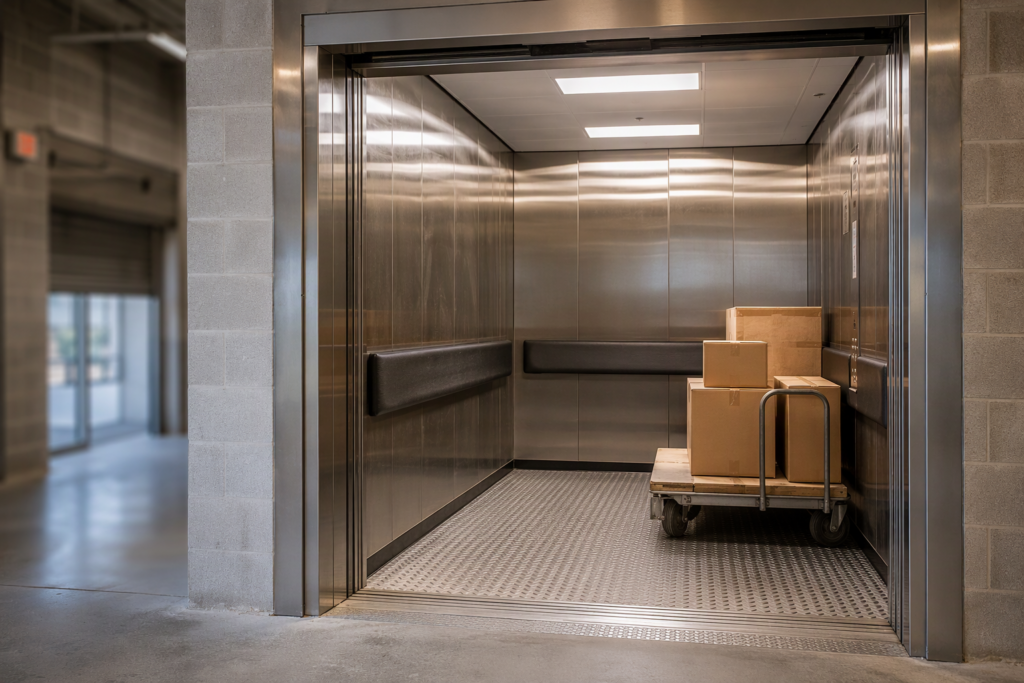
A storage facility elevator requires a rated hoistway, traction or hydraulic drive system, cab with heavy-duty flooring and door protection, machine room or machine-room-less (MRL) components, safety devices including buffers and safeties, an elevator controller, and all code-required signage and emergency systems compliant with ASME A17.1 and ADA standards. A properly equipped storage facility elevator […]
Failed Elevator Inspection in Arizona: Consequences, Fines, and What Building Owners Must Do Next
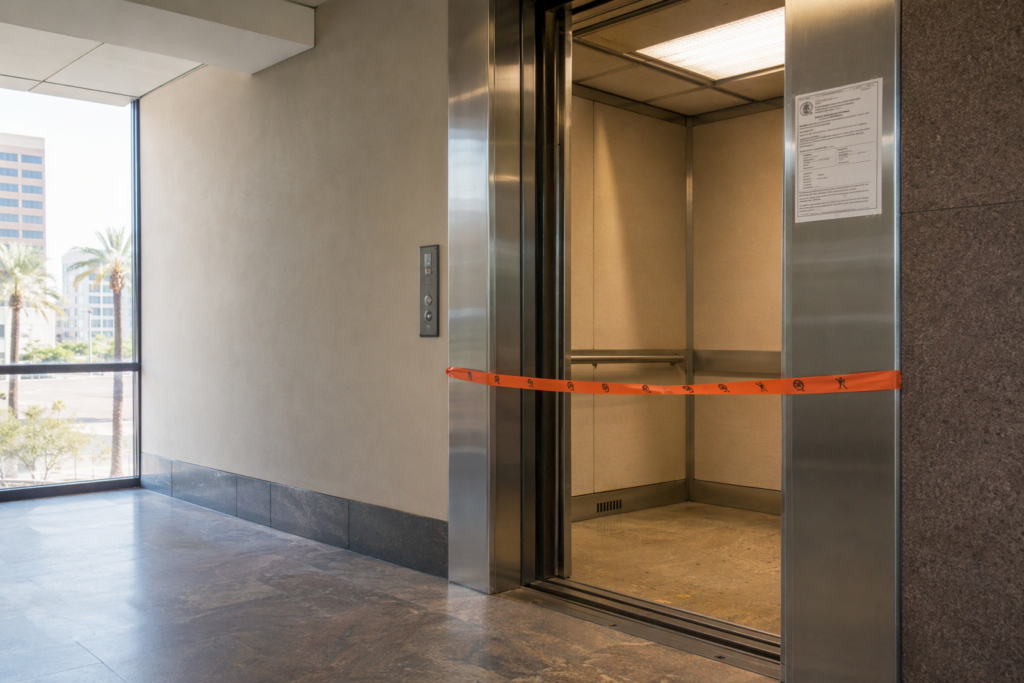
What Happens If My Building Fails an Elevator Inspection in Arizona — Fines, Consequences & Next Steps Direct Answer: If a building fails an elevator inspection in Arizona, the Industrial Commission of Arizona’s Elevator Division can order the conveyance taken out of service immediately, and operating an elevator without a valid annual certificate of inspection […]
Does Your Elevator Maintenance Company Also Service Telephone Handsets Inside Elevators?
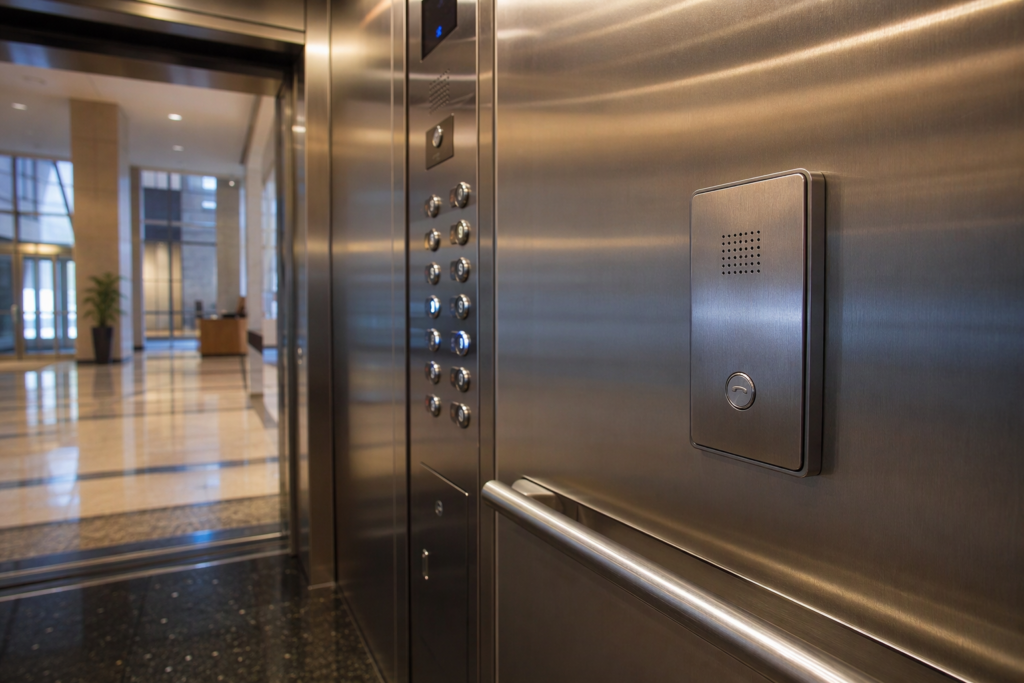
Yes — Arizona Elevator Solutions services elevator telephone handsets as part of its comprehensive elevator maintenance programs. The telephone unit inside a cab is a life-safety device required by federal code, and a full-service elevator maintenance company handles its testing, repair, and replacement alongside mechanical and electrical systems. Letting one contractor manage all cab systems […]
Failed Elevator Inspection in Arizona: What It Means, What Happens Next, and How to Get Back Into Compliance Fast
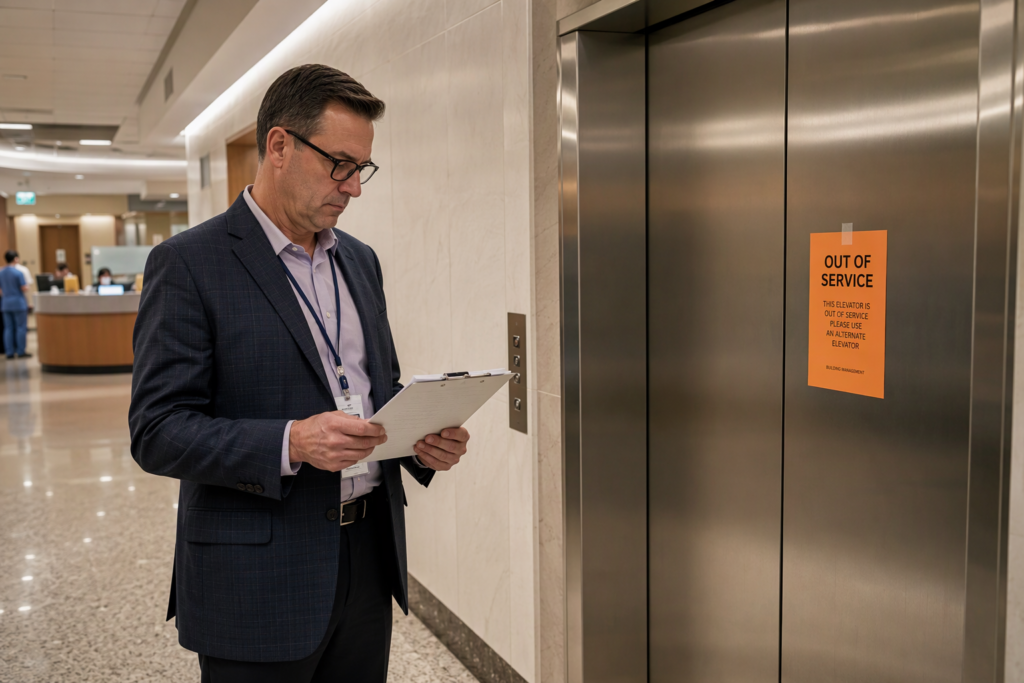
Failed an Elevator Inspection in Arizona? Here’s How to Get Back into Compliance If your Arizona building fails an elevator inspection, the conveyance must be taken out of service immediately, all deficiencies must be corrected by a licensed elevator contractor, and a re-inspection must confirm compliance before the Industrial Commission of Arizona’s Elevator Division will […]
What Is Involved When The Elevator Maintenance Team Needs To Complete A Phone Line System Change?
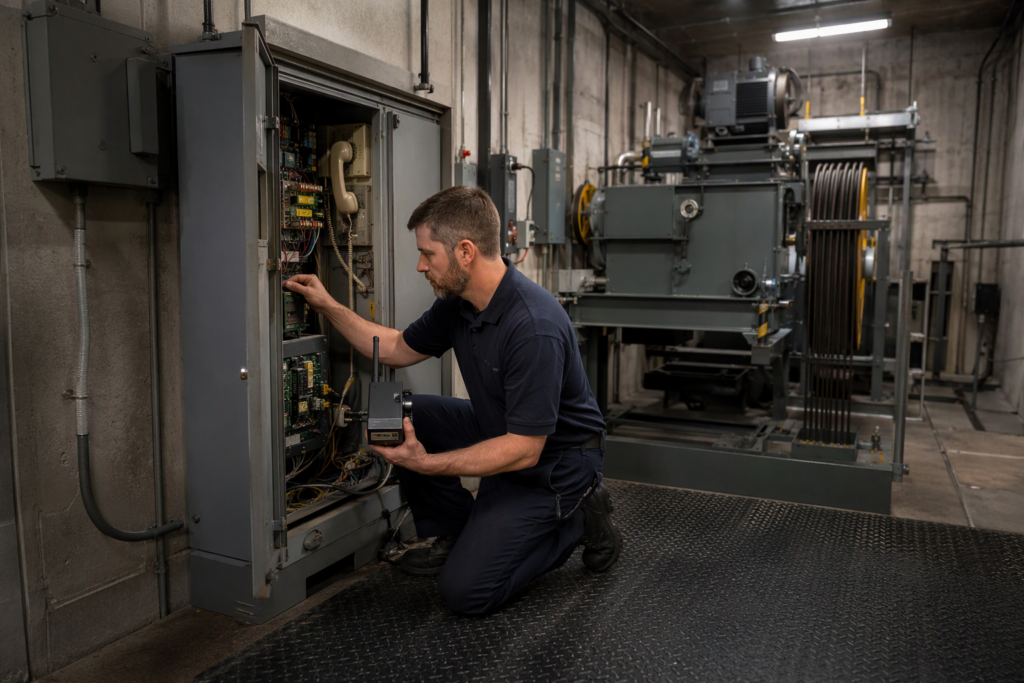
An elevator phone line system change requires the maintenance team to disconnect the existing emergency communication circuit, verify compliance with ASME A17.1 and ADA two-way communication requirements, install and test the replacement system, update documentation, and confirm that the conveyance certificate remains valid with the Industrial Commission of Arizona. An elevator maintenance technician removes a […]
Elevator Issues
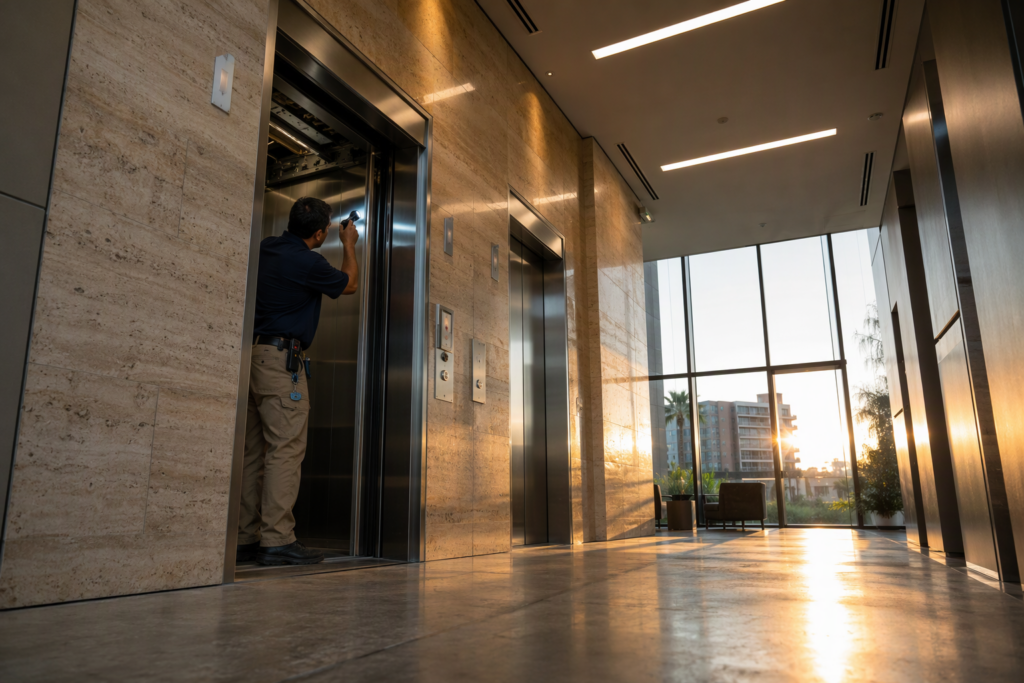
Elevator Service in Phoenix, AZ | Arizona Elevator Solutions Common elevator issues in Phoenix, AZ — including door malfunctions, leveling problems, unusual noises, and compliance gaps — require prompt diagnosis and repair by a qualified elevator service company working under Arizona’s regulatory framework to keep equipment safe, operational, and legally certified. Door malfunctions are among […]
How Do I Get A Quote For Elevator Inspection Services From Your Company?

To get a quote for elevator inspection services from Arizona Elevator Solutions, call the company directly, submit a contact form on the website, or request a free elevator assessment. Be ready to share the building address, equipment type, state serial number if available, and the date of the last inspection. Quotes are typically provided after […]
Elevator Repair vs. Modernization: How to Decide Which One Your Building Actually Needs
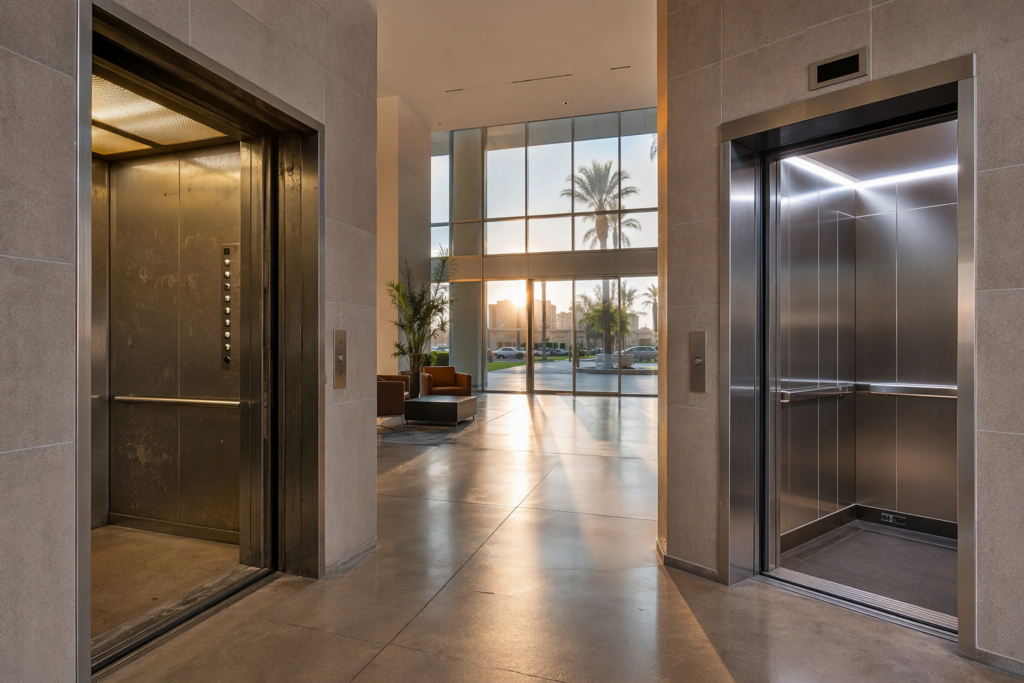
An elevator needs repair when isolated components fail or malfunction, but full modernization is warranted when the system is chronically unreliable, no longer meets current safety codes, parts are obsolete, or the cumulative cost of ongoing repairs exceeds the investment in a comprehensive upgrade—factors including equipment age, downtime frequency, compliance status, and energy performance all […]
Can I Get A Repair Quote For An Apartment Building Elevator Based On A Consultant’s Report?

Yes — a qualified elevator service company can use a consultant’s condition report as the starting point for a repair quote, though a licensed technician should perform an independent on-site review to verify findings, confirm current code compliance, and produce an accurate scope of work before any pricing is finalized. Apartment building owners in Phoenix […]