Quick Answer: An elevator typically qualifies for modernization when its structural components — the hoistway, cab enclosure, and pit — remain structurally sound but its mechanical, electrical, or safety systems are outdated; full replacement is warranted when structural deterioration, severe code non-compliance, or obsolete hoistway dimensions make targeted upgrades impractical or uneconomical.
Deciding between elevator modernization and full replacement is one of the most consequential — and expensive — decisions a building owner or facilities manager will make. The wrong choice can mean years of unnecessary repairs, ongoing compliance exposure under ASME A17.1 Safety Code for Elevators and Escalators and the Americans with Disabilities Act, or a capital expenditure that exceeds the building’s long-term need. This guide walks through the key technical, regulatory, and financial factors that separate a modernization candidate from a true replacement scenario — and explains how to make the right call for your Arizona property.
What Is the Difference Between Elevator Modernization and Full Replacement?
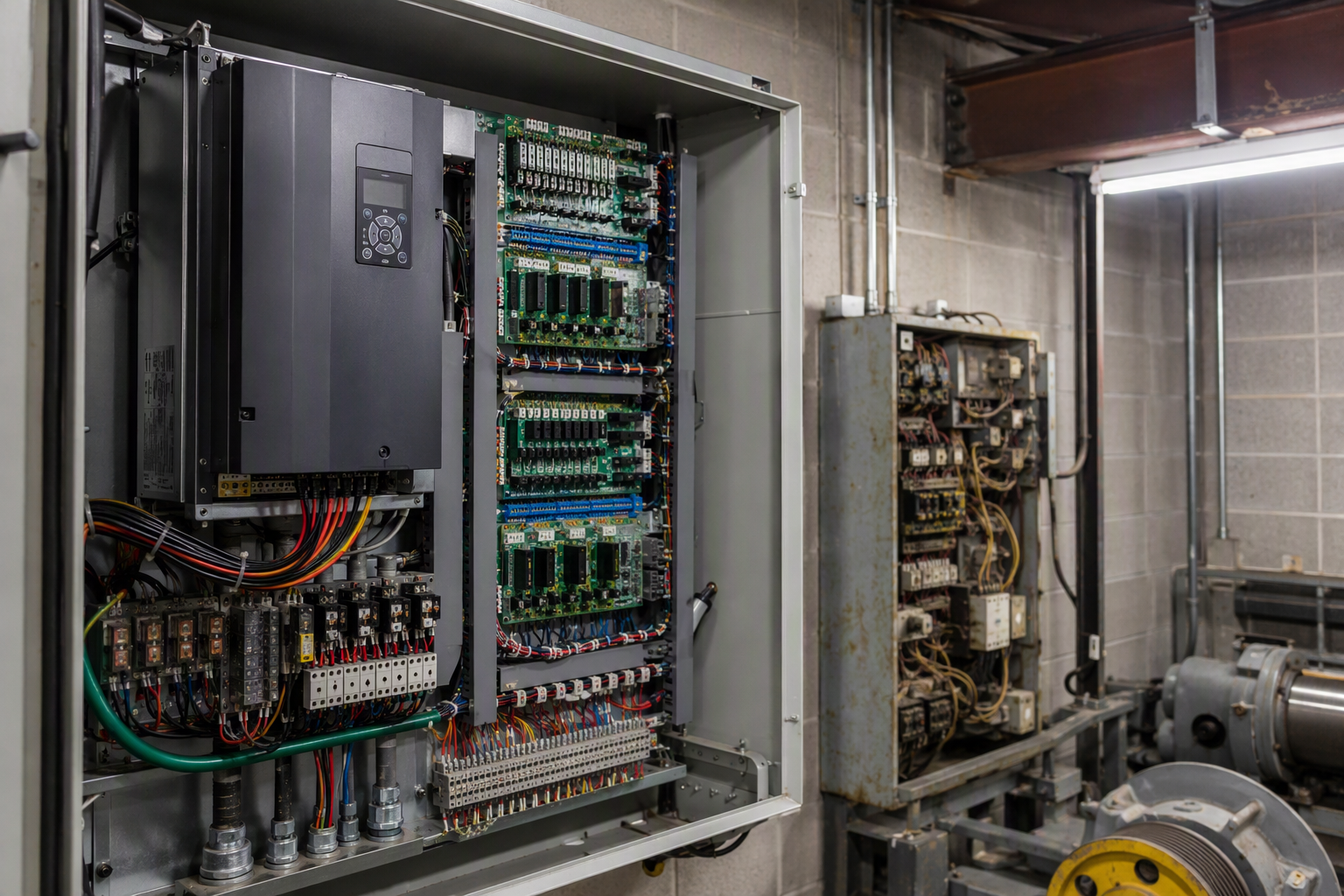
Modernization and full replacement are not interchangeable terms, and confusing them leads to misaligned budgets and project timelines.
Elevator Modernization refers to the selective upgrade of an elevator’s subsystems while retaining the existing hoistway structure and cab enclosure. A modernization project may include replacing the controller and drive system, upgrading door operators and safety devices, retrofitting new cab interiors, improving lighting, and bringing wiring and safety components into alignment with current code requirements. The hoistway — the shaft the elevator travels through — stays in place.
Full Replacement means removing all elevator equipment, often modifying or demolishing the hoistway itself, and installing a completely new system from the ground up. This approach is required when the existing structure cannot safely or practically accommodate upgraded components, or when the elevator design is so outdated that piecemeal upgrades would cost more than a new installation.
| Factor | Modernization | Full Replacement |
|---|---|---|
| Hoistway | Retained as-is | May be modified or rebuilt |
| Cab Structure | Often retained; interior refreshed | Completely new cab installed |
| Controller & Drive | Replaced or upgraded | New system installed |
| Construction Disruption | Moderate; elevator offline during work | Significant; may require structural work |
| Permit Complexity | Moderate | High; new installation permits required |
| Expected Useful Life Added | Extended service life for aging system | Full new-equipment life cycle begins |
| Typical Best Fit | Structurally sound but outdated system | Severely deteriorated or obsolete system |
How Do I Know If My Elevator Qualifies for Modernization?
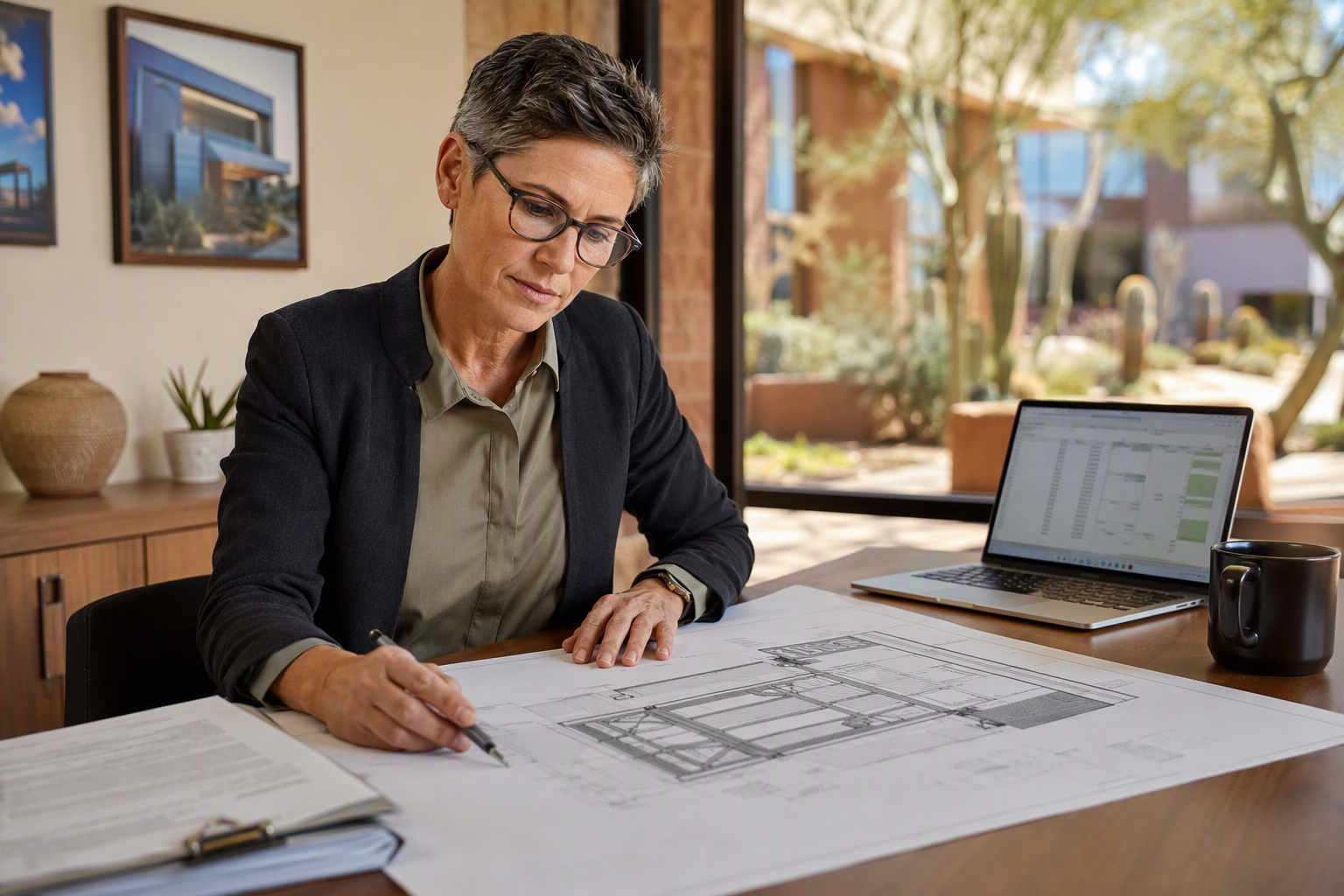
Several indicators point toward modernization as the appropriate path:
- Hoistway integrity is sound. Concrete or masonry shafts free of cracking, water intrusion, or structural movement are good modernization candidates.
- The cab enclosure and sill are structurally intact. If the cab frame, platform, and sill are not corroded or deformed, they can typically be retained.
- Outdated controls or drive technology. Relay-logic controllers and DC drive systems from earlier eras are commonly replaced during modernization with modern microprocessor controllers and variable-frequency drives (VFDs).
- Safety device obsolescence. Governors, safeties, buffers, and door interlocks may require upgrade to satisfy current ASME A17.3 Safety Code for Existing Elevators and Escalators requirements.
- ADA accessibility gaps. Button heights, cab dimensions, and signage upgrades to meet ADA standards are common modernization scope items.
- Parts availability declining. When manufacturer support and replacement parts become scarce for existing components, modernization replaces those subsystems before they cause extended outages.
What Are the Signs That Full Replacement Is the Right Choice?
Full replacement becomes necessary under conditions that modernization cannot address:
- Hoistway structural failure. Cracked, water-damaged, or undersized shafts may require rebuilding that makes a full replacement more cost-effective.
- Non-standard hoistway dimensions. Some older elevators were built with dimensions that no longer align with standard equipment, making new component installation physically impossible without structural modification.
- Severe corrosion or physical deterioration of the cab structure. When the platform, sill, or frame cannot be safely reused, a complete new cab and structure is required.
- Hydraulic system with underground single-bottom cylinders. In older hydraulic elevators, single-bottom cylinders buried underground carry environmental risk. Depending on condition and local authority having jurisdiction (AHJ) requirements, replacement of the full system may be the recommended path.
- Cumulative upgrade cost exceeds replacement cost. When a thorough assessment reveals that achieving current code compliance through individual upgrades would approach or exceed the installed cost of a new system, replacement delivers better long-term value.
- Building use change requiring increased capacity or speed. If a building conversion requires a heavier-rated or higher-speed elevator than the existing hoistway can accommodate, a new installation is necessary.
What Does the Assessment Process Look Like? (Step-by-Step)
A qualified elevator consultant or independent service provider should follow a structured assessment process before any modernization or replacement recommendation is made.
- Review maintenance history and violation records. Obtain all past inspection reports from the Arizona Department of Occupational Safety and Health (ADOSH) and the local AHJ. Document outstanding violations, citations, and repair orders.
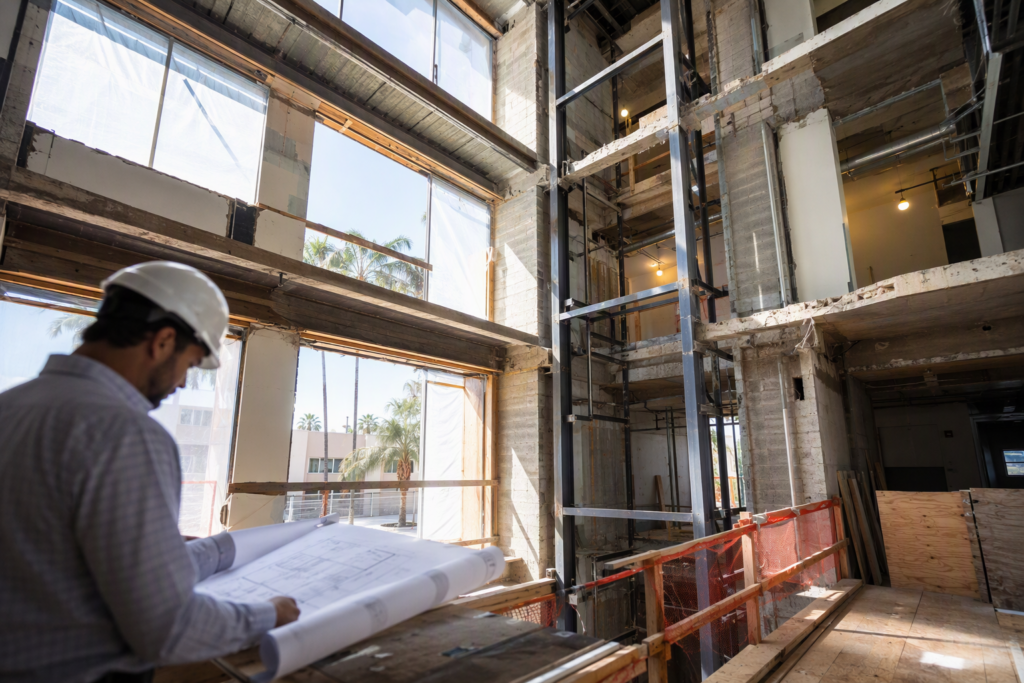
- Inspect the hoistway structure. A licensed elevator contractor visually inspects hoistway walls, pit condition, overhead beams, and rail brackets for structural integrity and code-compliant clearances.
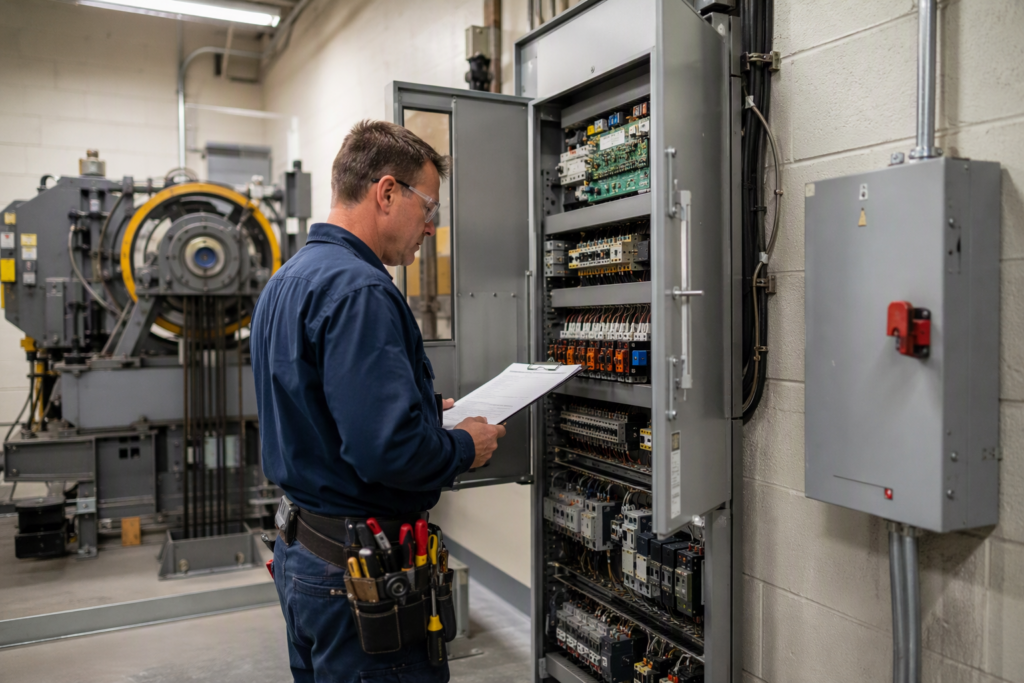
- Evaluate mechanical and electrical components. Controller type, drive system, motor condition, governor, safeties, buffers, and door operator are each assessed individually for remaining useful life and parts availability.
- Assess ADA and code compliance gaps. Cross-reference current cab dimensions, button placement, leveling accuracy, signage, and door timing against ADA standards and applicable ASME A17.3 requirements.
- Obtain itemized modernization scope from a qualified contractor. Request a line-item list of all required and recommended upgrades to understand what a full modernization would entail.
- Request a full replacement quote for comparison. A side-by-side comparison of modernization cost versus new installation cost, factoring in expected useful life, is the foundation of a sound decision.
- Calculate long-term cost of ownership. Factor in projected maintenance costs, downtime risk, energy efficiency differences, and the likelihood of additional required upgrades within the next five to ten years under each scenario.
- Make the decision with independent advice. An independent elevator consultant or service provider — not one tied exclusively to a single equipment manufacturer — can offer unbiased guidance on which path serves the building’s long-term interests.
How Do Costs Compare Between Modernization and Full Replacement?
Cost is almost always the first question building owners ask, but direct dollar comparisons without a site-specific assessment are misleading. What can be stated qualitatively:
| Cost Factor | Modernization | Full Replacement |
|---|---|---|
| Upfront Capital Outlay | Generally lower than replacement | Generally higher upfront |
| Structural / Construction Work | Minimal to none | Often significant additional cost |
| Permitting Fees | Moderate | Higher; new installation permits |
| Downtime / Lost Revenue Risk | Weeks, depending on scope | Months for full replacement |
| Post-Project Maintenance Cost | May remain elevated if older components retained | Lower; full new-equipment warranties apply |
| Energy Efficiency Improvement | Significant if VFD and LED upgrades included | Maximum; new equipment with regenerative drive options |
| Long-Term ROI | Strong if hoistway is structurally sound | Strong if building has 20+ year horizon |
The most reliable cost decision comes from requesting parallel quotes for both options and evaluating total 10-year cost of ownership — not just the initial invoice.
What Are the Pros and Cons of Elevator Modernization?
| Pros | Cons |
|---|---|
| Lower upfront capital cost than full replacement | Retains some original components that may still age out |
| Shorter project timeline and less structural disruption | Does not reset full equipment life cycle |
| Can target specific compliance gaps | Additional upgrades may be required in future inspection cycles |
| Improves energy efficiency, ride quality, and safety | Parts availability for retained components may continue to decline |
| Preserves existing hoistway investment | May not address all ADA or code deficiencies if scope is limited |
What Are the Pros and Cons of Full Elevator Replacement?
| Pros | Cons |
|---|---|
| Full new equipment life cycle with manufacturer support | Significantly higher upfront capital cost |
| Maximum energy efficiency with modern drive and regenerative options | Longer project timeline; extended elevator downtime |
| Complete ADA and code compliance from day one | Structural modifications to hoistway may add cost |
| Lowest projected maintenance cost over time | May exceed budget for buildings with shorter ownership horizons |
| Eliminates all legacy parts sourcing concerns | Permitting and inspection process more complex |
Which Codes and Standards Govern This Decision in Arizona?
In Arizona, elevator installations, inspections, and retrofits fall under the jurisdiction of the Arizona Division of Occupational Safety and Health (ADOSH), which enforces a state elevator safety program. At the federal technical standards level, two primary codes apply:
- ASME A17.1 Safety Code for Elevators and Escalators — the primary standard for new elevator installations. When a full replacement is undertaken, the new installation must comply with the edition adopted by the Arizona AHJ.
- ASME A17.3 Safety Code for Existing Elevators and Escalators — governs retroactive requirements for elevators already in service. Modernization projects are evaluated against A17.3 to determine which upgrades become mandatory as a result of the work performed.
- Americans with Disabilities Act (ADA) — applies to public accommodations and commercial facilities. Both modernization and replacement projects present an opportunity — and often a legal obligation — to address accessibility requirements.
Always verify the specific code edition and any local amendments with the Arizona AHJ having jurisdiction over your project before finalizing scope. Code adoption cycles mean that the edition enforced in Arizona in 2026 may differ from the most recently published ASME edition.
Does a Modernization Trigger Additional Code Compliance Requirements?
Yes — and this is one of the most important factors building owners overlook. Under ASME A17.3, performing a modernization on one subsystem can trigger mandatory upgrades to other components of the elevator system. For example, replacing a controller may require simultaneous upgrades to door interlocks, leveling devices, or emergency lighting to bring the entire system into conformance with the applicable retroactive requirements at the time of the alteration.
This “triggered compliance” effect is a critical cost variable that must be scoped out fully before a modernization budget is approved. A qualified, independent elevator contractor will identify all triggered requirements upfront so there are no surprise additions during the project.
How Long Does Each Option Take?
Project timelines vary by building configuration, equipment availability, permit processing, and scope complexity. Qualitatively:
- Modernization: Typically a shorter project than full replacement. The elevator is taken out of service during the upgrade work. Permit approval by the Arizona AHJ and ADOSH inspection scheduling affect the overall timeline and should be planned for early in the process.
- Full Replacement: A longer timeline due to the complexity of removing all existing equipment, any required structural work, new equipment fabrication and delivery lead times, installation, and multi-stage inspections. Buildings dependent on a single elevator should plan alternative accessibility accommodations carefully.
Supply chain conditions in 2026 continue to affect lead times for elevator components and complete systems. Engaging a contractor early and confirming equipment availability before committing to a project start date is strongly recommended.
Should I Use a Manufacturer-Affiliated or Independent Service Provider?
This is a question building owners and property managers should ask explicitly before selecting a contractor. Manufacturer-affiliated service providers may have contractual or financial incentives to recommend their own equipment, which can influence whether a modernization or replacement recommendation is made.
An independent elevator service company is not tied to a single equipment manufacturer and can evaluate products and approaches across the market to recommend the solution that genuinely fits the building’s needs, budget, and code obligations.
Arizona Elevator Solutions is an independent, Arizona-based elevator service company that provides assessments, modernization, maintenance, and repair services across the state. Because Arizona Elevator Solutions is not manufacturer-captive, clients receive evaluations based on the building’s actual condition and requirements — not on equipment sales incentives.
What Questions Should I Ask Any Elevator Contractor Before Committing?
- Are you providing a full, itemized scope of work — or a high-level estimate?
- Have you identified all ASME A17.3-triggered upgrades that would be required as a result of the proposed modernization scope?
- Are you affiliated with a specific elevator manufacturer, and how does that affect your recommendation?
- What is the projected useful life of the system after modernization, and at what point would full replacement become the better option?
- Who will handle permit filing with ADOSH, and what is the projected inspection and approval timeline?
- What warranty terms apply to both equipment and labor?
- Can you provide references for similar modernization or replacement projects completed in Arizona?
What Happens If I Delay the Decision?
Deferred action on an aging elevator carries compounding risks:
- Unplanned outages. Aging components fail unpredictably, often requiring emergency repair at premium cost and causing extended downtime that affects tenants, residents, or building visitors.
- Regulatory action. Arizona ADOSH and local AHJs may issue citations or orders to take elevators out of service when deficiencies are identified during periodic inspections. Operating a non-compliant elevator exposes building owners to liability.
- ADA exposure. Accessibility failures create legal risk under ADA for public accommodations and commercial facilities.
- Escalating repair costs. As parts for older systems become scarcer, repair costs and lead times increase. Proactive modernization or replacement is almost always less expensive than reactive emergency repair over time.
Is There a General Rule of Thumb for When to Modernize Versus Replace?
No single rule applies universally, but the following qualitative framework helps structure the decision:
- If the hoistway structure is sound, the cab enclosure is reusable, and the primary issue is outdated controls, drives, or safety devices, modernization is typically the appropriate starting point for evaluation.
- If the hoistway requires structural repair, the elevator system is so obsolete that standard components no longer fit, or cumulative upgrade costs approach or exceed replacement cost, full replacement warrants serious consideration.
- If the building’s ownership or use horizon is less than ten years, a lower-cost targeted modernization may be preferable to the larger capital outlay of full replacement.
- If the building is in it for the long term and the elevator serves a critical function — such as in a healthcare, senior living, or high-occupancy residential building — full replacement may deliver the best 20-year total cost of ownership.
The only reliable way to make this determination for a specific elevator is a thorough, independent on-site assessment by a qualified elevator professional.
Get a Free Elevator Assessment from Arizona Elevator Solutions
Building owners and facilities managers throughout Arizona trust Arizona Elevator Solutions for honest, manufacturer-independent guidance on modernization and replacement decisions. An assessment from Arizona Elevator Solutions covers hoistway condition, component life expectancy, code compliance gaps under ASME A17.1 and A17.3, ADA accessibility requirements, and a clear comparison of modernization versus replacement options for your specific system.
Contact Arizona Elevator Solutions for a free elevator assessment: 480-557-7600
Need elevator service you can rely on? Arizona Elevator Solutions is ready to help.