Top Rated Elevator Maintenance Company in Tucson, AZ: Complete FAQ Guide
After 15-plus years of working on elevators across southern Arizona — from high-rise office buildings in downtown Tucson to mid-rise apartment complexes near the University of Arizona — I’ve seen what separates a truly reliable maintenance provider from one that just shows up when something breaks. This guide answers every question property managers, building owners, and facility directors ask when evaluating elevator maintenance companies in Tucson. Use it to make a fully informed decision.
What makes a top rated elevator maintenance company in Tucson stand out from competitors?
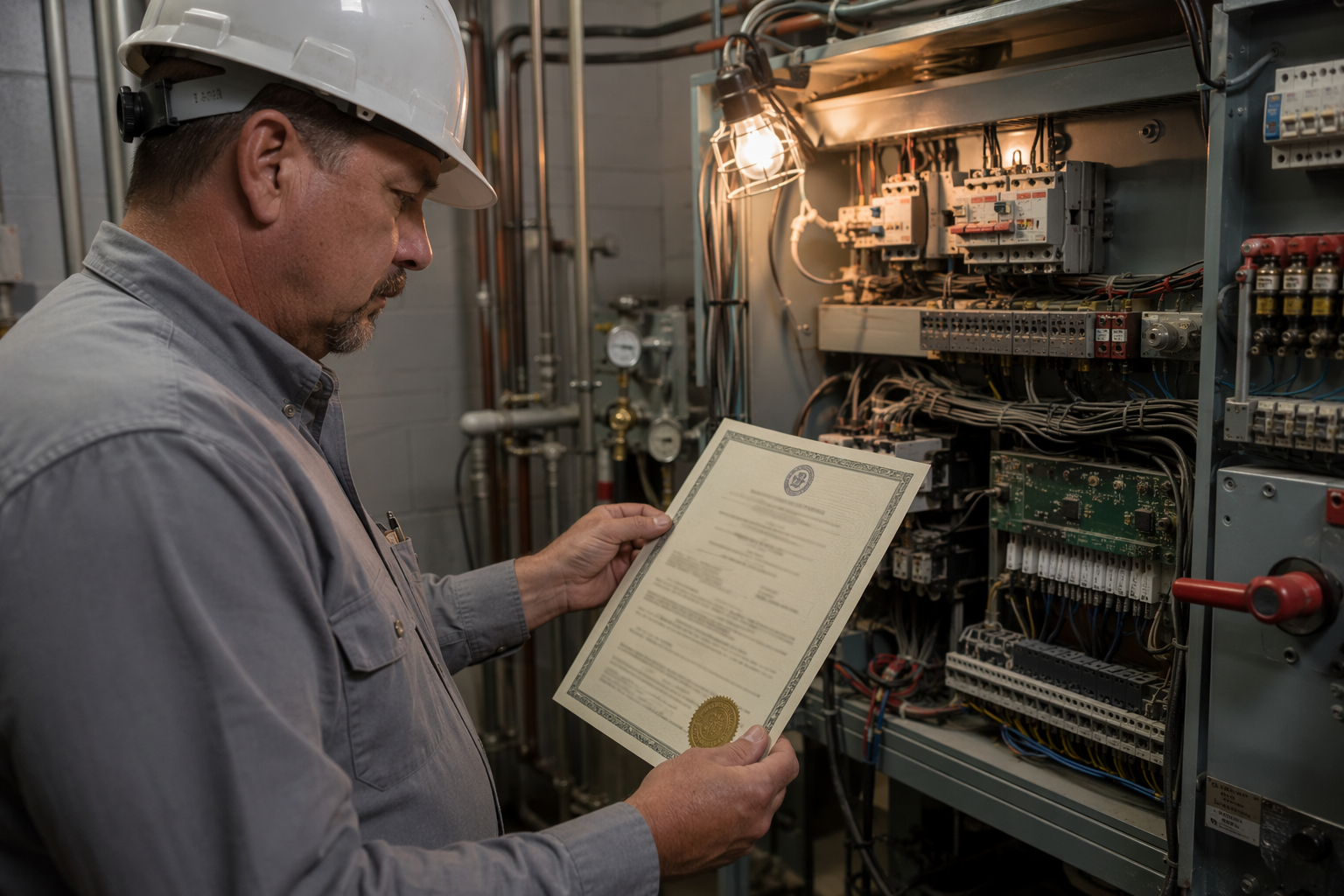
A top rated elevator maintenance company distinguishes itself through ASME A17.1 compliance, state-licensed technicians, documented response times under 4 hours for emergencies, and a transparent preventive maintenance schedule that reduces breakdowns by 60–70% compared to reactive-only service models.
In Tucson’s climate — where summer temperatures regularly exceed 110°F — heat stress on elevator mechanical and hydraulic systems is a real, measurable threat. A company that understands Tucson’s environment will adjust lubrication schedules, check hydraulic fluid viscosity more frequently, and inspect cooling systems in machine rooms on a tighter cycle than a national provider following a generic national calendar. Local expertise matters. Arizona Elevator Solutions was built specifically for Arizona conditions, and that regional knowledge shows up directly in equipment uptime rates.
Beyond technical skill, top companies hold certifications from the International Union of Elevator Constructors (IUEC) and maintain licensing through the Arizona Registrar of Contractors. When vetting any Tucson elevator company, ask to see their state license number and proof of active liability insurance before signing a maintenance contract.
How often should elevators be inspected in Tucson, Arizona?

Under Arizona state law and ASME A17.1/CSA B44 Safety Code for Elevators and Escalators, most commercial elevators in Arizona require a full Category 1 inspection annually, with Category 5 full-load safety tests performed every 5 years.
Here is a breakdown of the inspection cadence property owners in Tucson should follow:
| Inspection Type | Frequency | Governing Standard | Who Performs |
|---|---|---|---|
| Category 1 – No-Load Safety Test | Annually | ASME A17.1 Rule 8.6 | Licensed QEI Inspector |
| Category 3 – Partial-Load Test | Every 3 Years | ASME A17.1 Rule 8.6 | Licensed QEI Inspector |
| Category 5 – Full-Load Safety Test | Every 5 Years | ASME A17.1 Rule 8.6 | Licensed QEI Inspector + Contractor |
| Routine Preventive Maintenance | Monthly or Quarterly | Manufacturer + ASME A17.1 | Certified Elevator Technician |
| Hydraulic Fluid Integrity Check | Annually (twice in Tucson summer) | ASME A17.1 / EPA 40 CFR 112 | Certified Elevator Technician |
Missing a scheduled inspection in Arizona can result in fines, mandatory shutdown orders, and — more importantly — genuine safety risk to building occupants. I recommend putting inspection due dates on a 90-day advance reminder calendar so you are never scrambling at the last minute.
What does elevator maintenance cost in Tucson in 2026?
In 2026, monthly elevator maintenance contracts in Tucson typically range from $300 to $900 per elevator for standard commercial traction or hydraulic units, depending on equipment age, complexity, and the scope of services included in the agreement.
Here is a realistic cost breakdown for Tucson building owners:
- Basic oil-and-grease contract (lubrication + visual inspection only): $250–$350/month per unit
- Full preventive maintenance contract (parts, labor, callbacks included): $500–$900/month per unit
- Annual Category 1 inspection (standalone): $400–$700 per unit
- Category 5 full-load test: $1,200–$2,500 per unit
- Emergency after-hours callback (non-contract): $250–$500 service call plus $120–$180/hour labor
- Major component replacement (motor, controller, hydraulic cylinder): $8,000–$40,000+ depending on unit type
The cheapest contract is rarely the best value. A full-service agreement that covers callbacks and parts typically saves building owners 20–35% over reactive repair costs when measured across a 5-year period. Always compare what is actually included in a contract — a $300/month “maintenance” agreement that excludes all parts and callbacks offers far less protection than it appears.
What certifications should a Tucson elevator maintenance company hold?
At minimum, any reputable Tucson elevator maintenance company should hold IUEC certification for its field technicians, a Qualified Elevator Inspector (QEI) certification through ASME, an Arizona Registrar of Contractors license, and current general liability and workers’ compensation insurance coverage.
Here is a checklist of credentials to request before signing any maintenance contract in Arizona:
- Arizona Registrar of Contractors (ROC) active license number
- IUEC journeyman or mechanic certification for all assigned field technicians
- QEI certification number for any inspector performing Category 1, 3, or 5 tests
- Proof of general liability insurance (minimum $1 million per occurrence is industry standard)
- Proof of workers’ compensation insurance (required by Arizona law for all contractors with employees)
- Manufacturer certifications for proprietary systems (Otis, KONE, Schindler, ThyssenKrupp, etc.)
Arizona Elevator Solutions carries all of the above and is happy to provide documentation before any contract discussion begins — a transparency standard that not every competitor in Tucson matches.
What are the ADA compliance requirements for elevators in Tucson commercial buildings?
Under the Americans with Disabilities Act (ADA), commercial elevators serving buildings with 3 or more stories or 3,000+ square feet per floor must meet ADA Standards for Accessible Design, including minimum cab dimensions, door timing requirements, Braille/tactile controls, and audible position indicators.
The specific ADA requirements most frequently cited in Tucson building inspections include:
- Minimum cab interior clear floor area of 51 inches wide by 80 inches deep (for center-opening doors)
- Door reopening devices that keep doors open for a minimum of 20 seconds if obstructed
- Raised and Braille characters on all control buttons per ADA Section 407.4.7
- Visual and audible floor indicators (hall lanterns and audible signals)
- Car controls mounted no higher than 48 inches above the finished floor for forward reach
- Emergency two-way communication system accessible without tight grasping, pinching, or twisting
Non-compliance with ADA elevator standards exposes Tucson property owners to federal civil rights complaints, Department of Justice investigations, and private lawsuits. During routine maintenance visits, a qualified technician should audit ADA compliance items as a standard checklist item — not an afterthought.
How quickly should an emergency elevator repair company in Tucson respond?
Industry best practice for emergency elevator response in occupied commercial buildings is 2 hours or less, with top-tier Tucson providers offering guaranteed response windows of 60–90 minutes for entrapments and life-safety situations.
Response time matters enormously in Tucson’s heat. A passenger trapped in an elevator car when ambient temperatures are 108°F faces real heat-related health risk within 20–30 minutes if cab ventilation fails. When evaluating any elevator maintenance company, ask specifically: What is your guaranteed response time for entrapments? Is it written into the contract? What happens if you miss that window?
Arizona Elevator Solutions provides 24/7/365 emergency dispatch, with a documented average on-site arrival time of under 90 minutes throughout the Tucson metro area. That figure is tracked, recorded, and available to contract clients upon request.
What should you do immediately if someone is trapped in an elevator in Tucson?
If a passenger is trapped in an elevator, do not attempt to force the doors open — follow these steps immediately to ensure occupant safety while professional help is dispatched.
- Speak calmly to the trapped passenger through the intercom or door panel and advise them to stay away from the doors and remain seated if possible.
- Call your building’s elevator maintenance provider using the emergency number listed in your maintenance contract.
- Call 911 if the passenger reports any medical symptoms, if the car is between floors with a door gap, or if more than 20 minutes pass with no technician on site.
- Advise the passenger to activate the emergency alarm button inside the cab to maintain air circulation awareness and signal location to emergency responders.
- Post a building staff member at the elevator landing to guide arriving technicians directly to the correct unit.
- Log the time of entrapment, time of your call to the maintenance provider, and time of technician arrival for regulatory and insurance documentation purposes.
- After the rescue, do not return the elevator to service until the cause of the entrapment has been diagnosed and corrected by a certified technician.
How do hydraulic and traction elevators differ in maintenance needs in Arizona’s climate?
Hydraulic elevators require more frequent fluid maintenance in Arizona’s extreme heat because high ambient temperatures accelerate hydraulic fluid degradation, while traction elevators with machine room cooling systems face HVAC-related challenges that demand quarterly cooling checks in Tucson’s summer months.
Hydraulic units — common in Tucson’s 2- to 5-story commercial buildings, medical offices, and multifamily properties — use oil under pressure to raise and lower the cab. In summer heat, that oil thins, loses viscosity, and can cause slow or jerky ride quality, increased energy consumption, and seal wear. A competent Tucson technician checks hydraulic fluid condition twice per year as a minimum in this climate, compared to the once-per-year standard in cooler regions.
Traction elevators, more common in Tucson high-rises and newer construction, depend on electric motors, steel ropes or belts, and counterweights. Machine rooms for traction elevators must maintain temperatures below 104°F per ASME A17.1 requirements. In a Tucson building without proper machine room HVAC, summer temperatures can easily exceed this threshold, causing controller failures and motor overheating. Verifying machine room cooling capacity is a standard item on every Arizona Elevator Solutions quarterly visit.
What is a full-service elevator maintenance contract and what should it include?
A full-service elevator maintenance contract covers all scheduled preventive maintenance visits, all labor for repairs, all standard replacement parts, unlimited callback visits, and annual compliance inspections — providing complete cost predictability with no surprise invoices throughout the contract term.
When reviewing any elevator maintenance contract in Tucson, verify it explicitly includes:
- Stated number of preventive maintenance visits per year (monthly is best practice for commercial units)
- Coverage for wear parts: brake shoes, door contacts, rollers, gibs, and door operators
- Callback labor at no additional charge, 24/7
- Major component coverage thresholds (some contracts exclude motors, controllers, or hydraulic cylinders — read carefully)
- Compliance testing scheduling and coordination with the state inspector
- Documented maintenance logs provided to building owner after each visit
- Escalation clause limits (annual price increases should be capped, typically at 3–5% per year)
Contracts that exclude callback labor or major components may appear cheap but shift all financial risk onto the property owner. In my 15 years in this industry, the buildings that face the most expensive surprise repair bills are almost always on the cheapest, most stripped-down contracts.
How do you evaluate and compare elevator maintenance companies in Tucson?
To objectively compare Tucson elevator maintenance companies, score each vendor across five criteria: technician certifications, documented response times, contract scope, local references, and financial stability — then weight the criteria against your building’s specific risk profile.
| Evaluation Criterion | What to Look For | Red Flag |
|---|---|---|
| Technician Certifications | IUEC card, QEI for inspectors, ARC license | Unlicensed or “registered” but not licensed |
| Emergency Response Time | Written guarantee under 2 hours for entrapments | No written SLA or “best effort” language only |
| Contract Scope | Full parts, labor, callbacks, compliance tests | Parts excluded, callback billed separately |
| Local Tucson References | 3+ verifiable Tucson or Pima County clients | References only from other markets |
| Compliance Documentation | Maintenance logs provided after every visit | No written records or digital log system |
| Financial Stability | Established business, verifiable history | Recently formed LLC, no business history |
What are the most common elevator problems in Tucson buildings?
The most common elevator problems seen in Tucson commercial and multifamily buildings are door malfunctions (accounting for roughly 60% of all service calls), hydraulic fluid degradation from heat, controller board failures, and nuisance tripping caused by dust infiltration into sensitive electronic components.
Tucson’s desert environment introduces particulate challenges that technicians in cooler, wetter climates never encounter. Fine caliche dust and desert particulate matter infiltrates machine rooms, gets into door tracks, contaminates lubrication points, and accelerates wear on every moving component. A maintenance program designed for Tucson needs explicit protocols for dust management — including machine room door sealing, filtered ventilation, and more frequent door track cleaning than a national maintenance calendar would specify.
Door operator problems are the single largest cause of elevator downtime in commercial buildings everywhere, and Tucson is no exception. Annual door operator adjustments, vane and sensor cleaning, and door clutch lubrication are non-negotiable line items in any responsible Tucson maintenance program.
How does elevator modernization differ from routine maintenance, and when is it necessary?
Elevator modernization is a capital project that replaces aging control systems, drives, and safety components to restore code compliance and extend equipment life by 20–30 years, while routine maintenance preserves the current equipment condition — and modernization becomes necessary when repair costs exceed 50% of replacement value or when code violations cannot be corrected through maintenance alone.
In Tucson, many commercial elevators installed in the 1980s and early 1990s are now reaching or exceeding typical useful life thresholds of 25–30 years for hydraulic systems and 30–40 years for traction units. When controllers can no longer source replacement circuit boards, when hydraulic cylinders show corrosion, or when the cumulative annual repair bill approaches the cost of modernization, it is time to have a frank conversation with your maintenance provider about a capital upgrade plan.
A reputable company will give you an honest assessment of your equipment’s remaining useful life — not recommend expensive repairs on equipment that should be replaced. Arizona Elevator Solutions provides no-cost equipment assessments that include a 5-year lifecycle cost comparison between continued maintenance and full modernization, helping building owners make decisions based on data rather than guesswork.
What are Arizona’s state-specific elevator regulations Tucson property owners must know?
Arizona regulates elevators through the Office of the State Fire Marshal in coordination with local jurisdictions, requiring all conveyance equipment to comply with ASME A17.1 (2019 edition adopted by Arizona), with Pima County enforcing permit requirements for new installations and major alterations through the Building Safety department.
Key Arizona-specific requirements Tucson property owners must track include:
- All elevator contractors must hold a valid Arizona Registrar of Contractors (ROC) specialty license (CR-11 classification for elevators)
- Inspection certificates must be posted in each elevator cab and renewed annually
- Failed inspection items must be corrected within timeframes specified by the enforcing jurisdiction — typically 30 to 90 days depending on severity
- Hydraulic elevators must comply with EPA Spill Prevention, Control, and Countermeasure (SPCC) rules under EPA 40 CFR Part 112 for oil containment when the underground cylinder holds more than 1,320 gallons
- Any alteration to an existing elevator requires a permit through Pima County Building Safety before work begins
How long does elevator maintenance take per visit, and how much disruption should building occupants expect?
A routine monthly preventive maintenance visit on a standard commercial elevator takes 2 to 4 hours, during which the unit is taken out of service — building managers should notify occupants 24 to 48 hours in advance and schedule visits during low-traffic periods whenever possible.
For multi-elevator buildings, skilled technicians stagger maintenance visits so that at least one elevator remains in service at all times. In Tucson medical office buildings, assisted living facilities, and high-occupancy multifamily properties, this staggered scheduling is not just courteous — it is operationally essential. When discussing a new maintenance contract, always ask how the provider handles multi-unit buildings and whether they have experience working within occupied healthcare or residential environments.
What questions should you ask before hiring an elevator maintenance company in Tucson?
Before signing any elevator maintenance contract in Tucson, ask these 10 critical questions to fully evaluate the company’s qualifications, reliability, and contract terms.
- What is your Arizona Registrar of Contractors (ROC) license number, and can I verify it online?
- Are all field technicians IUEC-certified, and will the same technicians service my building consistently?
- What is your written guaranteed response time for passenger entrapments, and is it included in the contract?
- Does your full-service contract include parts, or are major components excluded?
- How do you document each maintenance visit, and how do I access those records?
- Have you maintained elevators of my specific brand and model before?
- Can you provide three verifiable references from Tucson or Pima County clients?
- How do you handle annual Arizona state inspection coordination?
- What is the annual escalation cap on contract pricing?
- What is your process when a repair exceeds a certain cost threshold — do you get my approval before proceeding?
How does preventive elevator maintenance reduce long-term costs for Tucson building owners?
Consistent preventive maintenance reduces unplanned elevator downtime by 60–75%, extends equipment service life by 5–15 years, and typically delivers a 3-to-1 return on investment compared to the combined cost of reactive repairs, emergency callbacks, and accelerated component replacement that result from deferred maintenance.
The math is straightforward. A hydraulic elevator running without proper lubrication and fluid maintenance in Tucson heat will require a pump unit replacement — averaging $6,000 to $12,000 in parts and labor — years before a well-maintained unit reaches that threshold. Multiply that across a 10-year ownership period on a multi-elevator building, and the cost differential between a robust preventive program and a minimal service contract reaches into the tens of thousands of dollars.
Beyond direct repair costs, elevator downtime carries indirect costs that building owners often underestimate: ADA violation exposure when the only accessible route is unavailable, tenant complaints and lease renewal risk in multifamily properties, productivity losses in commercial buildings, and potential liability if occupants are injured navigating stairs due to elevator unavailability.
What types of buildings in Tucson require elevator maintenance contracts?
Any Tucson building with a permitted elevator — including commercial office buildings, multifamily residential properties of 3 or more stories, hotels, hospitals, medical offices, retail centers, government facilities, and educational institutions — requires a formal maintenance program to maintain state inspection compliance and ADA accessibility obligations.
In practice, the Tucson buildings that benefit most from structured maintenance contracts tend to be:
- Medical office buildings and surgical centers near Banner University Medical Center and Tucson Medical Center
- University-area apartment complexes serving University of Arizona students and staff
- Senior living and assisted living communities in the Oro Valley, Marana, and Midtown Tucson corridors
- Downtown Tucson commercial high-rises and mixed-use developments
- Government-owned facilities including Pima County buildings and City of Tucson properties
- Hotel and hospitality properties along the I-10 corridor and Tucson resort destinations
How do you know if your current elevator maintenance provider is underperforming?
Warning signs that your current Tucson elevator maintenance provider is underperforming include recurring door problems that were supposedly repaired, inspection certificates that lapse without notification from your provider, response times consistently exceeding 4 hours, and maintenance logs that are vague, incomplete, or never provided at all.
After 15 years in this industry, I have taken over maintenance contracts from underperforming competitors on dozens of Tucson properties. The pattern is almost always the same: a building owner signed a cheap contract, never received detailed maintenance logs, and only discovered the extent of the neglect when a state inspector issued violation notices or a major component failed catastrophically. By then, the repair bills far exceeded what a proper maintenance program would have cost over the same period.
If your current elevator has more than 2 unplanned service calls per year, if your provider cannot immediately produce a maintenance log for your last 3 visits, or if you have received any inspection violation notices, those are clear signals that a second opinion from a qualified company is warranted.
Can elevator maintenance be performed by a building’s in-house maintenance staff in Arizona?
No — Arizona law requires that all elevator maintenance, adjustment, repair, and inspection work be performed by or under the direct supervision of a licensed elevator contractor holding an active Arizona Registrar of Contractors CR-11 specialty license; in-house building maintenance staff are not permitted to perform elevator work beyond basic housekeeping of the cab interior.
This is a point of significant confusion for some Tucson property managers, particularly those overseeing facilities with internal engineering departments. The prohibition is clear in Arizona statute and ASME A17.1: elevator mechanical, electrical, and safety system work is restricted to licensed professionals. Building staff can report problems, clean interior surfaces, and ensure the machine room is kept clear and properly climate-controlled — but nothing beyond that.
Any Tucson building discovered to have had unlicensed personnel perform elevator work faces potential permit revocation, mandatory shutdown, and significant liability exposure in the event of an injury.
Why should Tucson property owners choose a locally based elevator company over a national chain?
A locally based Tucson elevator company offers faster emergency response times, technicians with direct knowledge of Arizona’s climate challenges and state regulatory environment, and decision-making authority that national chains route through regional or national offices — resulting in faster approvals, faster parts procurement, and more accountable service relationships.
National elevator companies operate on standardized national maintenance calendars that were not designed for Tucson’s specific environmental demands. Local companies like Arizona Elevator Solutions have calibrated their maintenance protocols to Arizona’s heat, dust, and seismic considerations. When a problem arises at 9 PM on a Friday before a holiday weekend, a local company’s technician is in Tucson — not dispatched from a hub 3 hours away.
Local accountability also manifests in contract negotiations. A local provider’s owner or operations manager is reachable, known in the community, and directly invested in the company’s Tucson reputation. That accountability structure produces better service outcomes than a national provider where escalations travel through layers of regional management.
Get a Free Elevator Assessment from Tucson’s Trusted Maintenance Experts
Whether you manage a single-elevator medical office or a multi-unit commercial high-rise in Tucson, your elevators deserve a maintenance partner that understands Arizona’s climate, knows the state’s regulatory requirements inside and out, and will be on-site fast when something goes wrong.
Arizona Elevator Solutions serves Tucson, Phoenix, Scottsdale, and Mesa with ASME A17.1-compliant maintenance programs, certified technicians, and a documented emergency response commitment that is written into every contract — not just a sales promise.
Contact Arizona Elevator Solutions for a free elevator assessment. We will review your current equipment condition, evaluate your existing maintenance contract (or lack of one), and provide a transparent, no-obligation recommendation tailored to your building’s needs.
Call us today: 480-319-7157
Available 24/7 for emergency service throughout Tucson and Pima County.
Need elevator service you can rely on? Arizona Elevator Solutions is ready to help.