Who Should I Contact for 24-Hour Elevator Repair Service? Complete FAQ Guide
After 15-plus years diagnosing elevator failures in triple-digit Arizona heat — from hydraulic systems cooking in 115°F Phoenix summers to traction drives tripping on Mesa high-rises — I can tell you that knowing exactly who to call before an emergency happens is the difference between a 45-minute fix and a 12-hour shutdown. This guide answers every question building owners, property managers, and facility directors ask about 24-hour elevator repair service, including what it costs, what codes require, and how to vet a contractor fast.
Who should I contact first when my elevator breaks down after hours?
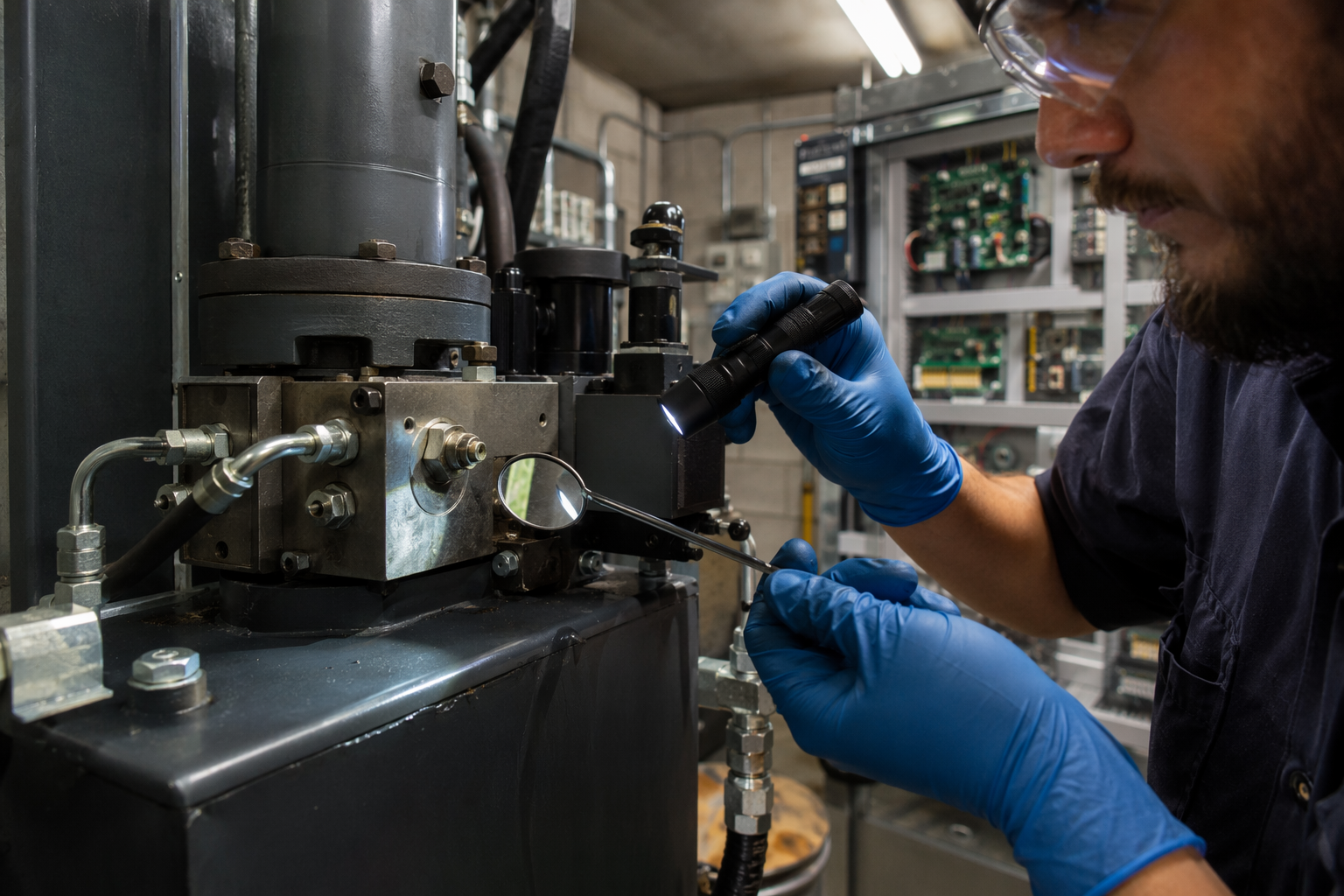
Contact a licensed, IUEC-certified elevator service company with a 24/7 emergency dispatch line — not a general HVAC contractor or handyman service.
Elevator systems are governed by ASME A17.1, the Safety Code for Elevators and Escalators, which mandates that only qualified elevator mechanics perform repairs. In Arizona, the Arizona Board of Technical Registration (BTR) licenses elevator contractors and mechanics, and working with an unlicensed technician voids your insurance coverage and exposes your property to significant liability.
When you call, confirm three things immediately: (1) the technician is IUEC-certified, (2) the company holds a current Arizona BTR elevator contractor license, and (3) they can dispatch someone to your location within 2 hours. Arizona Elevator Solutions meets all three criteria for emergency calls throughout the Phoenix metro, Tucson, Scottsdale, and Mesa service areas.
What qualifies as a true elevator emergency requiring immediate repair?
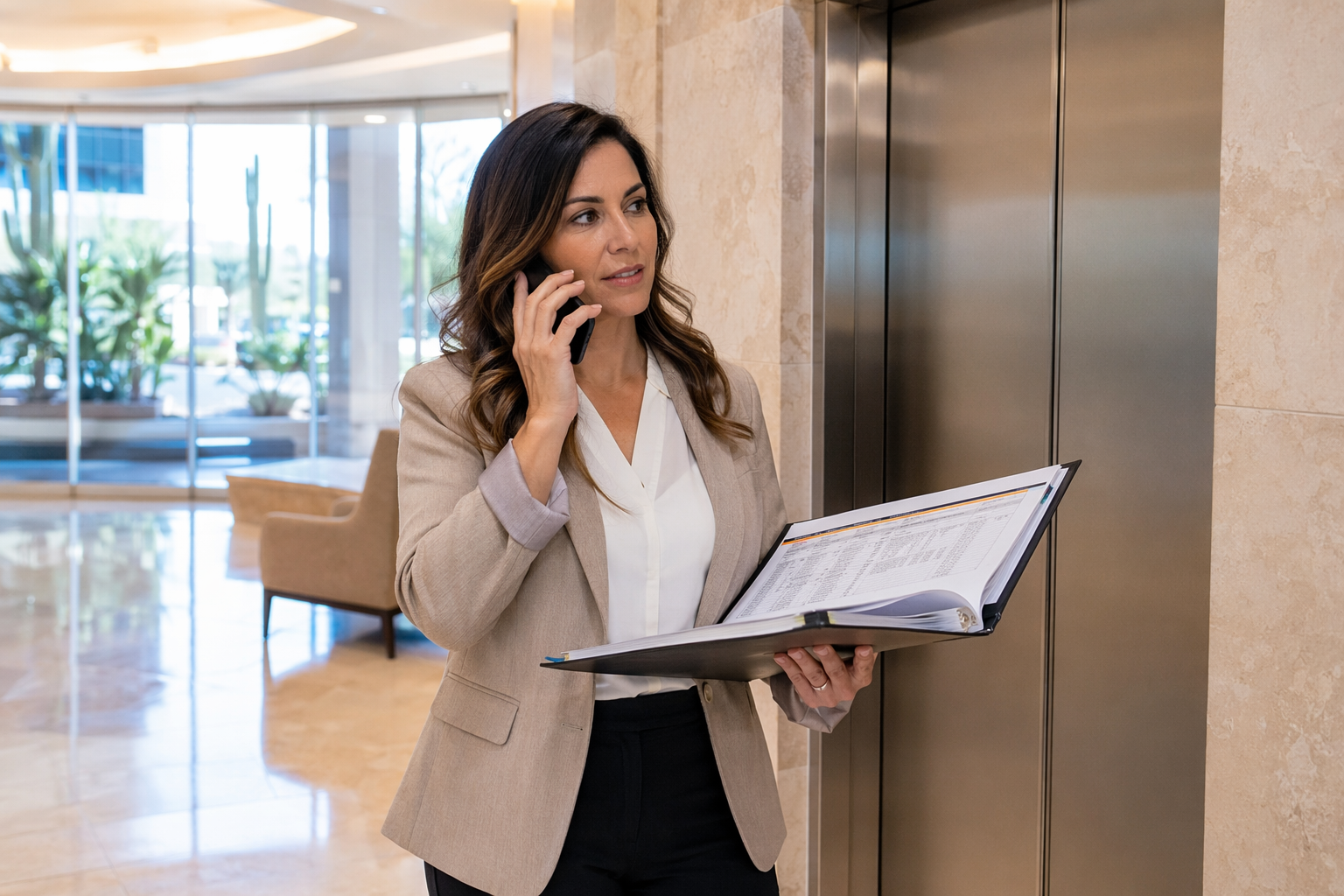
Any situation involving a person trapped in the elevator, an elevator that has stopped between floors, safety circuit failures, hydraulic fluid leaks, or unusual burning smells constitutes an emergency requiring immediate after-hours dispatch.
ASME A17.1-2022 Section 2.27 defines entrapment situations as the highest-priority emergency. Beyond entrapment, the following conditions require same-day or immediate response:
- Door that refuses to close or open (creates an entrapment or falling hazard)
- Elevator car leveling off by more than 0.5 inches from the floor (ADA compliance and trip hazard)
- Hydraulic unit overheating or active oil leak
- Safety relay or governor tripped with the car stuck
- Burning smell, smoke, or electrical arcing sounds from the machine room
- Control system displaying fault codes that prevent normal operation
- Traction elevator with brake failure indication
Non-emergency issues — such as minor lighting failures in the cab, cosmetic door dings, or slow door operation — can typically be scheduled for the next business day without safety risk, which can save you after-hours premium charges.
What should I do immediately when someone is trapped in an elevator?
Keep the trapped passenger calm, call 911 if there is a medical emergency, and simultaneously contact your 24-hour elevator service provider — never attempt to manually release the elevator without a certified technician present.
- Establish communication: Use the elevator’s emergency phone (required by ASME A17.1 Section 2.27.1) to speak with the trapped individual. If the phone is inoperable, use a cell phone relay through the building intercom.
- Assess medical urgency: Ask the passenger if they have a medical condition, are experiencing chest pain, or need medications. If yes, call 911 immediately before calling the elevator company.
- Call your 24-hour elevator repair provider: Give them the building address, elevator number or location, the floor the car is stopped between, and the number of people trapped.
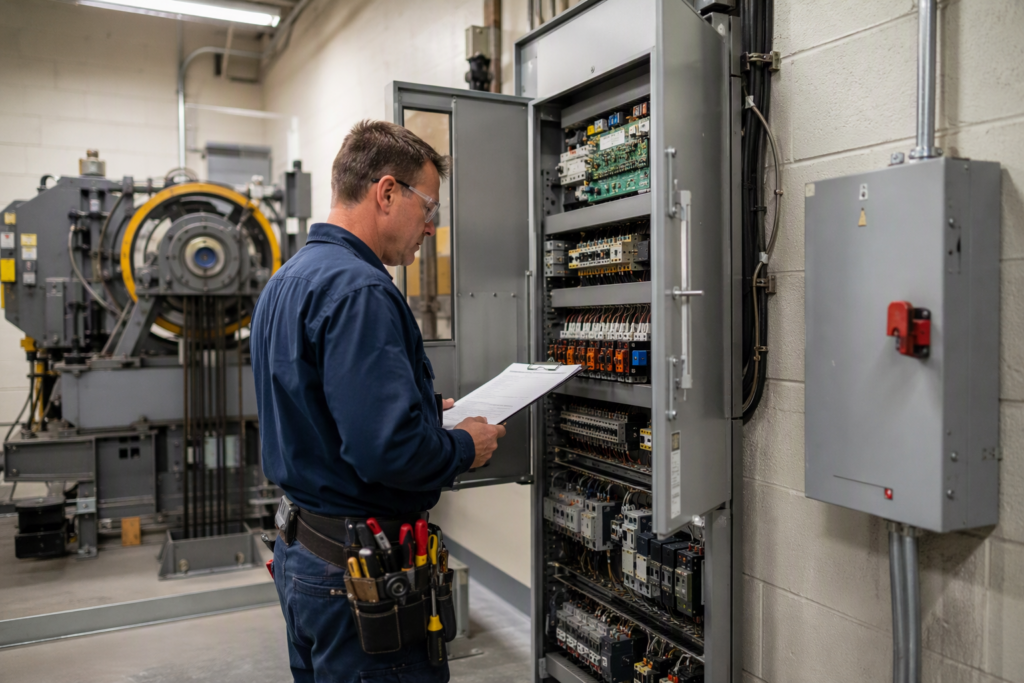
- Secure the machine room: If safe to do so, unlock the elevator machine room so the arriving technician has immediate access. Do not touch any controls.
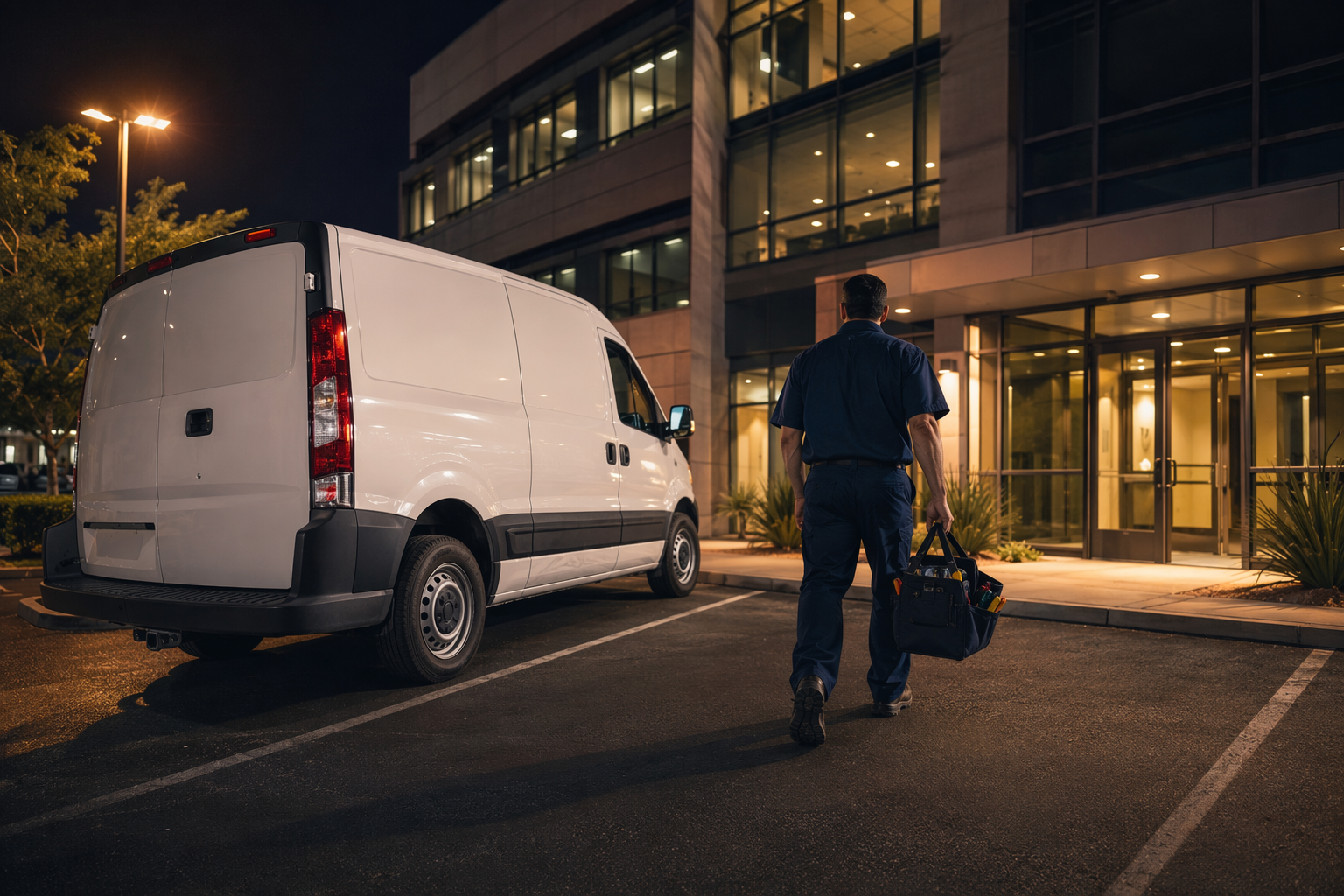
- Post a staff member at lobby level: Have someone meet the technician at the building entrance to guide them directly to the machine room, cutting response time by 10–15 minutes.
- Document the time: Note when the entrapment began. Arizona requires that entrapment incidents be logged and, in some cases, reported to the Arizona Department of Occupational Safety and Health (ADOSH).
- Keep communication ongoing: Check on the trapped passenger every 5 minutes. Anxiety and heat (a real concern in Arizona buildings in summer) can escalate a minor incident quickly.
How quickly should a 24-hour elevator repair technician arrive on site?
Industry best practice — and the standard any reputable elevator service company should meet — is a 2-hour or less response time for emergencies in urban and suburban markets.
In major Arizona markets like Phoenix, Scottsdale, Mesa, and Tucson, a well-staffed service provider should realistically arrive within 60–90 minutes for most locations. Response times beyond 4 hours are unacceptable for life-safety situations. When evaluating a service contract, always request the vendor’s written average emergency response time and ask whether on-call technicians are local or dispatched from out of state.
| Response Time | Service Level | Acceptable For | Industry Benchmark |
|---|---|---|---|
| Under 1 hour | Priority Emergency | Entrapment, safety circuit failure, fire | Best-in-class (top 10% of providers) |
| 1–2 hours | Standard Emergency | Car stopped between floors, hydraulic leak | Industry standard for metro areas |
| 2–4 hours | Urgent Non-Entrapment | Out-of-service elevator, door malfunction | Acceptable for low-rise, single-elevator buildings |
| 4–8 hours | Scheduled Urgent | Nuisance faults, intermittent issues | Acceptable only for non-safety-critical situations |
| Over 8 hours | Next Business Day | Cosmetic, lighting, minor comfort issues | Not appropriate for any safety-related fault |
How do I verify that an elevator repair company is licensed to work in Arizona?
Verify the company holds a current Arizona Board of Technical Registration (BTR) elevator contractor license by searching the BTR’s online license lookup database at btr.az.gov.
In Arizona, A.R.S. § 25-1351 et seq. and BTR rules require that all elevator mechanics be individually licensed and that companies maintain a licensed qualifier on staff. When you call for emergency service, ask the dispatcher to provide the company’s BTR license number and the arriving technician’s individual mechanic license number. Any hesitation to provide this information is a serious red flag. Additionally, confirm that the technician carries current IUEC (International Union of Elevator Constructors) certification, which indicates training to the current ASME A17.1-2022 code standard.
What does 24-hour elevator repair service typically cost in Arizona?
In Arizona, after-hours emergency elevator repair calls typically range from $350–$800 for the service call and first hour of labor, with overtime rates of $150–$250 per hour thereafter, plus parts — costs vary by elevator type, time of call, and the complexity of the fault.
Here is what typically drives cost variation in 2026 market pricing across Phoenix, Scottsdale, Mesa, and Tucson:
- Time of day: Calls between 10 PM and 6 AM, weekends, and holidays carry a premium surcharge, typically 1.5× to 2× standard labor rates.
- Elevator type: Hydraulic elevator repairs (common in 2–6 story Arizona commercial buildings) often cost less than traction elevator repairs, which require more specialized tooling.
- Part availability: Older controllers (pre-2005) may require sourced parts, adding $200–$1,500+ in parts cost and potential delay.
- Service agreement holders: Buildings with a full-maintenance or comprehensive service contract often receive emergency response at no additional charge beyond the monthly contract fee, making these agreements extremely cost-effective for multi-elevator buildings.
Always request a written estimate before authorizing repairs beyond the diagnostic call. Reputable providers like Arizona Elevator Solutions provide transparent pricing before work begins.
Does my building legally require 24-hour elevator emergency coverage?
While Arizona state law does not mandate a specific 24-hour service contract, ASME A17.1-2022 and the International Building Code (IBC) require that all elevators be maintained in safe operating condition at all times, which effectively requires having an emergency service plan in place.
The ADA (Americans with Disabilities Act) adds another layer: buildings where the elevator is the only accessible means of vertical travel must keep that elevator operational. An ADA elevator that remains out of service without a written accessibility alternative plan can trigger a compliance complaint and civil liability. For buildings serving the public — hotels, hospitals, senior living facilities, multifamily apartment complexes — having a 24-hour service contract is effectively a legal necessity, not a luxury.
What information should I have ready when I call for emergency elevator repair?
Have the building address, elevator identification number, floor the car is stopped on, nature of the malfunction, and your contact number ready before dialing — this cuts dispatch time significantly.
The more specific you can be, the faster a technician can arrive with the correct parts and tools. Additional helpful information includes:
- Elevator manufacturer (Otis, KONE, Schindler, ThyssenKrupp, Mitsubishi, etc.)
- Approximate installation year or last major modernization date
- Whether the elevator is hydraulic or traction
- Any fault codes or error messages displayed on the controller or cab panel
- Whether this is a recurring fault or a first-time failure
- Name and phone number of the building’s elevator maintenance provider (if different from who you are calling)
- Machine room location and access key availability
Can I use my building’s general maintenance company for after-hours elevator repair?
No — general maintenance technicians are not qualified or legally permitted to perform elevator repairs under ASME A17.1 and Arizona BTR regulations, and doing so creates serious liability exposure.
Elevators contain 480V three-phase electrical systems, hydraulic pressures exceeding 600 PSI, and life-safety brake mechanisms. A non-certified technician attempting a repair — even something that looks simple, like resetting a controller — can create a latent safety defect that causes a serious accident weeks later. Your insurance carrier will not cover a claim if the repair was performed by an unlicensed party. Always use a BTR-licensed elevator contractor.
What is the difference between a full maintenance contract and a repair-only service agreement?
A full maintenance contract covers all labor and most parts for routine maintenance and repairs at a fixed monthly cost, while a repair-only (or oil and grease) contract covers only scheduled lubrication visits and bills labor and parts separately for every repair call.
| Contract Type | Monthly Cost Range (per elevator) | Emergency Labor Included? | Parts Included? | Best For |
|---|---|---|---|---|
| Full Maintenance (Comprehensive) | $400–$900+ | Yes | Most standard parts | High-traffic, ADA-critical, or multi-elevator buildings |
| Partial Maintenance | $200–$450 | Yes (labor only) | No | Mid-size buildings with newer equipment |
| Oil & Grease (Lubrication Only) | $80–$175 | No | No | Low-traffic, owner-operated buildings with strong cash reserves |
| Time & Material (No Contract) | $0/month | Billed at premium rates | Billed separately | Single-visit needs or buildings switching providers |
How often should my elevator be inspected to prevent emergency breakdowns?
Arizona requires annual inspections by a state-licensed elevator inspector, but most certified elevator technicians — myself included — recommend quarterly maintenance visits to significantly reduce the likelihood of after-hours emergency calls.
Under ASME A17.1-2022, required maintenance tasks include monthly, quarterly, and annual inspection intervals depending on the component. In Arizona’s climate, hydraulic fluid degrades faster due to extreme heat, and electronic controllers can suffer accelerated component failure from thermal cycling. Buildings in Phoenix and Tucson that run HVAC systems in their machine rooms year-round see significantly fewer emergency breakdowns than those that do not.
Industry data from 2026 shows that buildings on a quarterly preventive maintenance schedule experience 60–70% fewer emergency callback events compared to buildings on annual-only inspection schedules. That translates directly to lower total repair costs and reduced ADA compliance risk.
What elevator problems are most common in Arizona’s climate?
Arizona’s extreme heat most commonly causes hydraulic fluid overheating, control board component failure, accelerated door operator wear, and rope stretch in traction systems — all of which can trigger unexpected shutdowns.
Having serviced elevators throughout the Phoenix, Scottsdale, Mesa, and Tucson markets for over a decade, I have seen these Arizona-specific failure patterns repeatedly:
- Hydraulic fluid breakdown: Fluid viscosity drops significantly above 130°F. Machine rooms without adequate HVAC in Arizona summers can reach 150°F or higher, causing overtemperature shutdowns.
- IGBT and power module failures: Variable frequency drive (VFD) components overheat when ambient temperatures are excessive, causing intermittent slowdowns or complete shutdown.
- Door operator carbon brush wear: Dry desert air accelerates brush wear in older DC door motors.
- Dust and particulate contamination: Arizona dust storms (haboobs) can infiltrate machine rooms, contaminating oil reservoirs and clogging cooling fans.
- Thermal expansion of selector tapes: Old selector tape systems expand and contract with extreme temperature swings, causing misleveling faults.
Are elevator repair companies required to pull permits for emergency repairs in Arizona?
Yes — in Arizona, most elevator repairs beyond routine maintenance require a permit from the local jurisdiction, and your contractor is responsible for obtaining it before work begins or, in true emergencies, within one business day after making the repair safe.
Cities including Phoenix, Scottsdale, Tucson, and Mesa each have their own permit offices that coordinate with the Arizona Department of Occupational Safety and Health (ADOSH), which handles elevator enforcement. Major component replacements — including controllers, hydraulic units, door operators, and safety components — always require a permit and subsequent inspection. A contractor who suggests skipping permits to save time or money is not one you want performing life-safety work on your elevator.
What questions should I ask before hiring a 24-hour elevator repair service?
Before hiring any elevator company for emergency service, ask about their BTR license number, average emergency response time, technician certification level, whether they carry elevator-specific liability insurance, and who physically dispatches after-hours calls.
Here is a vetted list of questions to ask:
- What is your Arizona BTR elevator contractor license number?
- Are your on-call technicians IUEC-certified?
- What is your guaranteed maximum emergency response time for my zip code?
- Do you have on-call technicians locally in Phoenix/Tucson/Mesa/Scottsdale, or are they dispatched from out of area?
- Do you stock common parts for my elevator’s make and model?
- What are your after-hours labor rates and service call fees?
- Do you carry a minimum of $2 million in general liability insurance?
- Can you provide three references from similar building types in the Arizona market?
- Who answers your emergency line — a live local dispatcher or a national answering service?
How do I know if my elevator repair issue is covered under an existing service contract?
Review your service agreement’s scope-of-work section, which specifically lists covered components and any exclusions — misuse damage, vandalism, and major modernization components are almost always excluded even in comprehensive contracts.
Common exclusions in full-maintenance contracts include cab interior damage, lighting fixtures, floor indicators, hydraulic jack replacement (due to cost), and any damage resulting from flooding or electrical surges not caused by normal elevator operation. Before calling for after-hours service, spend two minutes reviewing your contract’s exclusions section. If the fault is covered, the call costs you nothing extra. If it is excluded, knowing in advance helps you make an informed decision about authorizing repair costs.
What elevator codes and standards govern repair quality in Arizona?
All elevator repairs in Arizona must comply with ASME A17.1-2022, the ADA Accessibility Guidelines, ADOSH elevator safety regulations, and applicable local building codes — with the most recent adopted edition of ASME A17.1 serving as the primary technical standard.
Arizona has adopted ASME A17.1-2022 as the current governing safety code. Key code benchmarks relevant to repairs include:
- ASME A17.1 Section 2.26: Emergency operation and signaling requirements
- ASME A17.1 Section 2.27: Firefighters’ emergency operation
- ASME A17.1 Section 8.6: Maintenance, repair, and replacement requirements
- ADA Standards Section 4.10: Elevator accessibility requirements (floor leveling, door timing, cab dimensions)
- ADOSH Elevator Safety: Arizona-specific inspection and permit requirements administered through ADOSH
When a repair is completed, the technician should provide you with a service ticket documenting the fault found, work performed, parts replaced, and confirmation that the elevator was returned to code-compliant operation. Keep these records — inspectors will review them during your next annual inspection.
How long does an emergency elevator repair typically take?
Most emergency elevator repairs are resolved within 2–4 hours of the technician’s arrival, though complex hydraulic failures, controller replacements, or parts sourcing can extend downtime to 24–72 hours.
Simple faults — a tripped safety relay, a door edge adjustment, or a controller reset — typically take 30–90 minutes. Mid-complexity repairs like a faulty door operator motor, pump motor replacement, or valve adjustment typically run 2–4 hours. The longest delays occur when non-stocked proprietary parts must be sourced for older or obsolete equipment. Arizona Elevator Solutions maintains an on-vehicle parts inventory for the most common elevator makes and models serving the Arizona market, significantly reducing parts-sourcing delays for Phoenix, Tucson, Mesa, and Scottsdale customers.
What temporary measures are required while my elevator is out of service?
When an elevator serving as the only accessible route is out of service, ADA regulations require building owners to provide an equivalent facilitated access alternative and post clear signage directing building users to it.
Practical temporary measures include:
- Post clearly visible “Elevator Out of Service” signage at all elevator call button locations on every floor
- If the elevator is the only ADA-accessible route, provide a staff-assisted alternative and post contact information at the elevator lobby
- For multi-unit residential buildings, notify tenants in writing within 24 hours per most local ordinances
- Notify any tenants with known disabilities or mobility needs directly by phone
- Document the outage start time, repair call time, and estimated restoration time for your records
- For hotels, notify guests at check-in and assist with room reassignment to accessible floors
Failure to implement reasonable temporary accessibility measures during elevator outages has resulted in ADA complaints and civil suits in Arizona. Do not treat this as optional.
Is there a difference between elevator repair and elevator modernization — and does it matter for emergency calls?
Yes — repair restores a failed component to its original operating condition, while modernization replaces obsolete systems with current technology, and understanding this distinction matters because emergency callers sometimes discover their equipment is too outdated to repair quickly.
When a technician arrives for an emergency call and finds that the failed component is obsolete — such as a relay logic controller from the 1980s or a discontinued hydraulic valve — a simple repair becomes a modernization decision. In 2026, supply chain constraints mean that parts for controllers manufactured before 2000 can take 2–10 business days to source. If your elevator is over 20 years old, ask your service provider for a component obsolescence risk assessment before an emergency forces the issue. A planned modernization is always less expensive and disruptive than an emergency one.
Why should I choose Arizona Elevator Solutions for 24-hour elevator repair service?
Arizona Elevator Solutions is a BTR-licensed, IUEC-certified elevator service company with local technicians on call 24 hours a day, 7 days a week, across Phoenix, Tucson, Scottsdale, and Mesa — with an average emergency response time under 90 minutes.
What separates Arizona Elevator Solutions from national elevator service chains comes down to three things: local expertise, local parts inventory, and local accountability. Our technicians know the specific failure patterns of Arizona’s climate, maintain on-vehicle stock of the most common parts used in the Southwest market, and are dispatched from within the service area — not routed through a national call center. We have serviced commercial office buildings, senior living communities, hotels, hospitals, multifamily residential towers, and public-use facilities throughout the greater Phoenix and Tucson regions.
We also provide full ASME A17.1-2022 code compliance documentation with every service call, so your records are audit-ready for the next ADOSH inspection. Whether you need emergency response tonight or want to evaluate a comprehensive maintenance contract that reduces future emergency risk, our team is equipped to help.
Need elevator service you can rely on? Arizona Elevator Solutions is ready to help.