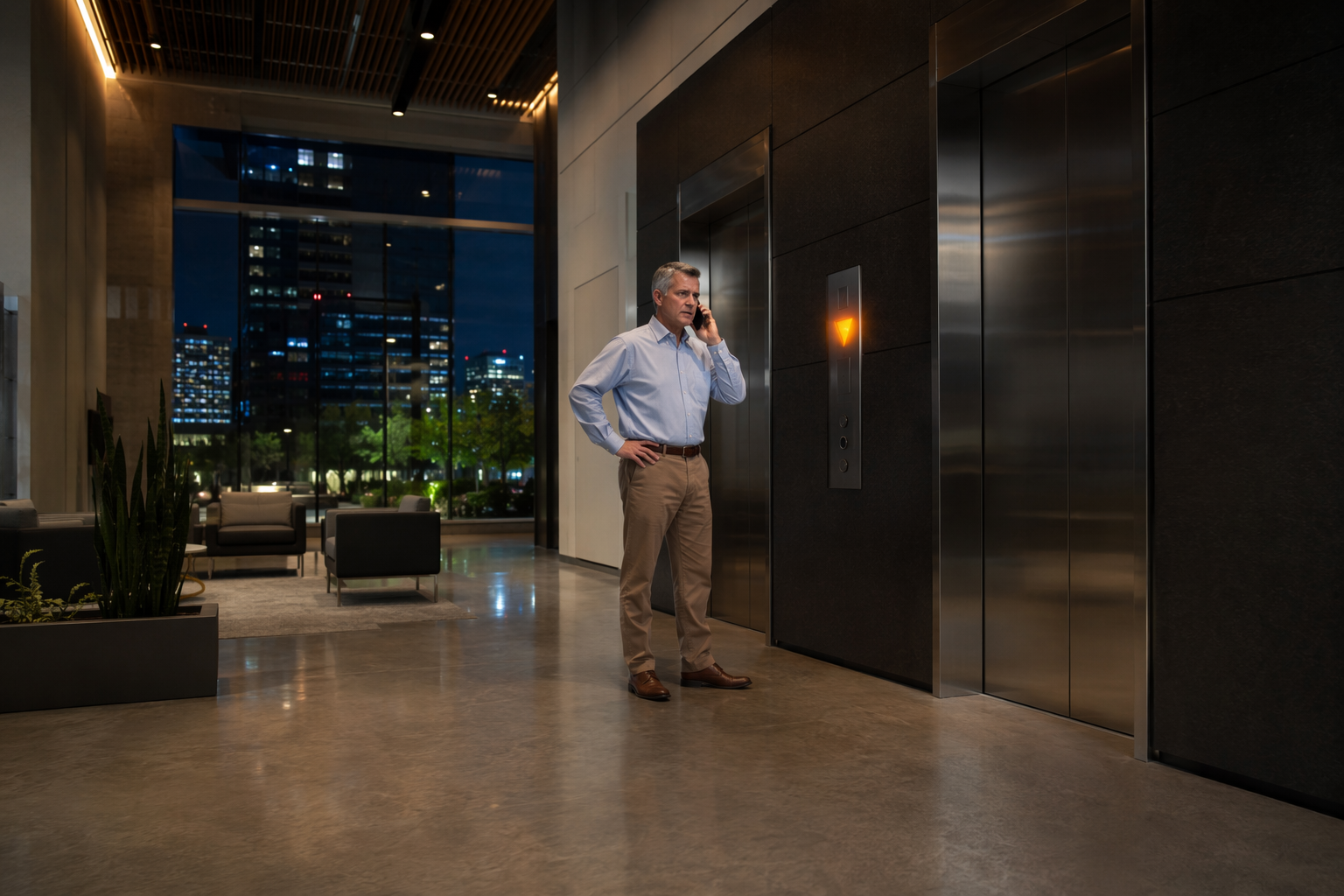
Contact your certified elevator service provider’s 24/7 emergency dispatch line the moment an elevator breaks down. If anyone is trapped inside the car, dial 911 immediately — do not attempt a self-rescue. In Arizona, building owners are legally obligated under Arizona Revised Statutes Title 23 and ASME A17.1 to maintain elevator equipment in safe operating condition and to respond to failures promptly. Knowing exactly who to call — and in what order — can mean the difference between a 90-minute resolution and an all-day shutdown that violates ADA accessibility requirements.
Who should I call first when an elevator breaks down?
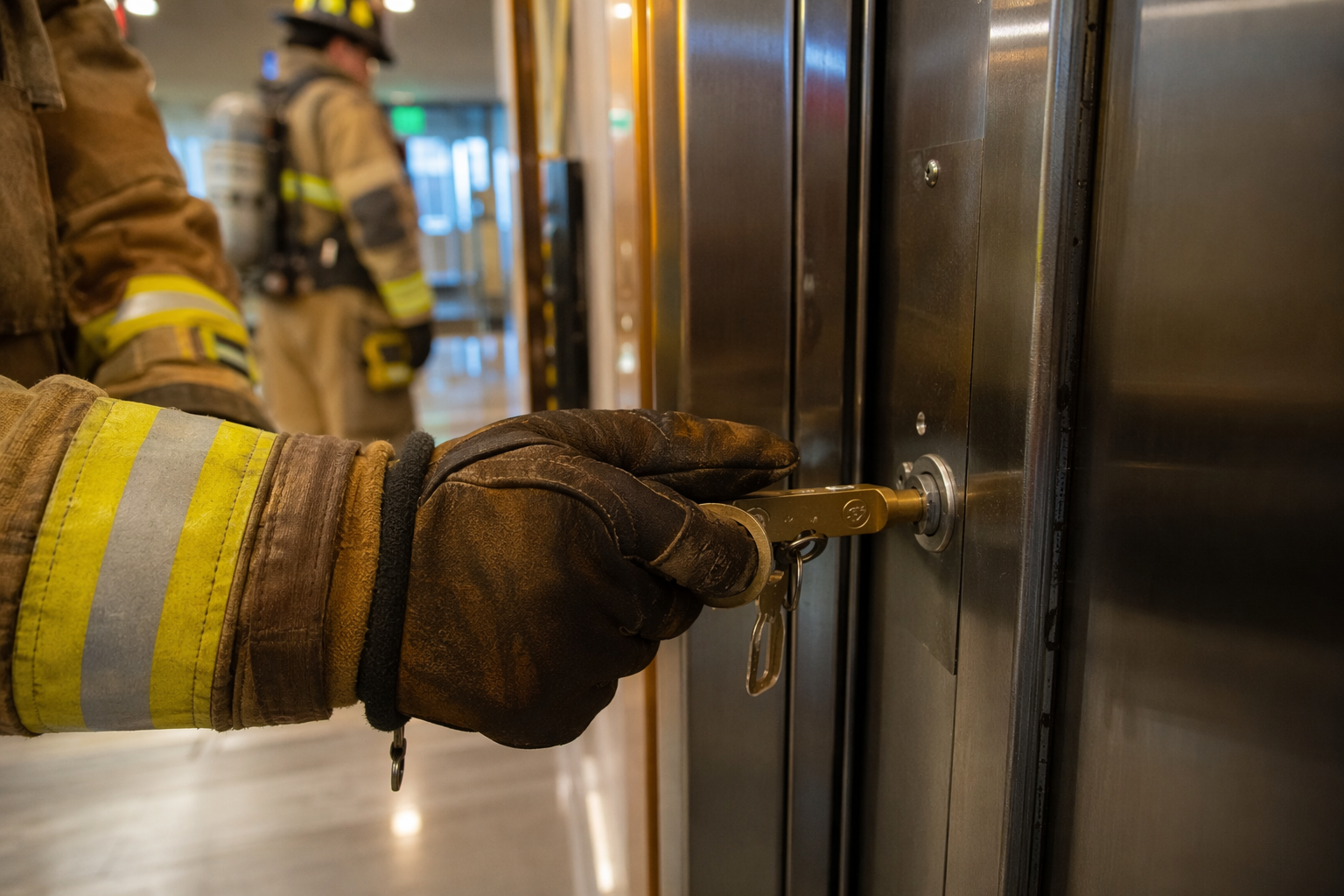
Call 911 if passengers are trapped, then immediately contact your certified elevator maintenance contractor’s 24/7 emergency line.
This two-call protocol is the industry standard recommended by the American Society of Mechanical Engineers (ASME) and enforced by Arizona’s Occupational Safety and Health Administration. Emergency responders — firefighters specifically — are trained to perform passenger extraction using elevator override keys. However, they cannot diagnose or repair the mechanical or electrical fault. That is why your elevator service contractor must be your second call, placed simultaneously or immediately after reaching 911.
Building managers in Phoenix and Scottsdale frequently make the mistake of calling their general property maintenance line first. This wastes critical time. Your elevator service contractor should already be listed as an emergency contact in your building’s safety plan, posted at the elevator machine room entrance as required by Arizona’s elevator safety regulations.
What is the correct step-by-step protocol when an elevator breaks down?
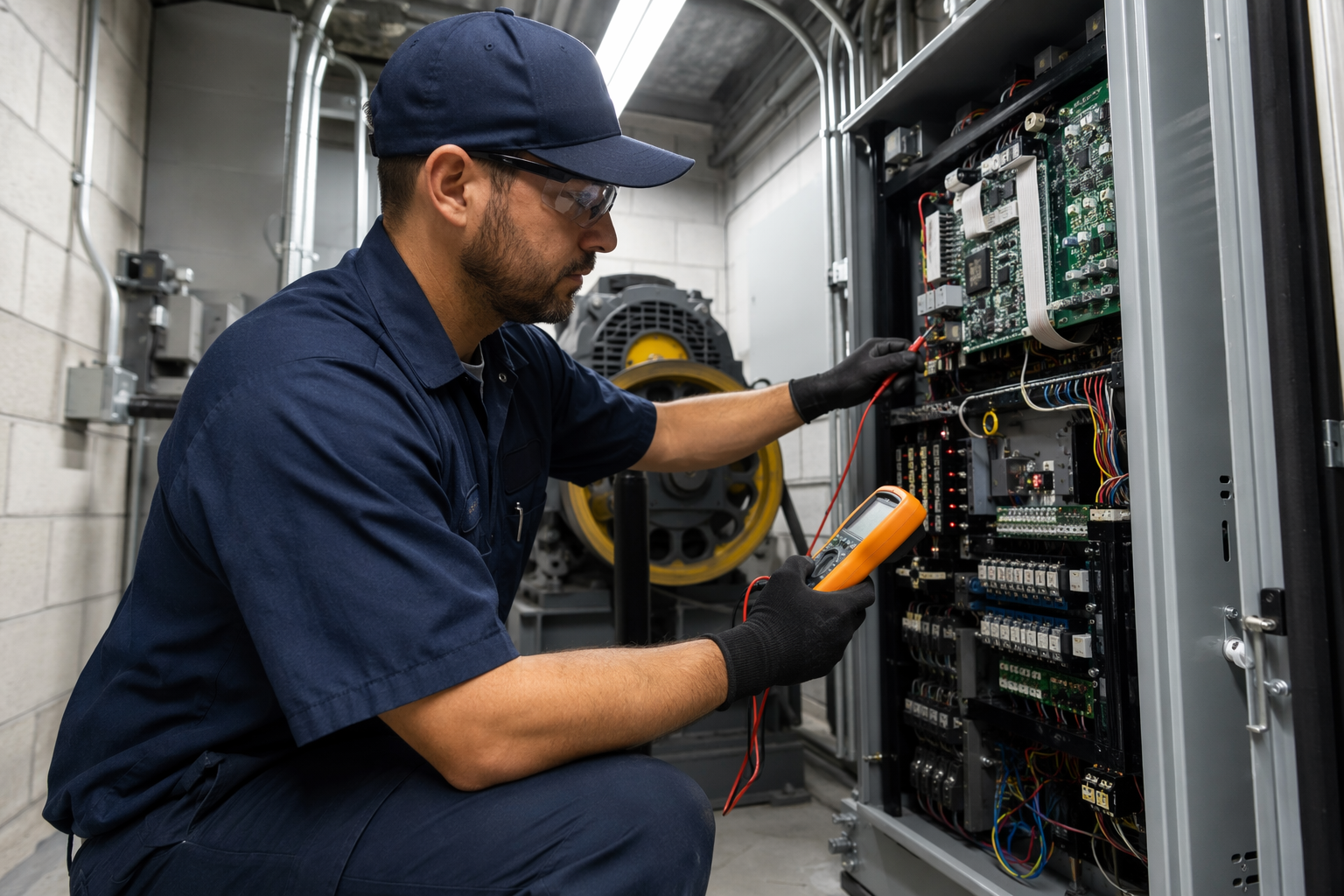
Follow this sequence to protect passengers, comply with Arizona regulations, and minimize equipment downtime.
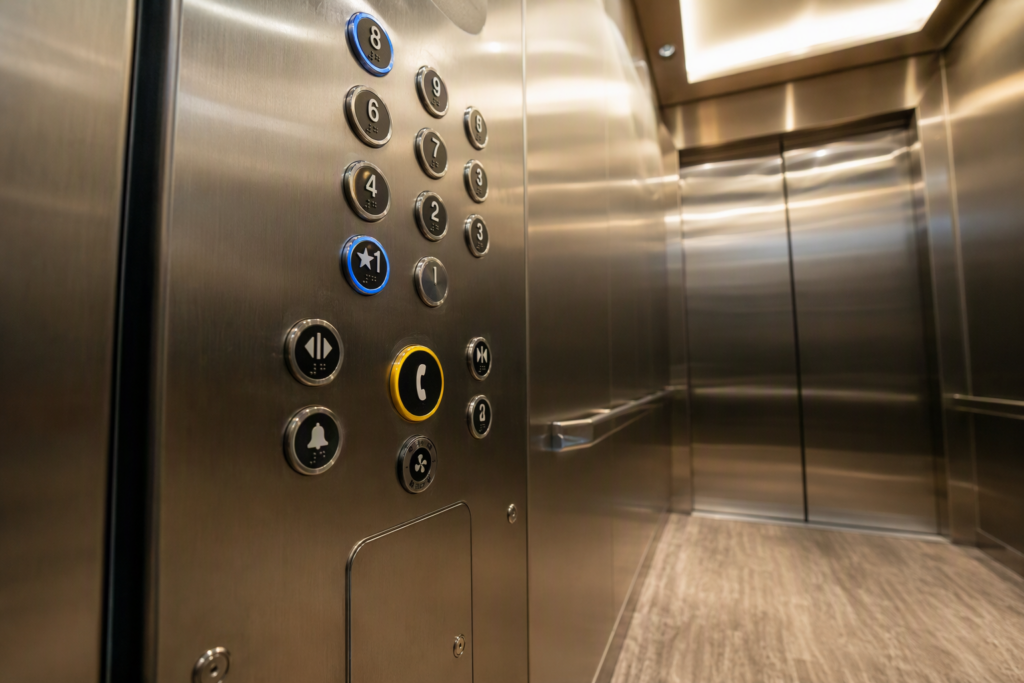
- Assess the situation immediately. Determine whether passengers are trapped inside the elevator car. Listen for intercommunication signals from inside the cab — ASME A17.1 Section 2.27.1 requires a two-way communication system in all elevator cabs manufactured after 1997.
- Call 911 if passengers are trapped. Provide the building address, floor location of the stalled car, and the number of passengers. Do not attempt to pry open doors or force the car to move.
- Call your elevator service contractor’s 24/7 emergency line. Provide the elevator ID number (found on the certificate of operation posted in the cab), approximate floor the car is stopped on, and a description of what occurred before the breakdown.
- Post signage at all elevator lobbies. Use “Out of Service” signage immediately to prevent additional passengers from attempting to board.
- Activate your ADA contingency plan. Under ADA Title III, buildings open to the public must provide accessible alternatives. Notify staff to assist individuals with disabilities to accessible routes or alternative floors.
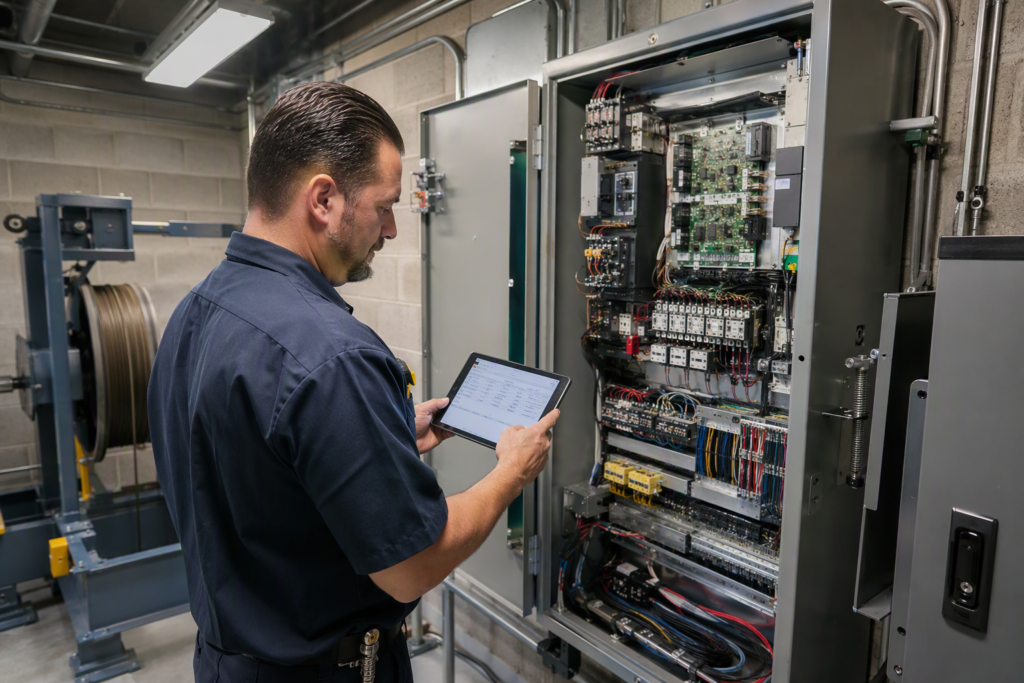
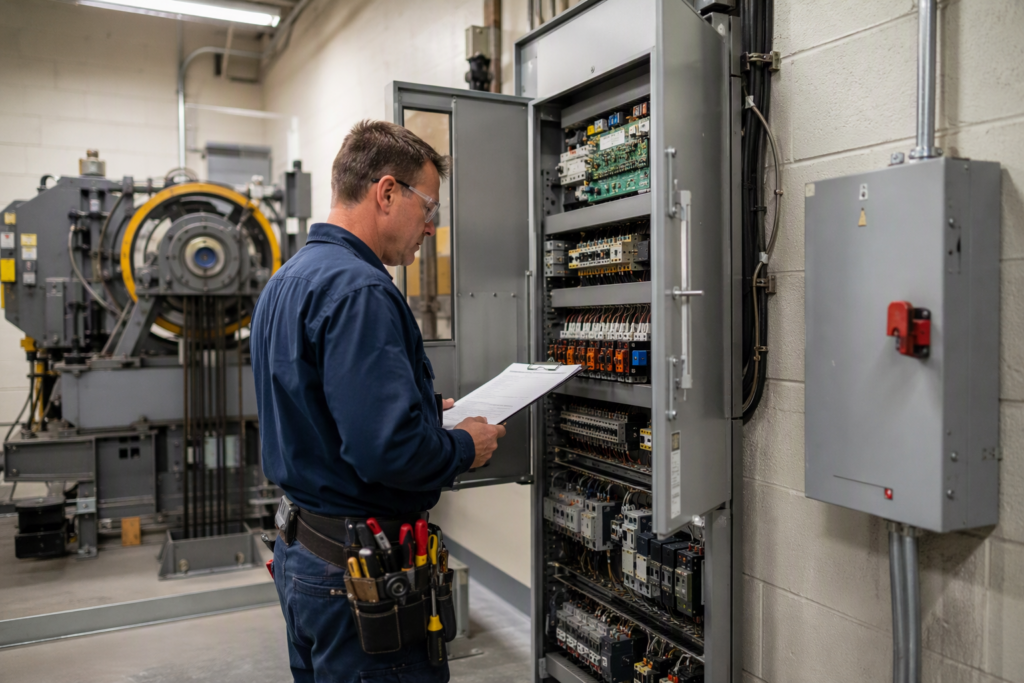
- Secure the machine room. Ensure the elevator machine room is accessible and unlocked so technicians can enter immediately upon arrival. Do not allow unauthorized personnel inside.
- Document the incident. Record the time of breakdown, who was notified, and any observable symptoms (unusual sounds, error codes on the controller, smoke, burning smell). This documentation supports your insurance claim and regulatory compliance record.
- Await the certified technician. Do not allow building maintenance staff, security personnel, or general contractors to attempt repairs. Unauthorized work on elevator equipment is a violation of ASME A17.1 and Arizona state law.
- Obtain a written service report. After repair, require the technician to provide a written description of the fault, the corrective action taken, and any follow-up maintenance recommended.
- Log the incident in your maintenance records. Arizona elevator inspection regulations require building owners to maintain maintenance records for a minimum of five years.
How quickly should an elevator emergency response technician arrive?
Industry best practice and most service contracts specify a response time of 60–120 minutes for emergency calls in metropolitan areas like Phoenix and Tucson.
Response time is one of the most important — and most overlooked — clauses in an elevator service contract. In my 15 years of field experience, I have seen contracts that promise “priority response” but bury a four-hour window in the fine print. That is unacceptable in a high-traffic commercial building or a healthcare facility in Mesa or Scottsdale where ADA compliance is critical.
Arizona Elevator Solutions maintains a guaranteed 60–90 minute emergency response window across all four service markets — Phoenix, Tucson, Scottsdale, and Mesa — with technicians staged geographically to meet that commitment. When evaluating any elevator service provider, ask specifically: “What is your contractually guaranteed emergency response time, and what remedy do I have if you miss it?”
What information should I have ready before calling an elevator emergency service?
Have your building address, elevator unit ID, certificate of operation number, and a description of the fault ready before dialing your elevator service provider.
Efficient emergency dispatch requires specific information. The more accurate data you provide upfront, the faster a technician can be staged with the correct tools and replacement parts. Here is what to gather:
- Full building address and suite or tower designation
- Elevator unit number or name (usually posted on the cab interior or machine room door)
- Approximate floor the car is stopped on
- Number of passengers trapped (if any)
- Certificate of Operation number (posted inside the cab per Arizona elevator code)
- Description of the malfunction: door won’t close, car won’t level, error code displayed, unusual noise, complete power loss
- Age and model of the elevator if known — useful for parts staging
- Name and direct callback number for the on-site contact
Is a building owner legally responsible for responding to elevator breakdowns in Arizona?
Yes — Arizona building owners bear direct legal responsibility for elevator safety, mandatory maintenance, and prompt response to breakdowns under state law and ASME A17.1.
Arizona’s elevator safety program, administered through the Industrial Commission of Arizona, requires that all elevators operating in the state comply with ASME A17.1/CSA B44 Safety Code for Elevators and Escalators. The 2019 edition, currently adopted in Arizona as of 2026, places direct obligations on the “owner” (defined as the entity controlling the building) to maintain equipment in safe condition.
Failure to respond promptly to a breakdown — particularly one that results in passenger entrapment — can expose building owners to significant liability including OSHA citations, personal injury claims, and ADA violation complaints filed with the U.S. Department of Justice. In 2026, ADA enforcement actions related to inaccessible elevators continue to increase, particularly in multi-story commercial buildings in Arizona’s urban markets.
What is the difference between an elevator breakdown and an elevator emergency?
A breakdown means the elevator is non-functional but no one is in danger; an emergency involves immediate risk to passengers, requiring 911 to be called first.
| Situation | Classification | First Call | Typical Response Target | ADA Contingency Required? |
|---|---|---|---|---|
| Elevator doors won’t open (no passengers inside) | Breakdown | Elevator service contractor | 60–120 minutes | Yes, if building is public-facing |
| Passengers trapped in stalled car | Emergency | 911, then elevator contractor | Fire dept. immediate; tech 60–90 min | Yes, immediately |
| Elevator making grinding or burning smell | Emergency | 911 (potential fire risk), then contractor | Fire dept. immediate; tech 60–90 min | Yes, immediately |
| Elevator stops between floors, no passengers | Breakdown | Elevator service contractor | 60–120 minutes | Yes, if building is public-facing |
| Complete power failure affecting elevator | Emergency (verify passengers) | 911 to confirm no entrapment; contractor | Fire dept. immediate; tech 60–90 min | Yes, immediately |
| Controller error code, elevator shut down automatically | Breakdown | Elevator service contractor | 60–120 minutes | Yes, if building is public-facing |
How much does emergency elevator repair service cost in Arizona?
Emergency elevator repair in Arizona typically costs between $350 and $1,200 for the service call, with parts and major repairs billed separately depending on the fault type.
Pricing varies significantly based on three factors: time of call (business hours vs. after-hours or holidays), the nature of the fault, and whether you have an active maintenance contract. Here is a general cost benchmark for 2026 in the Phoenix/Tucson metro market:
- Emergency service call (business hours, under contract): Often covered or reduced to $150–$250
- Emergency service call (after-hours, under contract): $250–$500 depending on contract terms
- Emergency service call (after-hours, no contract): $500–$1,200 plus parts
- Common parts replacement (door operator, relay board, safety edge): $300–$2,500 depending on elevator age and model
- Major hydraulic repair (cylinder, pump unit): $3,000–$15,000+
Buildings operating without an active maintenance contract consistently pay 40–60% more for emergency service than contracted clients. An annual full-service maintenance contract with Arizona Elevator Solutions not only reduces emergency repair costs but also significantly decreases the frequency of breakdowns through proactive preventive maintenance.
What happens if my elevator breaks down and I don’t have a maintenance contract?
Without a maintenance contract, you face higher emergency repair costs, longer response times, potential regulatory penalties, and increased liability exposure.
I have responded to hundreds of emergency calls over my career to buildings operating without any maintenance agreement. The pattern is consistent: deferred maintenance accumulates, minor faults compound into major failures, and when the breakdown happens — often during peak building traffic — the repair cost is exponentially higher than consistent preventive maintenance would have been.
Beyond cost, Arizona’s elevator inspection program can issue stop-use orders on elevators found to be operating without current inspection certifications or with documented maintenance deficiencies. A stop-use order means zero elevator service until compliance is restored — a serious operational disruption in any multi-story building, and a potential ADA violation if the elevator is the only accessible route between floors.
What are the most common causes of elevator breakdowns in Arizona?
The most common elevator breakdown causes in Arizona are door system failures, hydraulic fluid issues driven by extreme heat, electrical controller faults, and worn traction cable components.
Arizona’s climate creates specific failure patterns that technicians in other states rarely encounter at the same frequency. Phoenix and Mesa regularly record ambient temperatures exceeding 115°F, which accelerates hydraulic fluid degradation, stresses electrical components, and causes thermal expansion issues in door tracks. Here are the top breakdown causes I see in our service territory:
- Door operator failures: Account for approximately 40% of all elevator outages nationally and are higher in Arizona due to dust infiltration in door tracks and heat stress on motors.
- Hydraulic system issues: Fluid viscosity breakdown in extreme heat leads to leveling problems and slow operation preceding full failure. Critical for low-rise hydraulic elevators common in Arizona commercial buildings built before 2000.
- Controller and relay board faults: Electronic components are vulnerable to heat cycling. Buildings without adequate machine room cooling see significantly higher controller failure rates.
- Safety circuit trips: Dust accumulation on safety edges, pit sensors, and governor mechanisms triggers protective shutdowns — particularly after Arizona’s monsoon dust storms (haboobs).
- Worn suspension ropes or chains: Traction elevator cables and chains require periodic inspection per ASME A17.1 Section 8.6. Arizona’s dry heat accelerates surface oxidation.
How do I know if my elevator breakdown requires immediate evacuation versus waiting for repair?
Evacuate immediately if you detect smoke, burning odor, sparking, or if the car has stopped at an unsafe position relative to a floor landing.
The decision to evacuate passengers from a stalled elevator should always be made by trained emergency responders — not building staff and never by passengers themselves. Attempting self-rescue from a stalled elevator is one of the most dangerous actions a passenger can take. Falls into elevator shafts from improper self-rescue attempts are a documented cause of serious injury and death.
If the car has stopped level with a floor and doors can be safely opened from the inside using normal controls, passengers may exit normally. If the car is between floors, doors are jammed, or any unusual smell or sound is present, passengers should remain calm, use the two-way communication system (required by ASME A17.1), and wait for emergency responders. The two-way emergency communication system must connect to a monitored location 24 hours a day under current ASME A17.1 requirements.
What qualifications should my elevator emergency response technician have?
Your elevator technician should hold a valid IUEC (International Union of Elevator Constructors) certification or equivalent state-recognized credential and be licensed under Arizona’s elevator safety program.
Arizona requires elevator mechanics to be licensed through the Industrial Commission of Arizona’s Elevator Safety Section. When a technician arrives on-site, you have the right to ask to see their license. Key qualifications to verify include:
- Arizona Elevator Mechanic License (state-issued)
- IUEC certification or documented equivalent apprenticeship completion
- Current OSHA 10 or OSHA 30 construction safety certification
- Manufacturer-specific training for your elevator brand if applicable (Otis, KONE, Schindler, ThyssenKrupp, Mitsubishi)
- Active certificate of insurance from the service company — verify coverage for both general liability and workers’ compensation
All technicians deployed by Arizona Elevator Solutions are Arizona-licensed elevator mechanics and IUEC-certified, with manufacturer-specific training across all major elevator brands commonly installed in Phoenix, Scottsdale, Tucson, and Mesa commercial and residential properties.
How does elevator remote monitoring reduce emergency response time?
Remote elevator monitoring systems detect faults in real time, automatically alerting service technicians before a full breakdown occurs, typically reducing emergency call volume by 30–50%.
Modern elevator monitoring technology, now standard in many 2020s-era installations, uses connected controllers to transmit operational data — door cycle counts, leveling accuracy, motor current draw, error codes — to a monitoring platform accessible by the service provider 24/7. When the system detects an anomaly trending toward failure, a technician can be dispatched proactively during regular hours rather than reactively at 2 a.m. on a weekend.
For existing elevators without factory-installed monitoring, aftermarket retrofit monitoring systems are available starting at approximately $800–$2,500 installed, depending on elevator age and controller type. The return on investment is typically realized within 12–18 months through reduced emergency call costs and avoided downtime.
What should building managers do while waiting for the elevator technician to arrive?
Secure the elevator, post out-of-service notices, activate ADA alternative access procedures, and keep communication open with trapped passengers until the technician arrives.
The waiting period is not passive. Building managers have specific responsibilities that protect both passengers and the building owner’s legal position:
- Maintain continuous verbal communication with any trapped passengers through the two-way system or through the door — reassure them help is coming and provide an estimated technician arrival time.
- Keep the machine room unlocked and clear of clutter for immediate technician access.
- Do not allow anyone to attempt manual lowering or movement of the car without a licensed technician present.
- Document the timeline of events, actions taken, and all communications.
- Notify building ownership and property management of the incident immediately.
- If the building serves the public, post staff at elevator lobby locations to direct individuals with disabilities to accessible alternatives per your ADA transition plan.
How often should elevators be inspected to prevent breakdowns?
Arizona law requires a minimum of one annual inspection by a state-certified inspector, but industry best practice — and ASME A17.1 guidelines — recommend monthly maintenance visits for high-use elevators.
The annual state inspection is a compliance floor, not a maintenance ceiling. An elevator operating in a busy Phoenix high-rise or a Tucson medical facility that receives only one inspection per year will inevitably experience more frequent and more severe breakdowns than one on a monthly preventive maintenance schedule.
ASME A17.1 Section 8.6 outlines inspection and testing intervals. The code distinguishes between periodic tests (annually or every five years depending on test type) and ongoing maintenance, which is explicitly the owner’s responsibility and is not defined by a single frequency. High-use elevators — those making 200 or more starts per day — should receive monthly maintenance visits covering lubrication, door adjustment, safety device testing, and controller diagnostics.
Does ADA require a building to have a working elevator at all times?
The ADA does not explicitly mandate 100% elevator uptime, but it does require that accessible routes remain available; a broken elevator that eliminates the only accessible route to upper floors constitutes an ADA violation.
Under ADA Title III regulations for places of public accommodation, and Title II for government facilities, entities must maintain their accessible features in operable working condition. The ADA recognizes that isolated or temporary disruptions for maintenance or repairs are acceptable — but only if the disruption is genuinely temporary and prompt repair is undertaken.
An elevator that sits out of service for days or weeks without active repair efforts is not protected by the temporary disruption exception. In 2026, DOJ enforcement guidance has increasingly emphasized that “prompt repair” means hours, not days. For multi-story buildings in Phoenix, Scottsdale, Mesa, and Tucson where the elevator is the only accessible means of vertical travel, an extended outage without accessible alternatives can trigger a formal ADA complaint.
Can I use a general contractor or handyman to repair my elevator during a breakdown?
No — elevator repair in Arizona must be performed exclusively by a state-licensed elevator mechanic; use of unlicensed personnel is illegal and voids your insurance coverage.
This is one of the most dangerous mistakes I see property managers consider, usually driven by cost pressure or impatience during a breakdown. Elevator systems operate under significant tension, pressure (hydraulic systems), and electrical loads that are hazardous to anyone not specifically trained in elevator work. Beyond the safety risk, Arizona’s elevator safety statutes specify that only licensed elevator mechanics may perform maintenance, repair, or adjustment on elevator equipment. A general contractor who touches an elevator control panel has committed a regulatory violation, and any subsequent injury or damage will not be covered by your building’s general liability insurance.
How do I choose the right elevator emergency service provider in Phoenix, Tucson, Scottsdale, or Mesa?
Choose a provider with a guaranteed emergency response time under two hours, Arizona-licensed mechanics, 24/7 dispatch availability, and verifiable experience with your elevator brand and type.
When evaluating elevator service companies in Arizona’s major markets, ask these specific qualifying questions:
- What is your contractually guaranteed emergency response time, and what is the remedy if you miss it?
- Do your technicians hold current Arizona elevator mechanic licenses?
- Are you IUEC-affiliated or do you employ certified mechanics with equivalent credentials?
- Do you carry $2 million or more in general liability insurance and workers’ compensation?
- Do you have experience with my specific elevator brand and model?
- Do you offer 24/7 live dispatch (not voicemail) for emergency calls?
- What is your local parts inventory, and how do you handle extended lead times on obsolete parts?
- Can you provide references from similar buildings in my market?
Arizona Elevator Solutions was built specifically to serve building owners in Phoenix, Tucson, Scottsdale, and Mesa with a response infrastructure designed for Arizona’s urban geography and climate — including geographically staged technician deployment and a local parts inventory covering the most common elevator brands in our service area.
What records should I keep after an elevator breakdown?
Retain the technician’s written service report, the incident timeline, all communications with the service provider, and any inspection certificates — Arizona requires maintenance records to be kept for a minimum of five years.
Proper documentation after a breakdown serves three purposes: regulatory compliance, insurance claims support, and pattern identification for preventive maintenance. Specifically, your post-incident file should contain:
- Date, time, and duration of the outage
- Name and license number of the responding technician
- Written service report describing the fault, root cause, and corrective action
- Parts replaced (with model and serial numbers where applicable)
- Any recommendations for follow-up maintenance or component replacement
- Photographs of visible damage or fault conditions (if taken by the technician)
- Records of all passenger communications during the incident
- Updated certificate of operation if one was issued post-repair
What is the difference between full-service and oil-and-grease elevator maintenance contracts?
A full-service contract covers all parts and labor for breakdowns and repairs, while an oil-and-grease contract covers only routine lubrication and adjustments — leaving repair costs entirely to the building owner.
| Contract Type | What’s Covered | Emergency Repair Cost | Typical Annual Cost (AZ, 2026) | Best For |
|---|---|---|---|---|
| Full-Service (Comprehensive) | All parts, labor, adjustments, emergency calls | Included | $4,800–$14,400/year per elevator | High-use commercial, healthcare, multi-family |
| Parts & Labor | Labor included; parts billed separately | Labor included, parts extra | $3,600–$9,600/year per elevator | Mid-use commercial buildings |
| Oil & Grease (Basic) | Lubrication and minor adjustments only | Full cost to owner | $1,200–$3,600/year per elevator | Low-use residential or budget situations |
| No Contract (On-Call) | Nothing proactive; reactive only | Full cost plus premium rates | $0 contracted; variable actual cost | Not recommended for any building |
How does Arizona’s extreme heat affect elevator emergency response and repair timelines?
Phoenix and Mesa summer temperatures above 110°F accelerate component wear, increase breakdown frequency, and can require machine room cooling restoration before full elevator repairs can be safely completed.
Arizona’s climate is not simply a background condition — it is a primary engineering factor in elevator maintenance. Machine rooms that exceed 90°F ambient temperature put electronic controllers at risk of thermal shutdown and permanent damage. ASME A17.1 specifies that machine rooms must be maintained within acceptable temperature ranges for the equipment installed. In Phoenix summers, buildings without adequate machine room HVAC or ventilation regularly experience temperature-related shutdowns that compound underlying mechanical faults.
In 2026, Arizona Elevator Solutions has integrated machine room temperature assessments into all preventive maintenance visits across our Phoenix, Scottsdale, Mesa, and Tucson service territories — because addressing thermal management proactively is far less expensive than replacing a heat-damaged controller board at emergency rates in August.
Need elevator service you can rely on? Arizona Elevator Solutions is ready to help.