How Much Does Elevator Maintenance Cost? Complete 2026 Pricing Guide

After 15+ years servicing elevators across Phoenix, Tucson, Scottsdale, and Mesa, I’ve answered this question more times than I can count. The honest answer is: it depends — but there are clear cost drivers, contract structures, and Arizona-specific regulations that every building owner needs to understand before signing a maintenance agreement. This guide covers everything, including what the numbers actually mean for your bottom line.
What Is the Average Annual Cost of Elevator Maintenance in Arizona?
The average annual elevator maintenance cost in Arizona ranges from $3,000 to $7,500, depending on elevator type, contract scope, and the age of the equipment.
For most commercial properties in Phoenix and Scottsdale, a full-service maintenance contract on a standard hydraulic or traction elevator will fall between $250 and $625 per month. Residential elevators and limited-use/limited-application (LULA) lifts typically cost less — closer to $1,800 to $3,600 per year. High-traffic elevators in commercial towers, hospitals, or hotels can exceed $10,000 annually due to increased inspection frequency and parts wear.
These figures reflect 2026 market rates in the Greater Phoenix metro and Tucson areas, where labor costs and the extreme Arizona heat environment add measurable pressure to elevator components, particularly hydraulic fluid systems and cooling mechanisms.
What Factors Determine How Much Elevator Maintenance Costs?
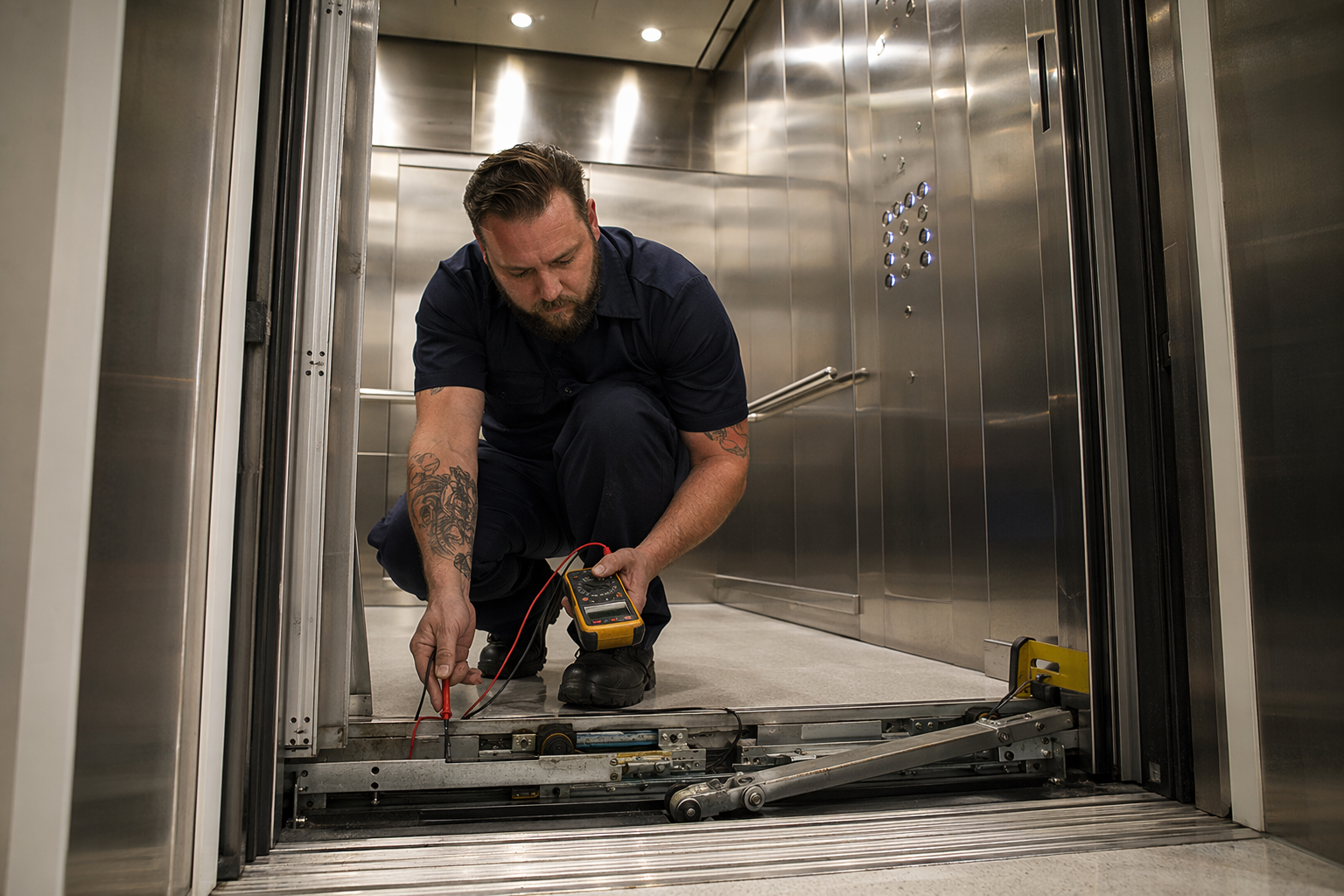
Elevator maintenance pricing is driven by six primary variables: elevator type, age, traffic volume, contract structure, geographic location, and equipment brand compatibility.
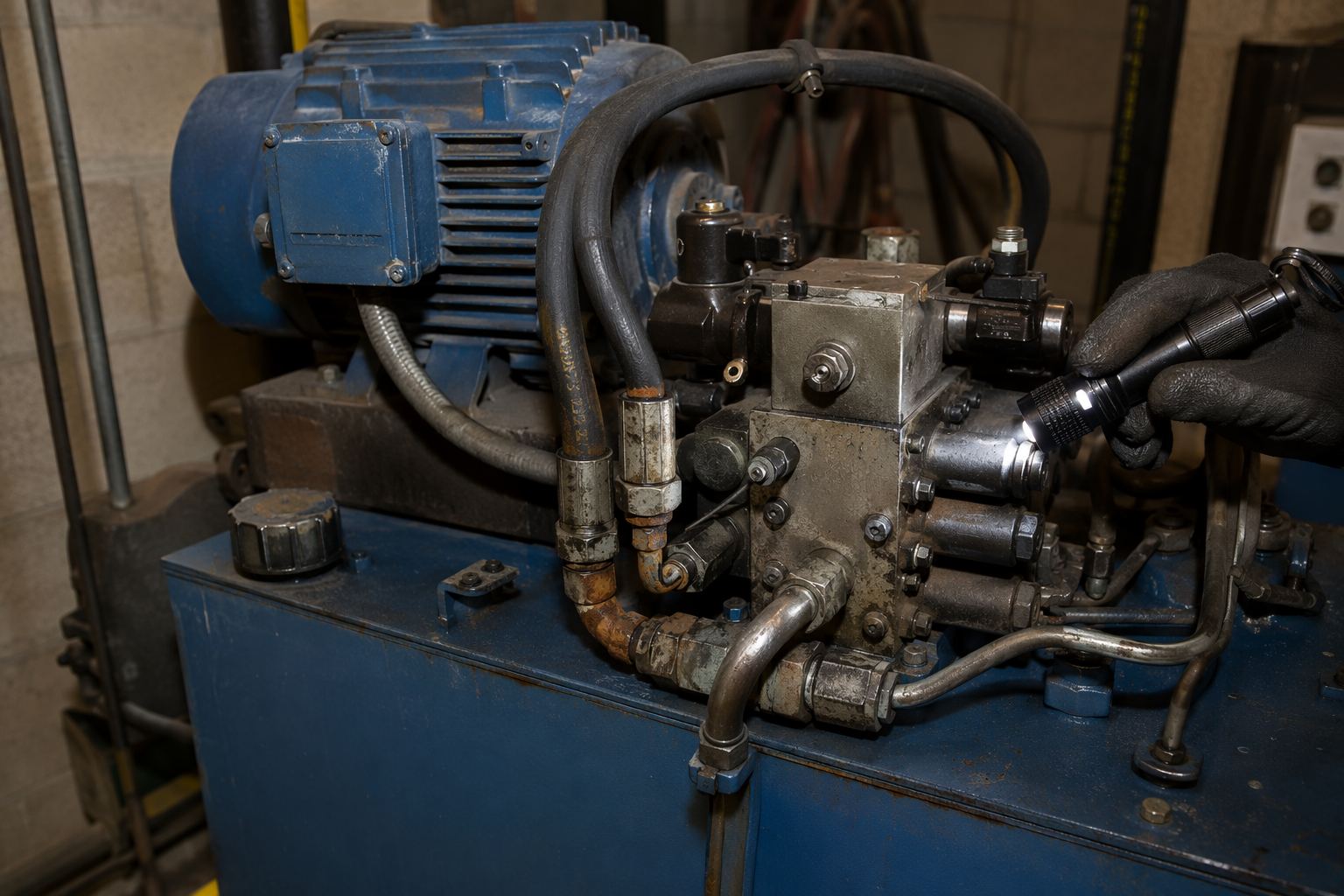
Elevator Type: Hydraulic elevators are generally less expensive to maintain than traction (cable) elevators, but they require hydraulic fluid monitoring and valve maintenance — especially critical in Arizona’s 110°F+ summer heat, which degrades fluid faster than in cooler climates.
Age of Equipment: Elevators older than 20 years require more frequent parts replacement. If your elevator was manufactured before 2000, expect to pay a 20–40% premium on annual maintenance costs due to parts scarcity and obsolescence.
Traffic Volume: A residential elevator running 10 trips per day has vastly different wear cycles than a hospital elevator completing 200+ trips daily. High-cycle elevators require quarterly or monthly inspections rather than semi-annual visits.
Contract Type: Full-service contracts include parts and labor. Oil-and-grease (OG) contracts cover only lubrication and adjustment — and can cost significantly less upfront but expose you to unpredictable repair bills. I always recommend full-service for commercial properties.
What Are the Different Types of Elevator Maintenance Contracts and What Do They Cost?
There are three primary contract structures: Oil-and-Grease (OG), Intermediate, and Full-Service — each with a different cost and risk profile.
| Contract Type | What’s Included | Avg. Monthly Cost (AZ) | Best For | Risk Level |
|---|---|---|---|---|
| Oil & Grease (OG) | Lubrication, minor adjustments only | $80 – $175 | Newer equipment, low traffic | High (unexpected repair costs) |
| Intermediate | OG + selected parts coverage | $175 – $350 | Mid-age equipment, moderate traffic | Medium |
| Full-Service | All labor, parts, adjustments, callbacks | $300 – $625+ | Commercial, hospital, high-traffic | Low (predictable cost) |
| Modernization + Maintenance Bundle | Full-service + upgrade financing | $500 – $900+ | Aging equipment, building upgrades | Low |
At Arizona Elevator Solutions, we offer all three contract tiers across Phoenix, Mesa, Scottsdale, and Tucson, with transparent pricing and no hidden callback fees — which is unfortunately not an industry standard.
How Often Does an Elevator Need to Be Inspected in Arizona?
Under Arizona state law and ASME A17.1/CSA B44 Safety Code for Elevators and Escalators, commercial elevators in Arizona are required to undergo a full inspection at least once per year, with a Certificate of Inspection issued by a licensed inspector.
The Arizona Department of Occupational Safety and Health (ADOSH) oversees elevator inspections under Arizona’s elevator safety regulations. Buildings failing to maintain current inspection certificates can face fines, forced shutdowns, and liability exposure. In 2026, ADOSH enforcement of inspection lapses has increased significantly, particularly in Maricopa County commercial properties.
High-traffic elevators — defined as those completing more than 150 trips per day — should be inspected semi-annually as a best practice even if not legally mandated. Hospitals, hotels, and large residential complexes in Scottsdale and Phoenix typically fall into this category.
What Does a Routine Elevator Maintenance Visit Actually Include?
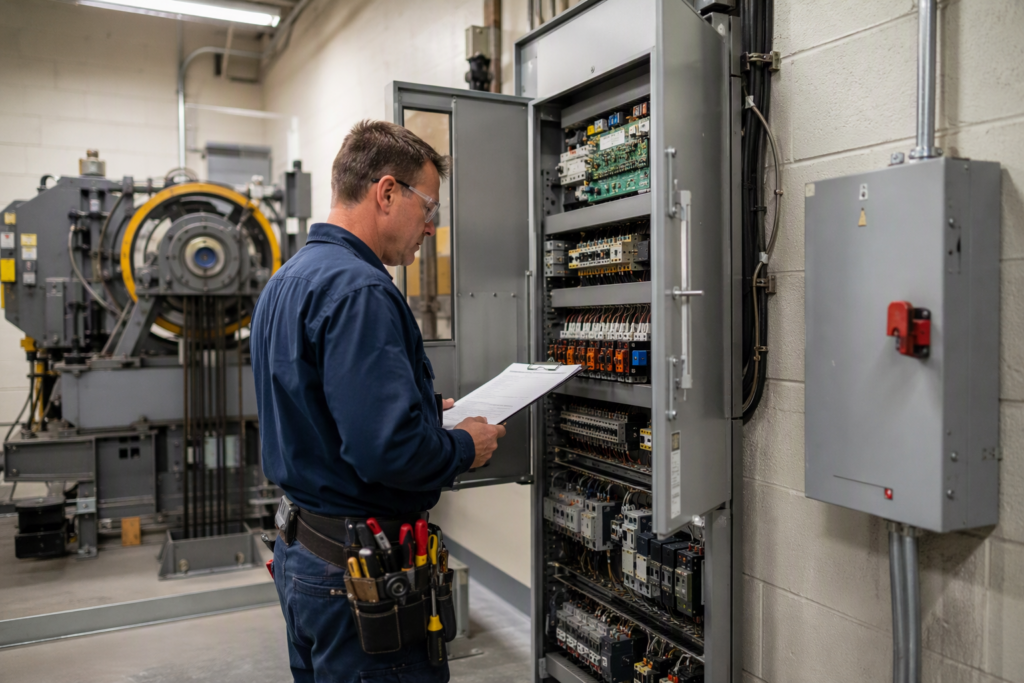
A comprehensive routine maintenance visit covers safety systems, mechanical components, electrical systems, and documentation — not just a quick visual check.
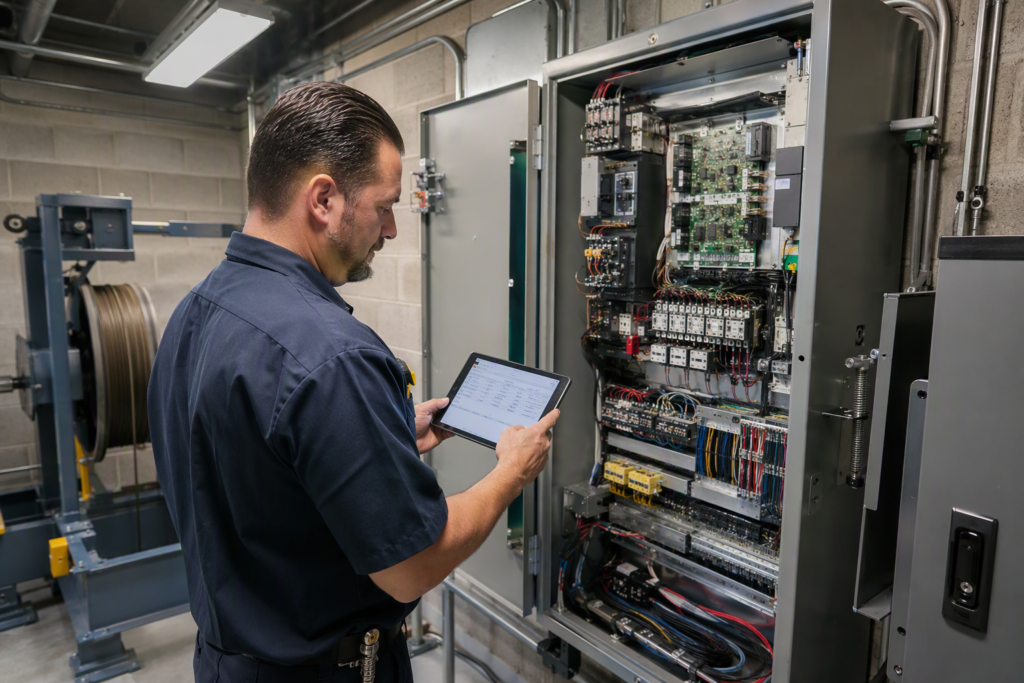
During a standard visit, a qualified technician should perform the following: lubrication of all moving components, inspection and adjustment of door operators and safety edges, testing of all safety devices including governors, buffers, and safeties (per ASME A17.1 Part 8), verification of lighting and emergency communication systems, hydraulic fluid level and condition checks (critical in Arizona heat), and a full documented service report.
A maintenance visit that takes less than 90 minutes on a commercial elevator should raise concerns. I’ve seen “quick service” providers spend 20 minutes on-site and call it done — that is not code-compliant maintenance and it creates real safety risk.
How Much Do Elevator Repairs Cost When Maintenance Is Neglected?
Deferred elevator maintenance consistently results in repair costs that are 3 to 10 times higher than what regular maintenance would have prevented.
Common repair costs when maintenance is skipped include: hydraulic pump replacements at $2,500–$6,000, door operator replacements at $1,500–$4,500, controller upgrades at $8,000–$25,000, and rope/sheave replacements on traction elevators at $5,000–$15,000. Emergency after-hours service calls alone average $300–$600 per trip in the Phoenix market, not including parts.
Beyond repair costs, an elevator that fails inspection due to neglected maintenance can be ordered out of service immediately by ADOSH, leaving building owners liable for accessibility violations under ADA Title III, particularly in commercial buildings open to the public.
What Is the Cost of Elevator Maintenance for a Residential Home Elevator?
Residential home elevator maintenance in Arizona typically costs $600 to $2,400 per year, depending on elevator type, usage, and contract scope.
Most residential elevators are hydraulic or winding drum models requiring annual inspections and semi-annual lubrication. In Arizona, private residential elevators are subject to ASME A17.1 requirements if they serve more than two stories, and many HOA-governed communities in Scottsdale and Mesa require proof of current maintenance contracts. A basic annual service visit for a residential elevator typically runs $150–$400 per visit, with full-service contracts at $50–$200 per month.
How Much Does Elevator Maintenance Cost for a Commercial Building?
Commercial elevator maintenance in Arizona costs $3,500 to $10,000+ per elevator per year depending on traffic volume, elevator type, and contract structure.
Office buildings with a single mid-rise elevator in Phoenix or Mesa typically pay $350–$500 per month on a full-service contract. Multi-elevator installations get pricing advantages — a building with four elevators might pay $1,200–$1,800 per month for a bundled full-service contract rather than $1,400–$2,000 at individual rates. Medical facilities, given their heightened ASME A17.1 compliance requirements and 24/7 operation demands, typically budget at the higher end of the range.
Does Arizona’s Climate Affect Elevator Maintenance Costs?
Yes — Arizona’s extreme heat significantly impacts elevator maintenance frequency and cost, particularly for hydraulic systems and electrical components.
Phoenix and Tucson regularly see temperatures exceeding 115°F in summer months. Hydraulic elevator fluid degrades faster in extreme heat, increasing the risk of seal failures, pump cavitation, and valve malfunctions. In our experience servicing elevators across Arizona for over a decade, we see roughly 15–25% more hydraulic-related service calls during June–September compared to winter months. Arizona buildings should budget for at least one additional hydraulic fluid inspection during summer and ensure machine rooms are climate-controlled — a requirement under ASME A17.1 Section 2.7 that is frequently overlooked.
Dust infiltration from Arizona’s monsoon season also accelerates wear on door mechanisms and electrical contacts, adding to maintenance frequency and cost compared to elevators in more temperate climates.
What Are the ADA Compliance Costs Related to Elevator Maintenance?
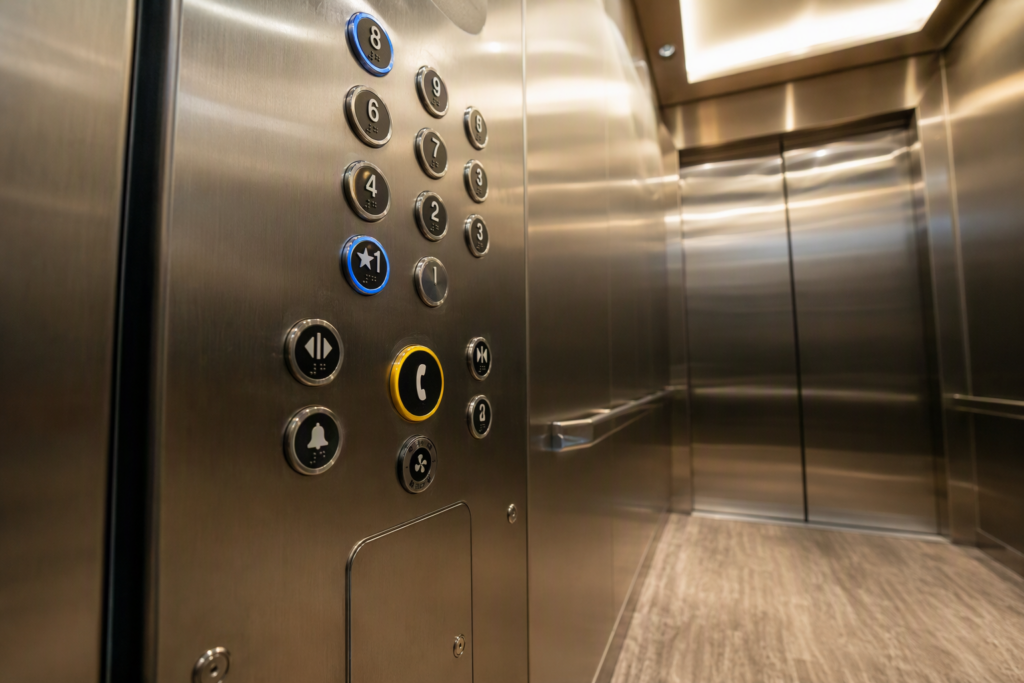
ADA elevator compliance is not a one-time cost — it requires ongoing maintenance to keep features like Braille signage, audible signals, and door timing within operational standards defined under ADA Standards for Accessible Design, Section 407.
Specific ADA elevator requirements include: door reopening devices that must function properly at all times (Section 407.3.3), call button illumination and tactile signage maintenance, and floor designation signals meeting audio and visual standards. Failures in these systems — even minor ones like a burned-out floor indicator — can constitute ADA violations in public accommodations under Title III. Corrective repairs for ADA deficiencies typically run $200–$2,000 per item depending on scope. Keeping these systems current is a standard component of every full-service contract offered by Arizona Elevator Solutions.
How Do I Compare Elevator Maintenance Vendors to Get the Best Price?
Comparing elevator maintenance vendors requires looking beyond the monthly rate to evaluate contract scope, response time guarantees, parts markup policies, and technician certification levels.
When evaluating vendors in Phoenix, Tucson, Scottsdale, or Mesa, ask these specific questions: Is the technician IUEC (International Union of Elevator Constructors) certified? What is the guaranteed emergency response time — is it 2 hours or 8 hours? Does the contract include a parts markup cap or are you charged retail plus labor for everything outside the base scope? Who owns the proprietary diagnostic software for your elevator brand — and will an independent contractor be locked out of it?
Many national elevator companies use proprietary controllers that effectively lock buildings into their maintenance contracts. At Arizona Elevator Solutions, we service all major brands without proprietary lock-in restrictions, giving building owners genuine price competition.
What Is Typically Excluded From an Elevator Maintenance Contract?
Most elevator maintenance contracts explicitly exclude major component replacements, vandalism repairs, modernization work, and repairs necessitated by misuse or third-party modifications.
Common exclusions in standard contracts include: complete controller replacement, motor and pump replacements, rail and structural work, cab interior refurbishment, and damage caused by water intrusion or electrical surges. In Arizona, power surge damage from monsoon lightning strikes is a notable real-world exclusion that catches many building owners off guard. Always verify whether your contract includes surge-related electrical repairs or whether you need to rely on building insurance for those events. Full-service contract holders should request an explicit exclusion list in writing before signing.
How Much Does It Cost to Bring an Elevator Up to Current Code?
Bringing a non-compliant elevator up to current ASME A17.1 and Arizona state code can cost anywhere from $5,000 to $75,000+, depending on the age of the equipment and the scope of required upgrades.
In 2026, Arizona ADOSH continues to enforce modernization requirements for elevators that fail to meet current safety standards, including Phase I and Phase II firefighter service, door reopening devices, and emergency lighting. Common code compliance upgrades and estimated costs include: firefighter service upgrades at $2,000–$6,000, door safety edge upgrades at $500–$2,500, emergency lighting and communication systems at $800–$3,000, and full controller modernization at $15,000–$60,000. Proactive maintenance prevents many of these costs from arriving as emergency obligations.
Is It Cheaper to Self-Perform Elevator Maintenance or Hire a Contractor?
Self-performing elevator maintenance is not legally permissible in Arizona — all elevator maintenance, inspection, and repair work must be performed by licensed, qualified elevator mechanics under state law.
Arizona Revised Statutes and ADOSH regulations require that elevator maintenance be performed by individuals who hold the appropriate certifications under ASME A17.1 standards. Attempting self-maintenance — even basic lubrication — voids most equipment warranties, invalidates insurance coverage, and exposes building owners to direct liability for any resulting injuries. The only legitimate cost-saving strategy is negotiating better contract terms with qualified providers, bundling multiple elevators, or extending contract terms in exchange for rate locks.
How Often Should Hydraulic Elevator Fluid Be Changed and What Does It Cost?
Hydraulic elevator fluid should be tested annually and typically replaced every 3 to 5 years, with Arizona’s extreme heat often requiring testing more frequently.
A complete hydraulic fluid change on a commercial elevator — including fluid disposal, which must comply with EPA regulations — costs approximately $400–$1,200 depending on tank capacity and fluid type. Environmentally safe biodegradable hydraulic fluids, now recommended under current environmental guidelines and required in some Arizona municipalities, cost roughly 20–35% more than petroleum-based alternatives but significantly reduce environmental liability in the event of a leak. Fluid condition testing alone typically costs $75–$150 per test and can catch degradation before it becomes a pump or seal failure.
What Happens If an Elevator Fails Its Annual Inspection in Arizona?
If an elevator fails its annual inspection in Arizona, ADOSH can order it immediately out of service until deficiencies are corrected and a re-inspection is passed.
Failed inspection consequences include: mandatory posting of an “out of service” notice, loss of Certificate of Operation, potential fines for continued operation, and — in commercial settings — potential ADA liability for removal of the only accessible vertical transportation in a building. Re-inspection fees typically run $150–$400 per visit in Arizona, in addition to the cost of required repairs. Buildings with current, comprehensive maintenance contracts rarely fail inspections because a qualified technician identifies and corrects deficiencies before the official inspection date.
Can I Negotiate Elevator Maintenance Contract Pricing?
Yes — elevator maintenance pricing is almost always negotiable, and building owners with multiple elevators, multi-year commitments, or bundled service needs have significant leverage.
Effective negotiation strategies include: committing to a 3–5 year term in exchange for a rate lock (protecting against annual price increases), bundling multiple elevators in the same building or portfolio under one contract, requesting a defined parts markup cap (e.g., no more than 15% above wholesale), and specifying guaranteed response times with financial penalties for vendor failure to meet them. In the Phoenix and Scottsdale commercial market, competitive bidding among two or three qualified vendors typically reduces pricing by 10–20% compared to accepting the first quote.
How Much Should I Budget for Elevator Maintenance Annually as a Building Owner?
As a rule of thumb, budget 1–2% of elevator replacement value per year for maintenance, plus a capital reserve for major component replacements.
A standard commercial elevator with a replacement value of $80,000–$120,000 should have an annual maintenance budget of $800–$2,400 for routine maintenance plus a reserve of $2,000–$5,000 per year for unplanned repairs and eventual component replacement. Building managers in Mesa and Tucson who follow this budgeting framework consistently avoid the emergency cost spikes that come with deferred maintenance. A formal ASME-compliant maintenance log — which your service provider should maintain — is also essential for documenting expenditures, supporting insurance claims, and demonstrating due diligence in the event of a liability claim.
What Questions Should I Ask Before Signing an Elevator Maintenance Contract?
Before signing any elevator maintenance contract, ask at minimum these seven critical questions to protect your building, budget, and liability exposure.
- What is your technician’s certification level and union affiliation (IUEC)?
- What is your guaranteed emergency response time, and what are the penalties if you miss it?
- Does this contract include all ASME A17.1 required safety tests, or only routine lubrication?
- What is explicitly excluded from parts coverage, and how are parts priced outside the contract scope?
- Do you maintain proprietary control over my elevator’s diagnostic system?
- Will you provide a complete maintenance log after each service visit for ADOSH compliance purposes?
- What is your protocol for identifying and escalating code deficiencies before my annual state inspection?
Any reputable provider — including Arizona Elevator Solutions — should answer all seven questions clearly and in writing before you sign anything.
How Do I Know If My Elevator Maintenance Provider Is Doing a Good Job?
A high-quality elevator maintenance provider demonstrates value through documented service reports, proactive deficiency identification, consistent technician assignments, and clean inspection records year over year.
Warning signs of inadequate maintenance include: service visits that consistently take less than 60 minutes on a commercial elevator, missing or vague service documentation, repeated callbacks for the same recurring issue, surprise failures at annual inspections, and frequent technician turnover meaning a new face every visit. Conversely, excellent providers deliver detailed written service reports after every visit, assign a primary technician who knows your specific equipment, proactively flag aging components before they fail, and maintain a track record of first-time inspection passes. Over 15 years of field work, I can state unequivocally: the quality of documentation is one of the clearest indicators of overall service quality.
Summary: 2026 Elevator Maintenance Cost Quick Reference
| Elevator Type / Scenario | Annual Cost Range (AZ, 2026) | Monthly Equivalent |
|---|---|---|
| Residential Home Elevator | $600 – $2,400 | $50 – $200 |
| Commercial Hydraulic (Low Traffic) | $3,000 – $5,000 | $250 – $420 |
| Commercial Traction (Moderate Traffic) | $4,500 – $7,500 | $375 – $625 |
| Hospital / High-Rise (High Traffic) | $8,000 – $15,000+ | $667 – $1,250+ |
| Emergency Repair Call (After Hours) | $300 – $600 per call | N/A |
| Annual State Inspection (ADOSH) | $150 – $400 per inspection | N/A |
| Code Compliance Modernization | $5,000 – $75,000+ | N/A |
Need elevator service you can rely on? Arizona Elevator Solutions is ready to help.