Elevator Service in Phoenix, AZ | Arizona Elevator Solutions
In apartment buildings throughout the Phoenix metro area, elevator reliability directly affects resident safety, accessibility, and daily quality of life. When something goes wrong, questions about responsibility and repair timelines can create friction between tenants, landlords, and service providers. Arizona Elevator Solutions provides certified elevator service across Phoenix, AZ and the surrounding region, helping property managers navigate both mechanical repairs and regulatory compliance with confidence.
What Are the Most Common Elevator Problems in Apartment Buildings?
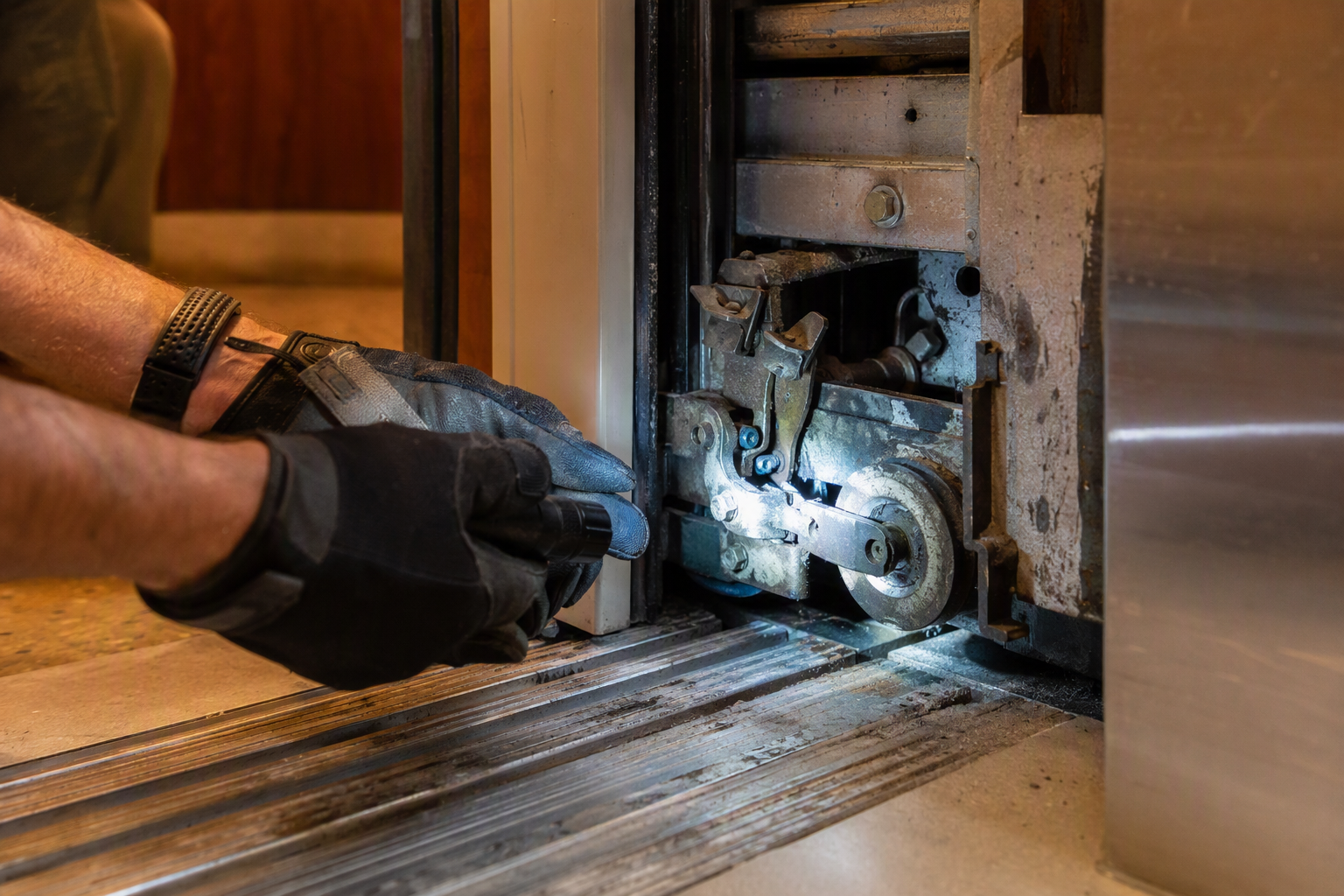
Apartment elevators operate under heavy daily demand, and certain mechanical and electrical issues arise more frequently than others across residential properties in the Phoenix area.
- Door malfunctions: Elevator doors that fail to open, close improperly, or reverse unexpectedly are among the most frequently reported problems. Door sensors, rollers, and clutch mechanisms wear over time and require routine adjustment or replacement.
- Hydraulic system failures: Many low- and mid-rise apartment buildings in Phoenix use hydraulic elevators. Hydraulic fluid leaks, pump failures, and piston deterioration can cause slow travel speeds, unleveled stops, or complete system shutdowns.
- Cable and sheave wear: Traction elevators rely on steel hoist cables and sheave systems. Regular inspection is critical to identify fraying or uneven wear before it becomes a safety risk.
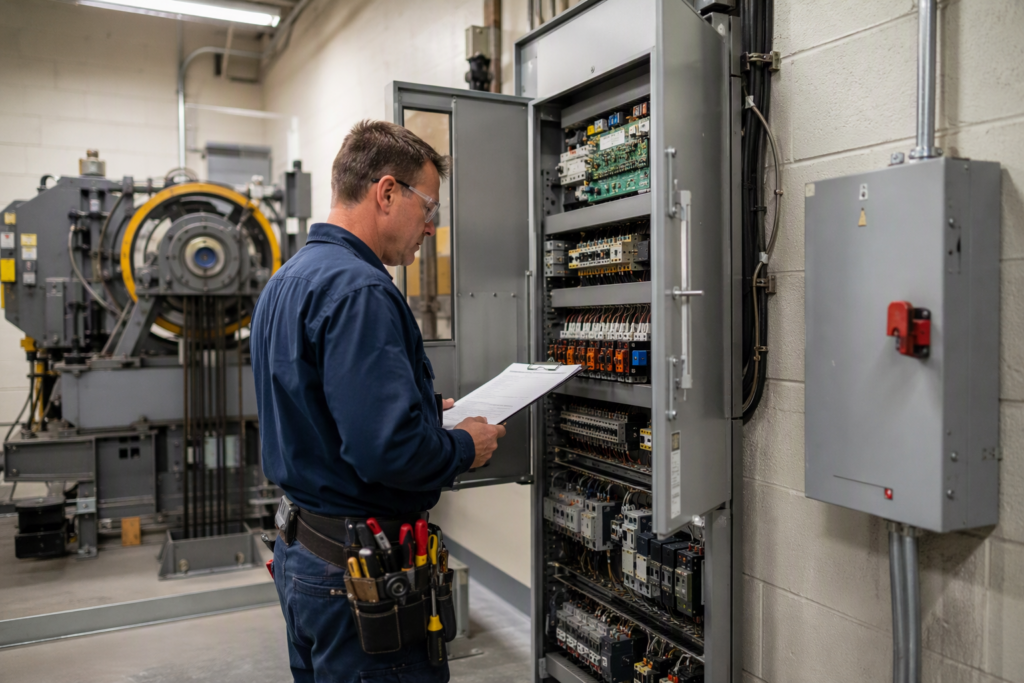
- Control panel and electrical faults: Aging wiring, faulty relays, and outdated controller boards can lead to erratic behavior, unexpected stops between floors, or unresponsive call buttons.
- Leveling problems: When an elevator stops above or below the floor threshold, it creates a serious trip-and-fall hazard — particularly for elderly residents or those using mobility aids.
- Overheating and motor issues: Phoenix’s extreme summer heat places additional stress on elevator motor rooms that are inadequately ventilated, accelerating wear on motor windings and drive components.
Who Is Legally Responsible for Elevator Repairs in an Apartment Building?
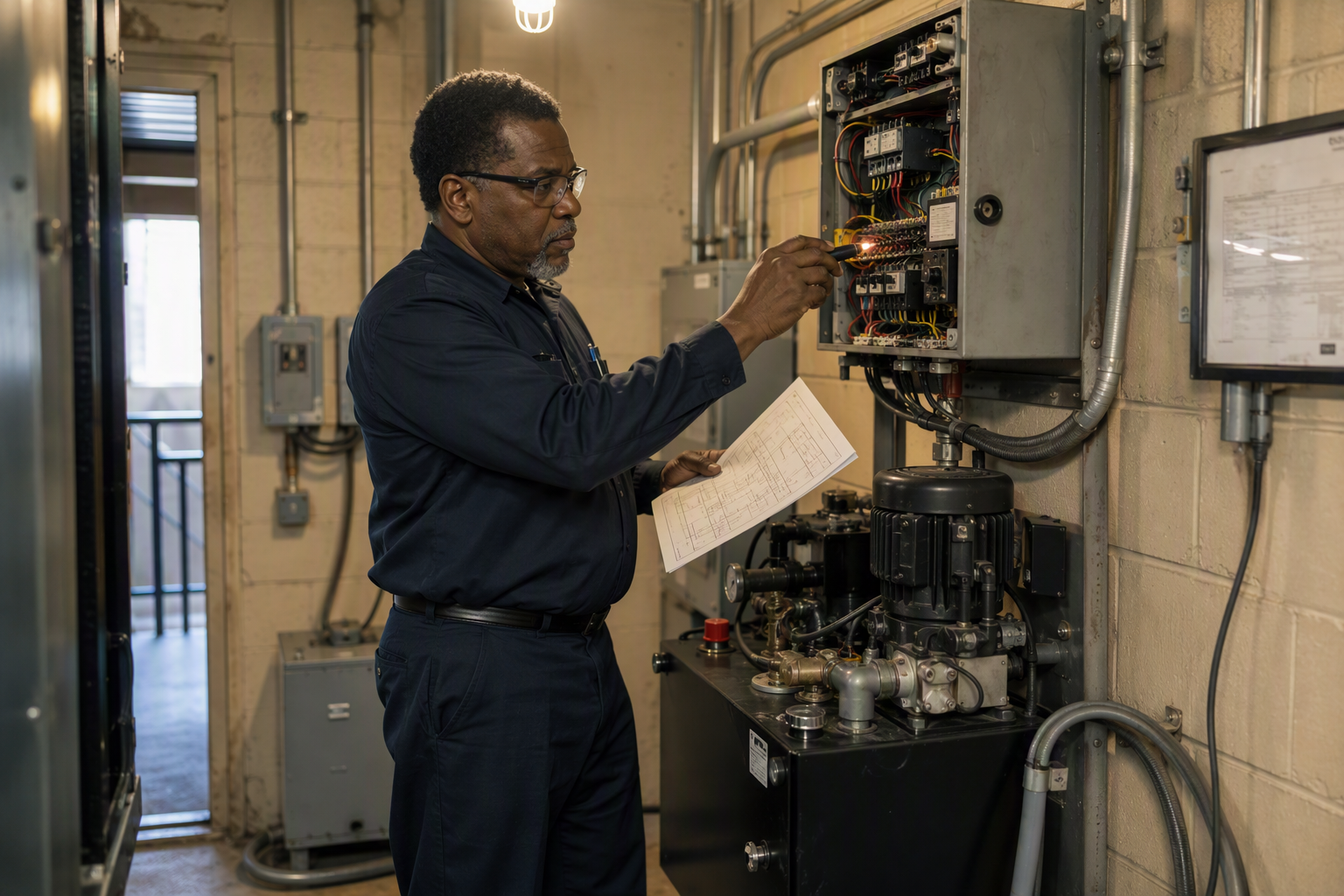
Under Arizona law, the building owner or property management entity bears legal responsibility for maintaining elevators in safe working condition. Elevators in Arizona are regulated by the Arizona Division of Occupational Safety and Health (ADOSH), which enforces elevator safety standards under the OSHA-aligned framework adopted by the state.
Arizona follows the ASME A17.1 Safety Code for Elevators and Escalators, the nationally recognized standard governing elevator design, installation, inspection, and maintenance. Property owners are required to ensure their elevators meet current ASME A17.1 requirements and maintain valid inspection certificates. Tenants have no legal obligation to arrange or fund elevator repairs — that responsibility rests entirely with the building owner or their authorized property manager.
When a repair service agreement is in place, the licensed elevator contractor may share responsibility for scheduled maintenance items, but emergency repairs and code compliance remain the property owner’s accountability.
What Does Arizona Code Require for Elevator Inspections in Apartment Buildings?
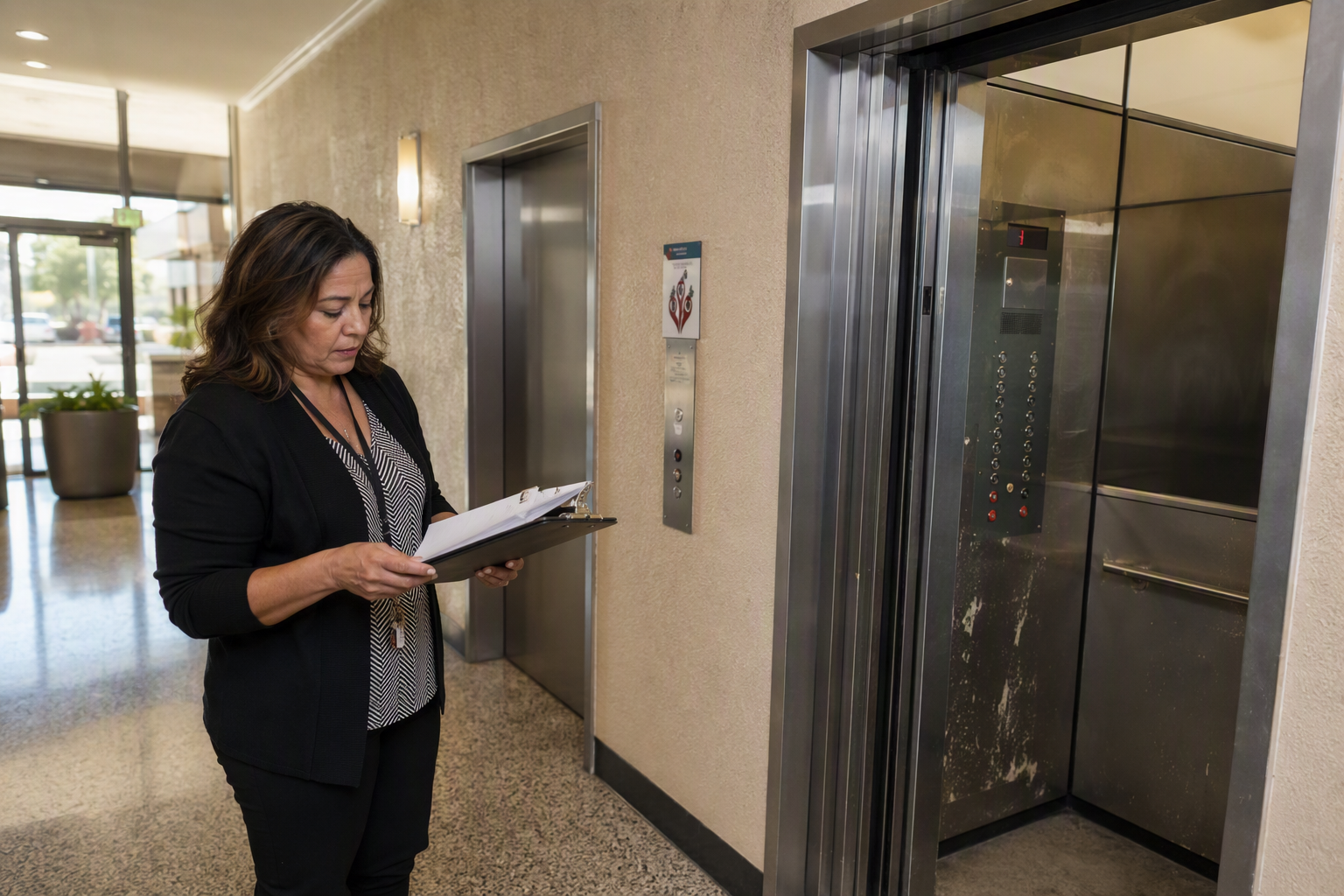
Arizona requires periodic inspections of all elevators in residential buildings by a certified elevator inspector. These inspections verify that equipment continues to comply with the ASME A17.1 Safety Code for Elevators and Escalators, including current 2019 and later adopted editions referenced in state guidance as of 2026.
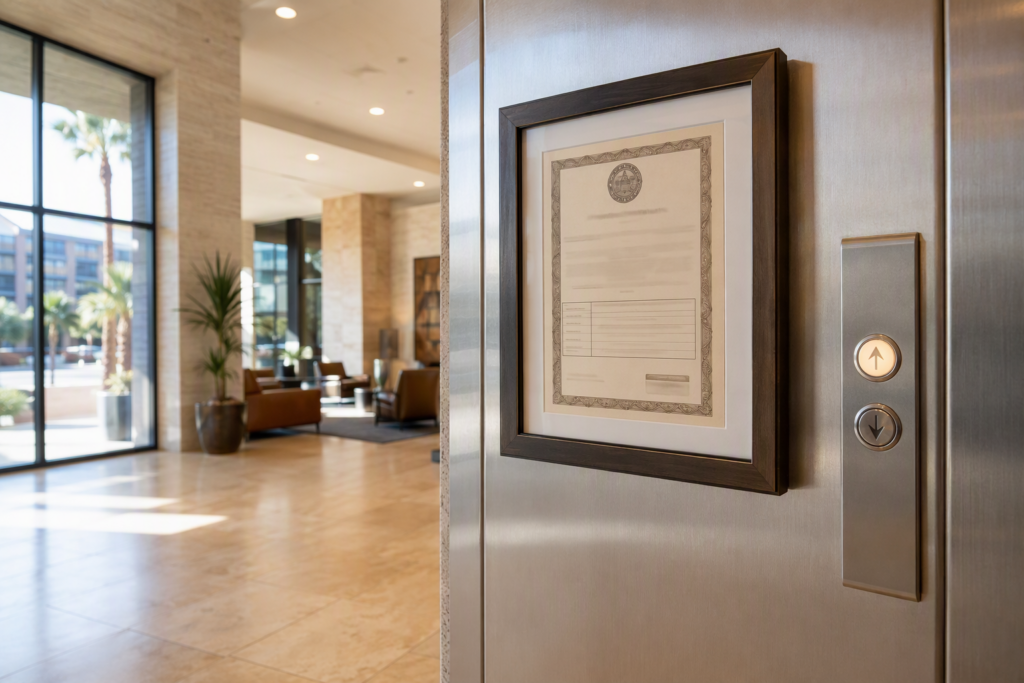
Following each inspection, property owners receive an inspection certificate that must be posted inside the elevator cab. If an elevator fails inspection, the jurisdiction may issue an out-of-service order until the deficiencies are corrected and the unit is re-inspected and cleared. Operating an elevator with an expired or failed inspection certificate exposes property owners to significant legal and financial liability.
Are Elevator Accessibility Requirements a Repair Obligation for Apartment Buildings?
Yes. Apartment buildings covered by the Americans with Disabilities Act (ADA) and Fair Housing Act standards are required to maintain accessible elevator service. ADA Title III and related Fair Housing provisions require that elevators providing access to public and common-use areas remain operational and accessible. Persistent elevator outages in multi-story buildings where the elevator is the only accessible route can constitute an ADA violation.
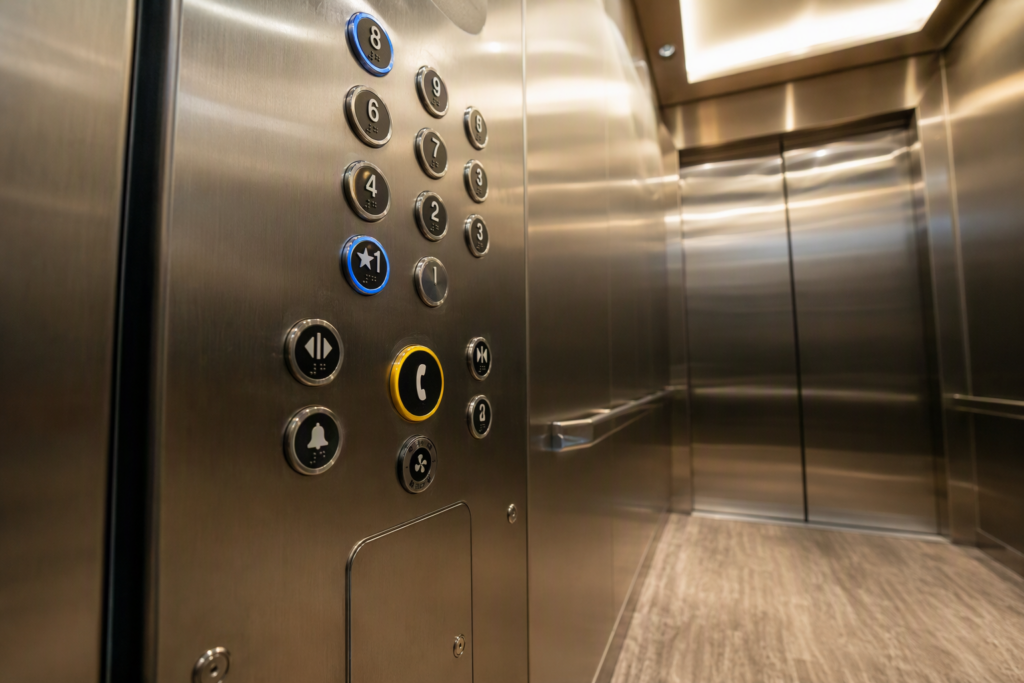
Property owners should work with a qualified elevator service provider to ensure that cab dimensions, door width, button height, audible signals, and Braille signage meet current ADA standards. Modernization projects in Phoenix-area apartment buildings often address both mechanical reliability and accessibility compliance simultaneously.
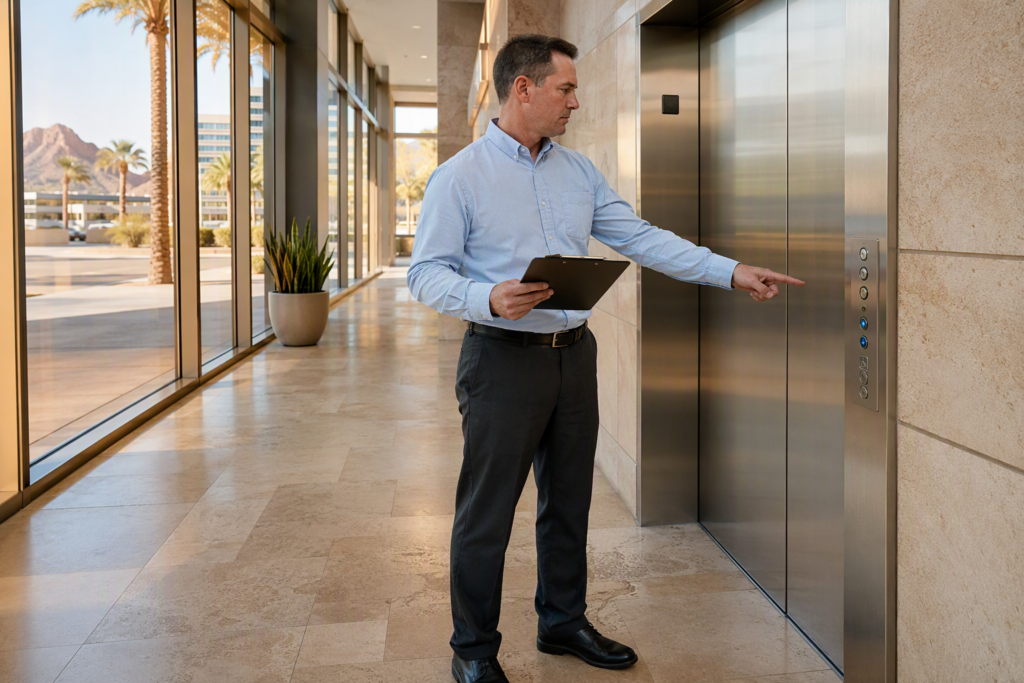
What Should a Property Manager Do Immediately When an Elevator Breaks Down?
- Secure the elevator and post clear out-of-service signage at every floor landing to prevent residents from attempting to use the disabled unit.
- Confirm no person is trapped inside the cab. If anyone is trapped, contact emergency services (911) immediately and notify your elevator service provider’s emergency line.
- Document the malfunction — note the time, observed symptoms, error codes displayed (if any), and any unusual sounds or behaviors preceding the failure.
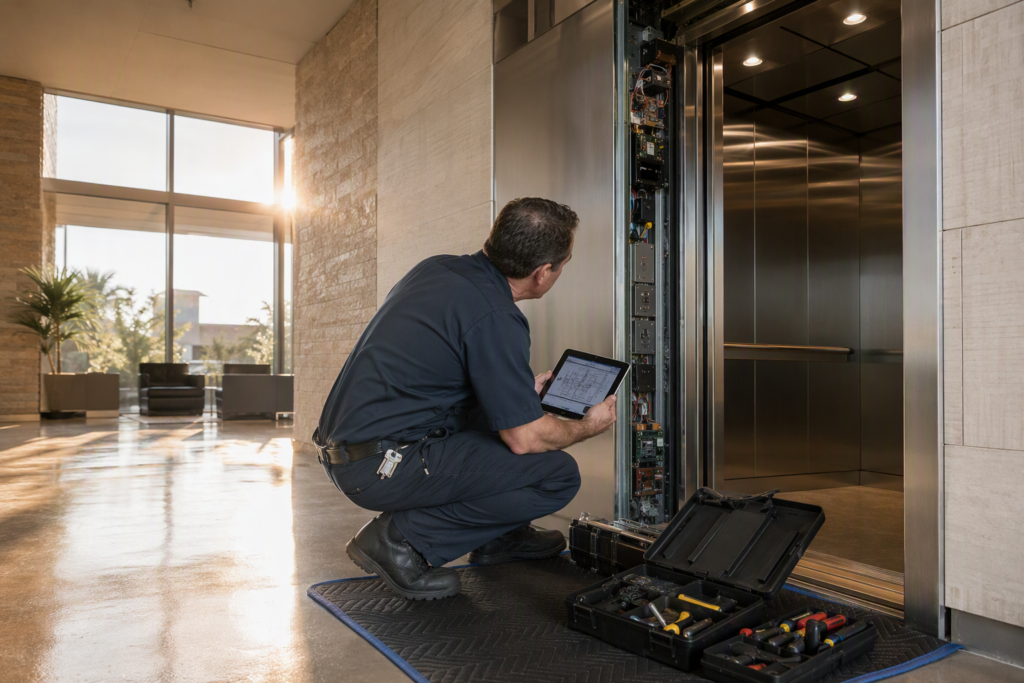
- Contact your licensed elevator service contractor to dispatch a qualified technician for diagnosis and repair.
- Notify residents of the outage, estimated repair timeline (once provided by the technician), and any alternative access arrangements — especially for residents with mobility limitations.
- File any required incident or outage reports with the Arizona Division of Occupational Safety and Health (ADOSH) if the malfunction involved a safety event such as a free-fall, entrapment, or injury.
- Retain all service records and repair documentation to support future inspections and compliance verification.
How Does Phoenix’s Climate Affect Elevator Maintenance Needs?
Phoenix’s desert climate introduces maintenance challenges that are less common in other regions. Sustained summer temperatures frequently exceeding 110°F place thermal stress on elevator machine rooms, hydraulic fluid, and drive electronics. Without adequate cooling or ventilation in the machine room, overheating events can shorten the service life of motors, controllers, and hydraulic components significantly.
Dust and particulate matter common in the Valley — particularly during monsoon haboob events — can infiltrate shaft environments and contaminate lubrication points, sensors, and door tracks. A maintenance program tailored to Phoenix’s specific environmental conditions is an important consideration when selecting an elevator service provider for apartment properties in the area.
When Is Elevator Modernization the Right Choice Over Ongoing Repairs?
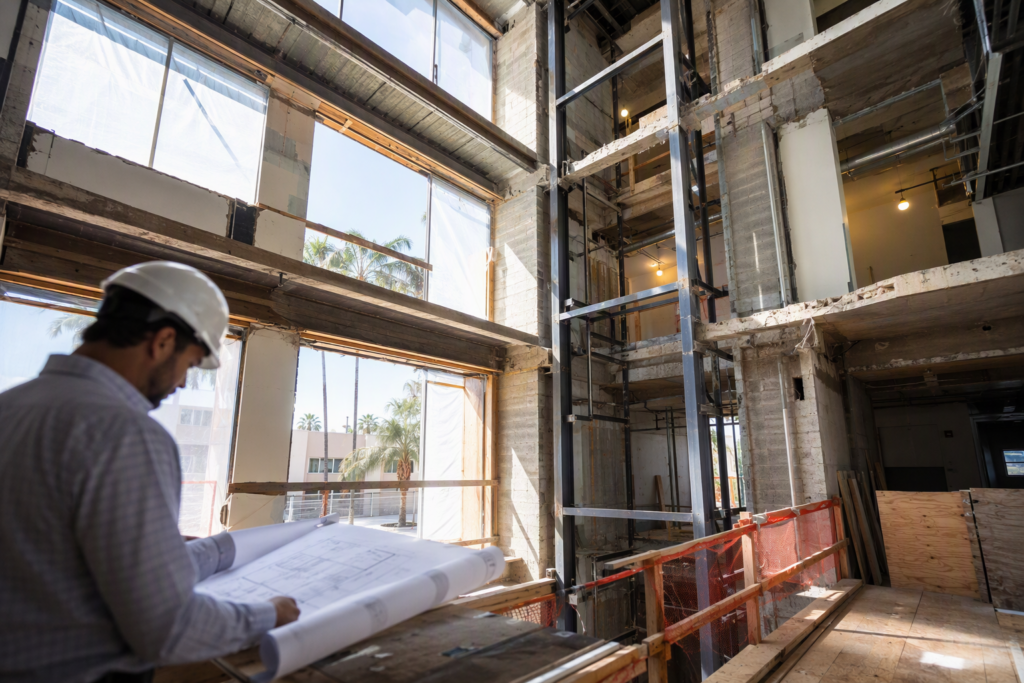
Repeated service calls for aging equipment, difficulty sourcing replacement parts, and escalating repair costs often signal that modernization is the more cost-effective long-term strategy. Elevator modernization typically involves replacing outdated control systems, drive machines, cab interiors, and door operators with current-generation equipment that meets the latest edition of the ASME A17.1 Safety Code for Elevators and Escalators.
For Phoenix apartment buildings with hydraulic elevators installed prior to updated environmental regulations, modernization may also address underground cylinder and fluid containment requirements that older units no longer satisfy. A qualified elevator contractor can conduct a condition assessment and outline the scope and phasing of modernization work appropriate for the property.
What Markets Does Arizona Elevator Solutions Serve Across the Phoenix Region?
Arizona Elevator Solutions provides elevator maintenance, repair, inspection support, and modernization services across the greater Phoenix metropolitan area, including Scottsdale, Tempe, Mesa, Chandler, Gilbert, Glendale, Peoria, and surrounding communities. The company serves residential apartment and condominium properties, commercial office buildings, healthcare facilities, hospitality venues, and public-sector clients throughout Maricopa County and beyond.
As a locally based operation, Arizona Elevator Solutions understands the regulatory landscape specific to Arizona — including ADOSH inspection requirements and the climate-driven maintenance considerations that distinguish Phoenix-area elevator service from national averages. Emergency service availability is maintained to support property managers when unplanned outages or safety events require prompt response.
Schedule a Free Consultation
If your Phoenix-area apartment building is experiencing recurring elevator problems, approaching an inspection deadline, or overdue for a modernization assessment, Arizona Elevator Solutions is ready to help. Contact the team today to schedule a free consultation and receive a clear, code-compliant path forward for your property.
Call Arizona Elevator Solutions: 480-557-7600
Need elevator service you can rely on? Arizona Elevator Solutions is ready to help.