Elevator Maintenance and Inspection Requirements for Hospitals and Healthcare Facilities in Arizona
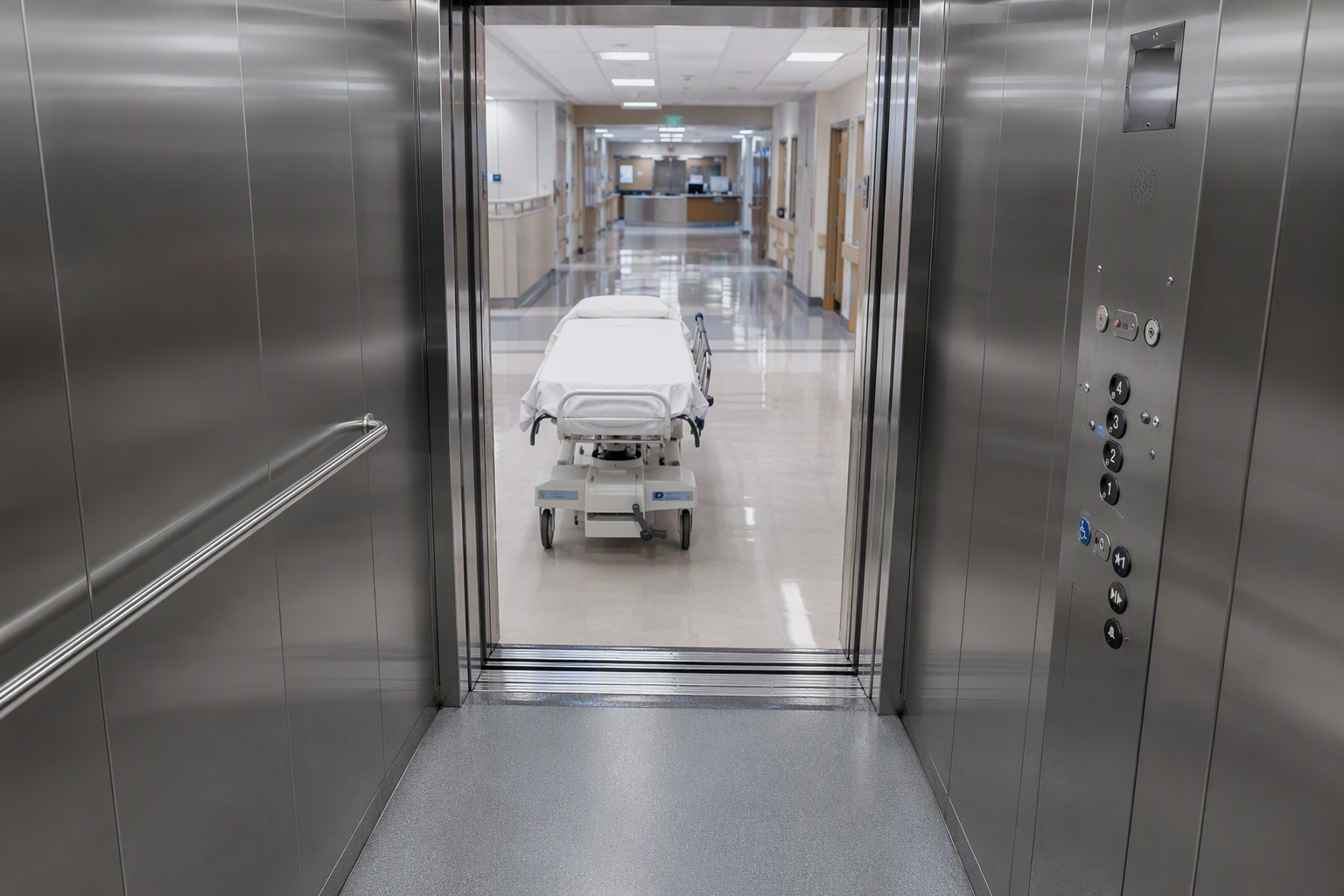
Healthcare environments place uniquely demanding requirements on vertical transportation. From emergency department gurneys and ICU equipment carts to wheelchair-accessible patient transport, elevators in hospitals and healthcare facilities must operate reliably, safely, and in full regulatory compliance — every hour of every day. The following guide covers every layer of Arizona’s elevator compliance framework as it applies to healthcare settings, including inspection intervals, accessibility mandates, maintenance documentation, and what facility managers across Phoenix, Tucson, Scottsdale, and Mesa need to know in 2026.
What Codes Govern Hospital Elevator Requirements in Arizona?
Arizona elevator safety is enforced through a layered framework of federal codes, national standards, and state administrative authority.
- ASME A17.1 Safety Code for Elevators and Escalators: The primary national standard governing the design, construction, installation, alteration, and maintenance of new elevator equipment. Arizona adopts this standard by reference, making it the baseline for all new elevator installations in healthcare facilities.
- ASME A17.3 Safety Code for Existing Elevators and Escalators: Applies to elevators already in service. Healthcare facilities with older elevator equipment must meet A17.3 requirements, which establish retroactive safety mandates for existing installations.
- Arizona Department of Occupational Safety and Health (ADOSH): The Arizona state authority having jurisdiction (AHJ) for elevator safety. ADOSH administers the elevator inspection and permitting program across the state, including for healthcare facilities in Maricopa County, Pima County, and beyond.
- Americans with Disabilities Act (ADA): Federal law mandating accessible elevator design and operation. Healthcare facilities must meet ADA Standards for Accessible Design, covering cab dimensions, door timing, control panel reach ranges, audible and visual signals, and more.
- OSHA: While OSHA’s general industry standards apply to worker safety around elevator equipment, Arizona operates its own State Plan under federal OSHA approval. ADOSH enforces these requirements at the state level.
Arizona Elevator Solutions works exclusively within this Arizona regulatory framework, helping healthcare facilities in Phoenix, Tucson, Scottsdale, and Mesa maintain full compliance across all applicable codes.
How Often Must Hospital Elevators Be Inspected in Arizona?
Arizona requires periodic inspections of all elevators, including those in healthcare facilities, conducted by ADOSH-licensed inspectors or third-party inspectors operating under ADOSH authority. Inspection frequency is governed by the type of equipment and its use classification.
In healthcare settings, the continuous, high-cycle demand placed on elevators — particularly patient transport, service, and freight elevators — makes compliance with inspection intervals especially critical. Healthcare facility managers should maintain a current, up-to-date inspection certificate posted in each elevator cab as required by Arizona statute.
Beyond the state-mandated periodic inspection, ASME A17.1 requires that elevators undergo periodic tests, including pressure relief valve tests, governor and safety tests, and brake tests, at intervals specified within the code. The precise intervals depend on the type of elevator drive system (hydraulic, traction, MRL) and the tests involved.
What Maintenance Documentation Is Required for Healthcare Elevators?
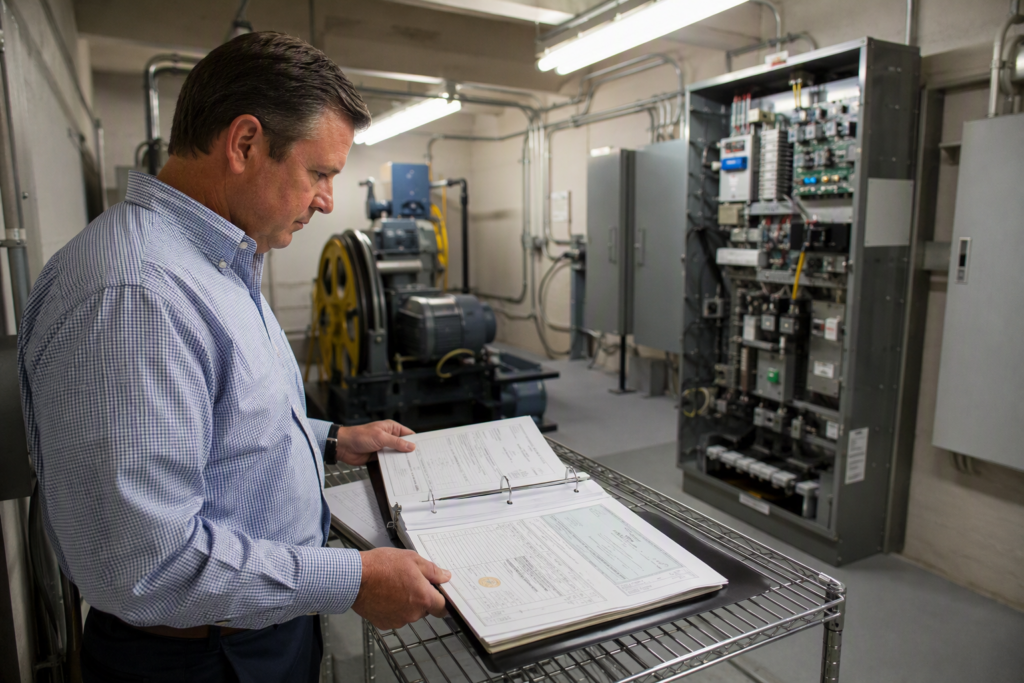
Arizona’s adoption of ASME A17.1 requires that a maintenance control program (MCP) be developed and followed for every elevator. For healthcare facilities, this requirement carries added weight because regulatory surveyors — including those from The Joint Commission and the Centers for Medicare & Medicaid Services (CMS) — routinely review elevator maintenance documentation during facility accreditation surveys.
A compliant maintenance control program for a hospital elevator typically includes:
- A written maintenance, repair, and replacement schedule specific to each unit
- Documented records of all maintenance tasks performed, including dates, technician identification, and work completed
- Records of all periodic tests and their results
- A callback and trouble log
- Records of any alterations or replacements made to elevator components
Arizona Elevator Solutions assists healthcare clients in building and maintaining documentation packages that satisfy both ADOSH requirements and third-party accreditation review standards.
What ADA Requirements Apply to Hospital Elevators in Arizona?
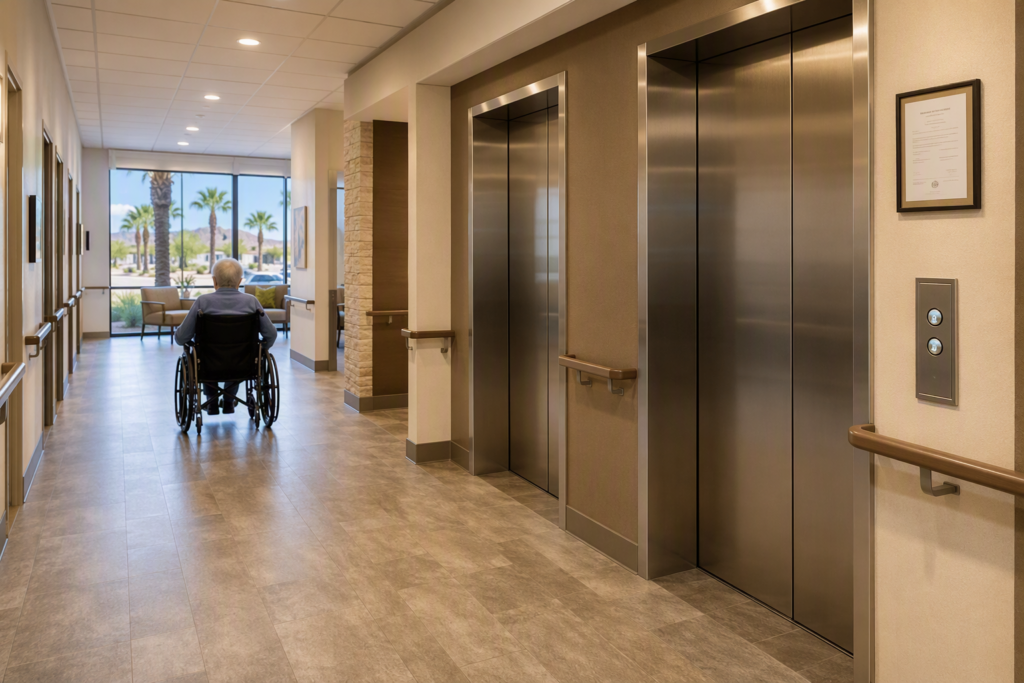
Under the Americans with Disabilities Act, hospitals and healthcare facilities are classified as places of public accommodation and commercial facilities, making full ADA elevator compliance mandatory. Key ADA requirements for healthcare elevator installations include:
- Cab dimensions: Minimum interior dimensions sufficient to accommodate a wheelchair user and attendant, as specified in the ADA Standards for Accessible Design.
- Door timing: Doors must remain open long enough for a person using a mobility aid to enter or exit. This is particularly important in healthcare settings where patients may use wheelchairs, walkers, or gurneys.
- Control panel reach ranges: Floor buttons, emergency controls, and communication devices must be within accessible reach ranges for users in wheelchairs.
- Raised characters and Braille: Floor designations and control buttons must include raised characters and Braille.
- Audible and visual signals: Hall lanterns and audible signals must indicate car arrival and direction of travel.
- Two-way emergency communication: A code-compliant two-way communication system must be present and operational in every elevator cab.
Facilities undergoing renovation or alteration must ensure that any modified elevator components meet current ADA Standards, even if the existing installation predates ADA requirements.
What Are the Unique Elevator Demands in Hospital Environments?
Hospitals and healthcare facilities impose operational demands on elevators that exceed those found in most other building types. Factors that distinguish healthcare elevator requirements include:
- High cycle counts: Patient transport, food service, linen, and pharmaceutical delivery can place an elevator in near-continuous operation across all three shifts.
- Oversized loads: Hospital beds, imaging equipment, and medical carts often require elevators with higher weight capacities and larger cab dimensions than standard commercial installations.
- Infection control: Cab interiors, door edges, and call button surfaces must be maintainable to healthcare-grade sanitation standards.
- Emergency power: Many healthcare facilities are required to designate certain elevators for operation on emergency generator power, ensuring vertical access is maintained during power outages. Fire service access operation requirements under ASME A17.1 are especially relevant in this context.
- Firefighter service operation: ASME A17.1 requires compliant Phase I and Phase II firefighter emergency operation on elevators in buildings over a specified height, a requirement that applies to multi-story hospital structures.
What Happens If a Hospital Elevator Fails an Arizona Inspection?
When an elevator in an Arizona healthcare facility fails a periodic inspection, ADOSH may issue a notice of violation and, depending on the severity of the deficiency, order the elevator removed from service until corrective action is completed and the unit passes a re-inspection. The ordered steps a healthcare facility manager should follow are:
- Receive the written inspection report and identify all cited deficiencies.
- Notify the facility’s maintenance and compliance team immediately.
- Contact a licensed elevator contractor to assess and quote the required repairs.
- Obtain any required permits from ADOSH before beginning alteration or repair work, as required by Arizona statute.
- Complete all cited repairs using qualified, licensed elevator mechanics.
- Schedule the follow-up inspection with ADOSH or the licensed third-party inspector.
- Retain all documentation — repair records, permits, and the passing inspection certificate — in the facility’s elevator compliance file.
- Update the maintenance control program to address any recurring issues identified during the inspection process.
Arizona Elevator Solutions supports healthcare facilities through every step of this remediation process, from deficiency assessment through re-inspection readiness.
What Is Required for New Elevator Installations in Arizona Hospitals?
New elevator installations in healthcare facilities in Arizona require a permit from ADOSH prior to installation. The installation must comply with the currently adopted edition of ASME A17.1 as recognized by Arizona, as well as applicable ADA Standards for Accessible Design. Upon completion, a final inspection by a licensed inspector is required before the elevator may be placed in service. The issued certificate of inspection must then be posted in the elevator cab.
Does Arizona Require a Licensed Contractor for Hospital Elevator Maintenance?
Yes. Arizona requires that elevator maintenance, repair, and alteration work be performed by licensed elevator contractors and qualified elevator mechanics. Healthcare facility managers should verify that any service provider engaged for elevator work holds current Arizona licensure. Arizona Elevator Solutions is a certified elevator service company operating in full compliance with Arizona’s contractor licensing requirements.
How Do Joint Commission and CMS Surveys Relate to Elevator Compliance?
Hospitals and healthcare systems seeking or maintaining accreditation through The Joint Commission or certification through the Centers for Medicare & Medicaid Services (CMS) are subject to Environment of Care standards that include the maintenance of life safety systems — a category that encompasses elevators. Surveyors commonly request:
- Current, valid ADOSH inspection certificates for all elevators
- Maintenance control program documentation
- Maintenance logs and callback records
- Evidence that periodic tests have been completed on schedule
- Documentation of any deficiencies found and corrective actions completed
A gap in elevator compliance documentation can become a cited deficiency during a Joint Commission or CMS survey, potentially affecting accreditation status. Maintaining a current, complete elevator compliance file is a best practice for every healthcare facility manager in Arizona.
What Should Healthcare Facilities in Phoenix, Tucson, Scottsdale, and Mesa Look for in an Elevator Service Partner?
Not all elevator service companies have experience with the specific demands of healthcare environments. When evaluating an elevator maintenance and inspection partner, healthcare facility managers should look for:
- Current Arizona elevator contractor licensure
- Demonstrated familiarity with ADOSH inspection processes and documentation requirements
- Experience maintaining high-cycle, large-cab hospital elevator equipment
- Ability to develop and maintain a written maintenance control program compliant with ASME A17.1
- Understanding of ADA compliance requirements for healthcare facilities
- Capacity to support documentation needs for Joint Commission and CMS survey readiness
Arizona Elevator Solutions serves healthcare facilities across the Phoenix metropolitan area, Tucson, Scottsdale, and Mesa, providing maintenance, inspection support, and compliance documentation tailored to hospital and healthcare environments.
Questions Your Inspector Will Ask
When an ADOSH inspector or licensed third-party inspector visits a healthcare facility in Arizona, facility managers and maintenance staff should be prepared to answer questions such as:
- Is the current inspection certificate posted in every elevator cab? Certificates must be current and visible.
- Where is your maintenance control program, and can you provide it now? The MCP must be on-site and accessible.
- Are maintenance logs current and complete? Inspectors will review dates, tasks performed, and technician records.
- When was the last periodic test performed, and do you have the results? Test records must be retained and available.
- Have there been any callbacks or trouble incidents since the last inspection, and how were they resolved? A callback log demonstrates active maintenance oversight.
- Has any alteration or replacement work been performed, and were the required permits obtained? Unpermitted alterations are a common citation.
- Is the two-way emergency communication system operational in every cab? Inspectors will test this.
- Is firefighter emergency service (Phase I and Phase II) operational and tested? This is a code-required feature on applicable elevators.
- Are the elevator pit and machine room clean, free of stored materials, and properly lit? Housekeeping in these spaces is an inspection item.
- Is your elevator contractor currently licensed in Arizona? Be prepared to provide contractor license information.
How Can Healthcare Facilities Stay Proactively Compliant Between Inspections?
Reactive maintenance — waiting for a failure or an inspection citation before taking action — is a significant risk in a healthcare environment where elevator downtime directly affects patient care. Proactive compliance practices include:
- Scheduling preventive maintenance visits at regular intervals aligned with the maintenance control program
- Conducting internal readiness reviews before scheduled ADOSH inspections
- Tracking periodic test due dates and scheduling them well in advance
- Training facilities staff to recognize and report early warning signs of elevator performance issues
- Auditing elevator documentation files quarterly to identify any gaps before a surveyor does
Arizona Elevator Solutions helps healthcare clients build proactive maintenance programs designed to keep elevators compliant, documented, and operational year-round.
Get a Free Elevator Assessment for Your Healthcare Facility
Elevator compliance in a hospital or healthcare facility is not a once-a-year event — it is an ongoing operational responsibility. Whether your facility is preparing for an ADOSH inspection, a Joint Commission survey, or simply wants to ensure that patient transport and service elevators meet every applicable code requirement, Arizona Elevator Solutions is ready to help.
Serving healthcare facilities throughout Phoenix, Tucson, Scottsdale, Mesa, and surrounding Arizona communities, Arizona Elevator Solutions provides certified maintenance, inspection support, and compliance documentation tailored specifically to the demands of healthcare environments.
Contact Arizona Elevator Solutions for a free elevator assessment: 480-319-7157
Need elevator service you can rely on? Arizona Elevator Solutions is ready to help.