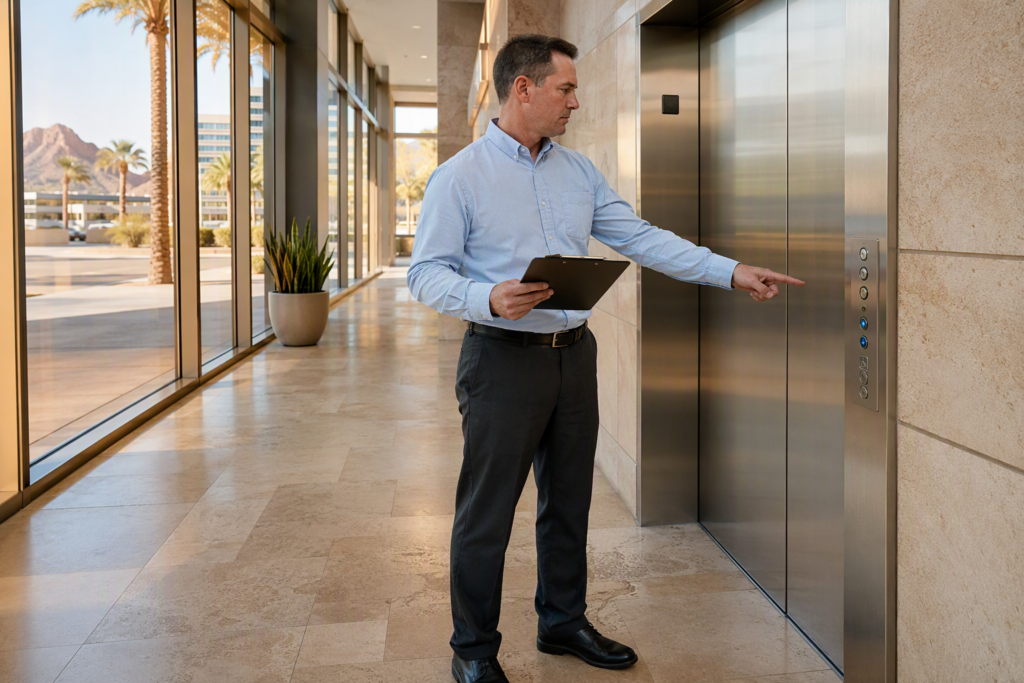
How Often Does a Commercial Elevator Need to Be Replaced? Signs It’s at End of Life
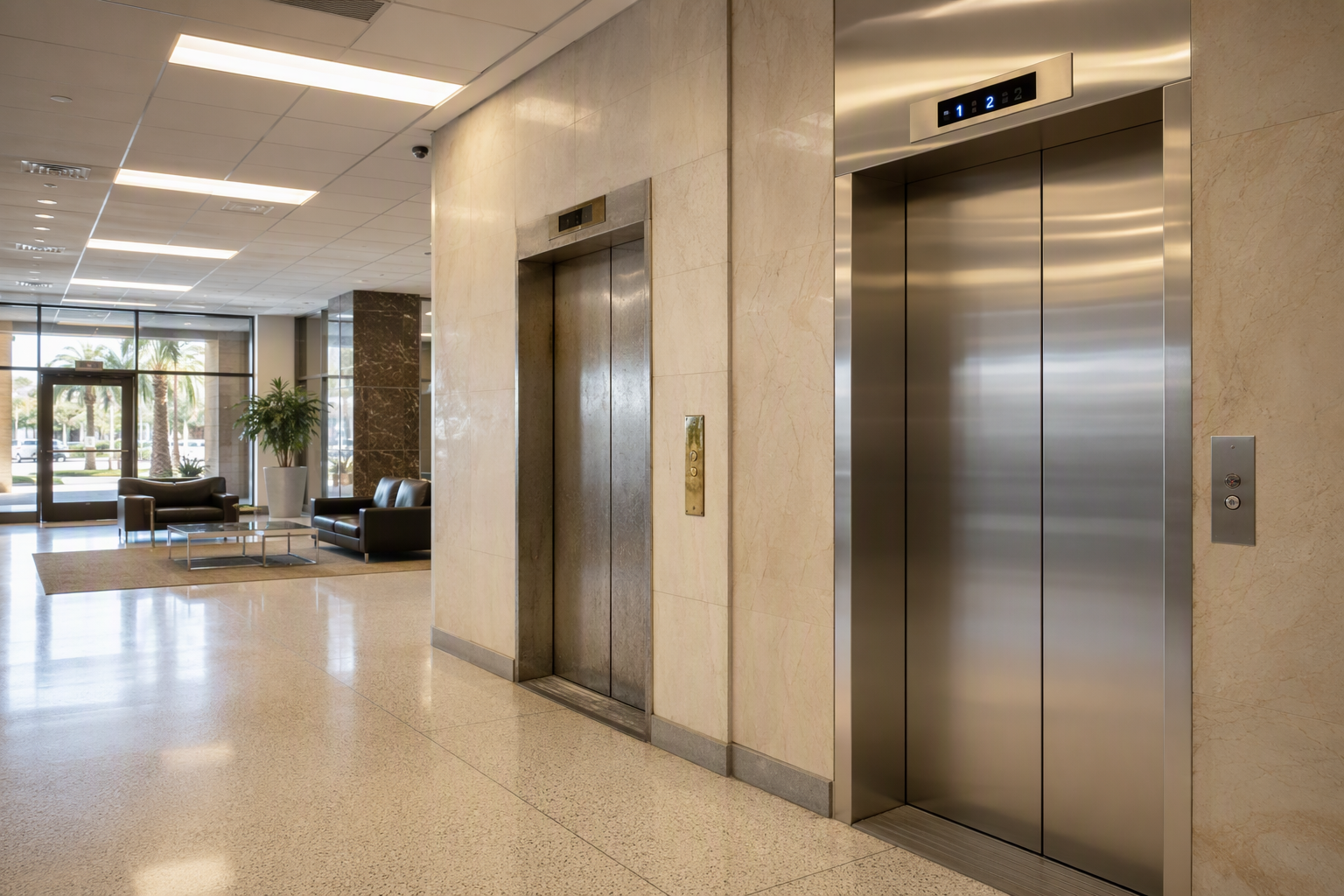
Building owners and facility managers in Phoenix, Tucson, Scottsdale, and Mesa face a recurring capital planning challenge: at what point does an aging commercial elevator cross the line from a maintainable asset into a liability that demands full replacement? This comprehensive FAQ hub answers that question from every angle — service life benchmarks, regulatory compliance timelines, cost thresholds, and the specific warning signs that signal an elevator is approaching or has reached end of life.
What is the typical service life of a commercial elevator?
Most commercial elevators are designed for a service life of roughly 20 to 25 years, though well-maintained units regularly reach 30 years before replacement becomes unavoidable.
Service life is not a single fixed number stamped on the equipment. It is influenced by installation quality, usage intensity (cycles per day), environmental conditions, and most importantly, the consistency of preventive maintenance. A high-rise elevator in a busy Phoenix office tower that runs hundreds of cycles daily will age mechanically faster than a low-use hydraulic lift in a two-story medical clinic in Scottsdale. Equipment manufacturers design mechanical components — traction sheaves, ropes, controllers, and hydraulic cylinders — with expected wear rates, but those rates assume code-compliant maintenance intervals are honored.
When any major subsystem — the controller, drive, or machine — reaches the point where replacement parts are no longer manufactured or available through aftermarket suppliers, the practical service life of the entire unit is effectively over regardless of calendar age.
What are the clearest signs a commercial elevator has reached end of life?
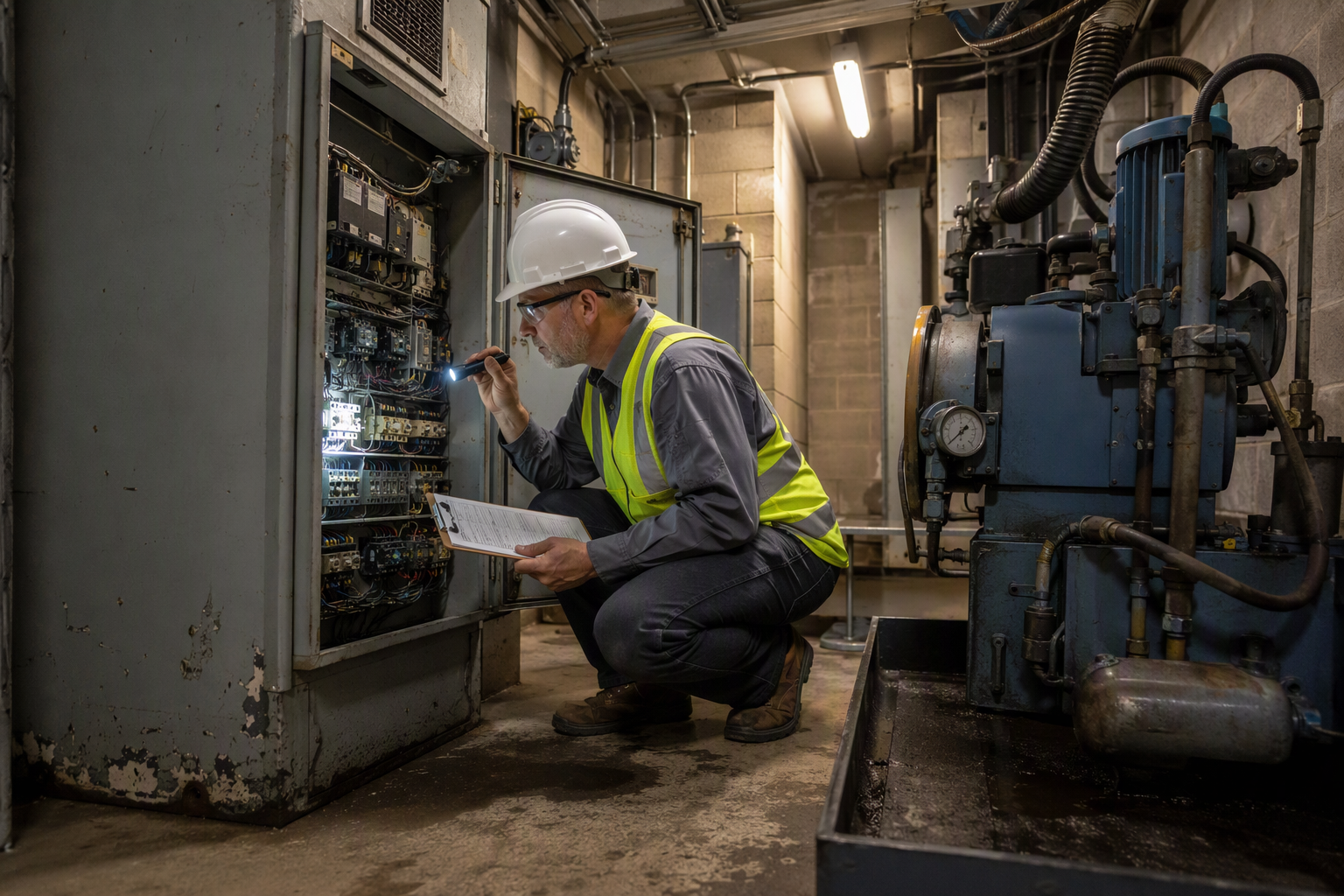
The most definitive end-of-life indicators are: obsolete controllers with no available replacement parts, hydraulic cylinder corrosion requiring full liner or cylinder replacement, recurring safety-related shutdowns, persistent ADA non-compliance, and repair costs that consistently exceed the value of continued operation.
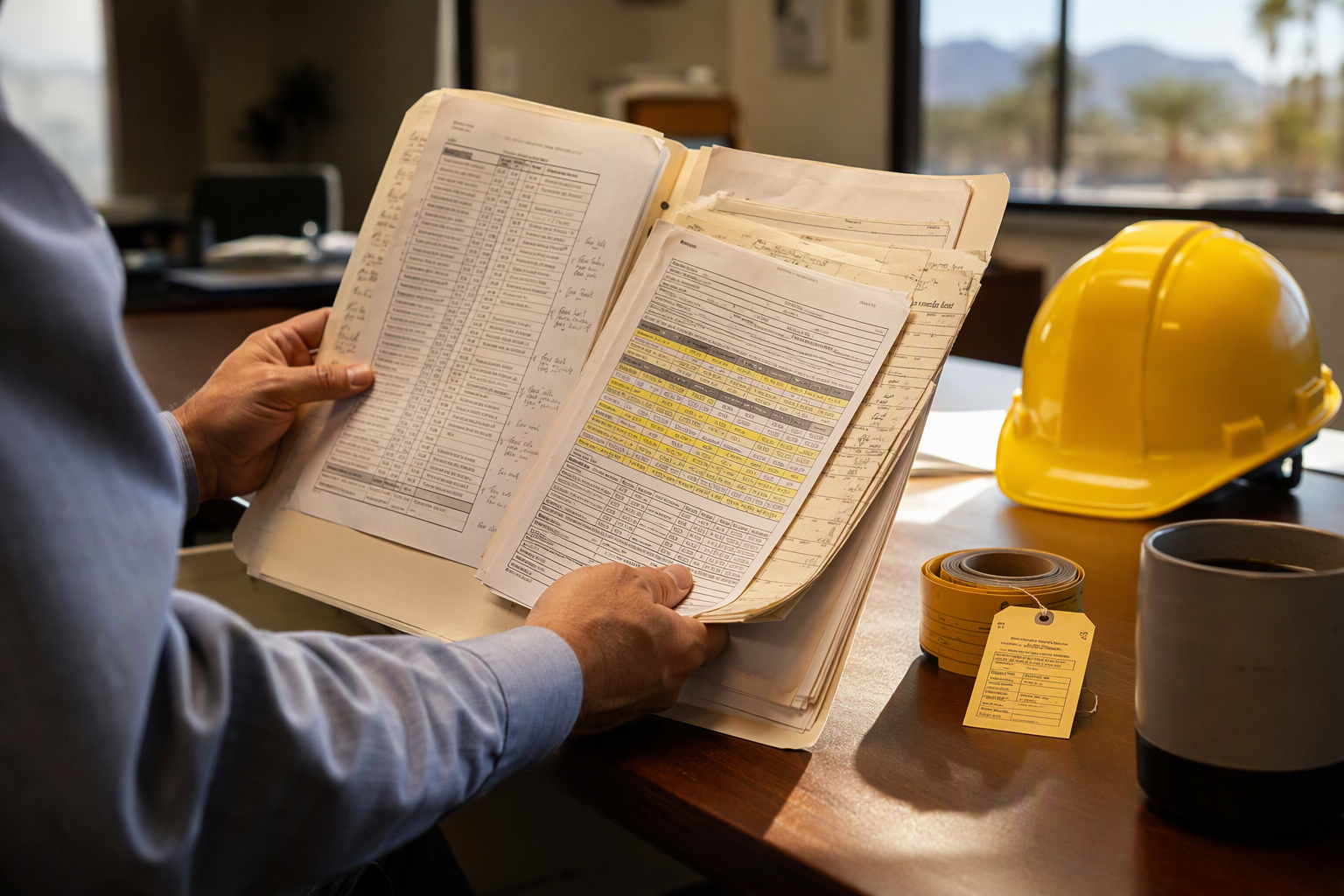
Individually, any one of these signs warrants a serious evaluation. In combination, they make a compelling case for modernization or full replacement. Facility managers should document each service call, part cost, and downtime event so the cumulative picture becomes visible over time rather than being obscured by the episodic nature of individual repairs.
Arizona Elevator Solutions performs structured end-of-life assessments for building owners across Phoenix, Tucson, Scottsdale, and Mesa, providing documented findings that support capital budget requests and insurance carrier communications.
What does ASME A17.1 say about elevator maintenance and inspection requirements?
The ASME A17.1 Safety Code for Elevators and Escalators establishes minimum maintenance, testing, and inspection requirements that define how an elevator must perform throughout its service life — and indirectly signals when it can no longer comply.
ASME A17.1 requires that elevators be maintained in a safe operating condition and that all safety devices function as designed. It mandates periodic testing of critical safety components including governors, safeties, buffers, and pressure relief valves on hydraulic units. When an aging elevator can no longer be brought into compliance with current A17.1 requirements without cost-prohibitive retrofits, that compliance gap is a strong signal that end of life has been reached.
Arizona also references ASME A17.3, the Safety Code for Existing Elevators and Escalators, which governs the retroactive application of safety requirements to older installed equipment. When an existing elevator cannot meet A17.3 requirements without fundamental redesign, replacement becomes the code-compliant path forward. Building owners should consult with their Authority Having Jurisdiction (AHJ) — in Arizona, elevator inspections are administered through the Arizona Department of Occupational Safety and Health (ADOSH) — to confirm current applicable requirements.
How does ADA compliance factor into elevator replacement decisions?
Older elevators that pre-date modern Americans with Disabilities Act (ADA) standards frequently lack compliant cab dimensions, control panel heights, door timing, or auditory/visual signals, and bringing them into full compliance can sometimes cost more than a modernization program.
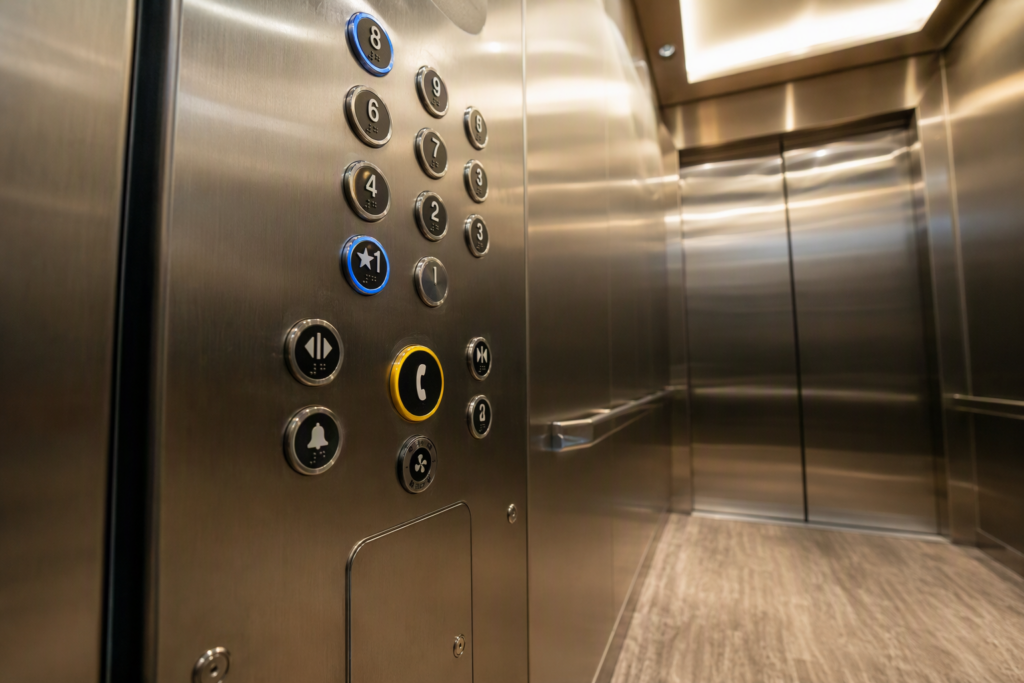
The ADA requires that elevators serving public accommodations and commercial facilities meet specific accessibility standards covering door clear width, floor leveling accuracy, two-way communication systems, Braille and raised character call button markings, and more. An elevator that was installed before these standards were codified may require significant cab and entranceway modifications to achieve compliance. When the scope of ADA remediation overlaps substantially with the scope of mechanical modernization, full replacement often represents a more economical and architecturally cleaner solution.
Building owners in Phoenix and the surrounding Arizona markets should note that ADA compliance is an ongoing legal obligation — not a one-time retrofit. An aging elevator that repeatedly falls out of compliance due to worn door operators, failing leveling systems, or degraded communication equipment creates persistent legal exposure.
What is the “repair-versus-replace” cost threshold for commercial elevators?
A widely applied industry rule of thumb holds that when annual repair costs approach or exceed a significant fraction of the estimated replacement cost, and when that pattern repeats over multiple consecutive years, replacement becomes the financially rational decision — though exact thresholds depend on the specific equipment type, building use, and financing options available.
This comparison must account for more than raw parts and labor costs. Downtime costs — lost productivity, tenant dissatisfaction, potential ADA liability, and emergency service premiums — are real financial consequences that rarely appear in a simple repair invoice but substantially affect the true cost of keeping aging equipment running. A hydraulic elevator that requires emergency service multiple times per year is not simply a maintenance line item; it is an operational risk.
Replacement cost estimates for commercial elevators vary considerably based on equipment type (hydraulic vs. traction), cab size, travel height, and building configuration. Any cost comparison must be built on actual quotes rather than generic industry averages, which is why a detailed site assessment from a qualified elevator company is the appropriate starting point.
What specific mechanical components tend to fail first as an elevator ages?
The components that most commonly drive end-of-life decisions are the relay-logic or early solid-state controllers, hydraulic cylinders (particularly single-bottom cylinders susceptible to underground corrosion), traction machine gear sets, wire rope assemblies, and door operator systems.
Controller obsolescence is particularly consequential because the controller is the brain of the entire system. Relay-based controllers from the 1970s and 1980s and early microprocessor controllers from the 1990s are frequently unsupported by their original manufacturers. When a controller board fails and no replacement or equivalent is available, the elevator is effectively out of service until a full controller modernization or equipment replacement occurs.
Hydraulic cylinders in underground installations present a separate set of concerns. Single-bottom cylinders, which were standard installation practice for many decades, are susceptible to external corrosion from soil contact and groundwater. ASME A17.1 and A17.3 have addressed this risk through requirements for cylinder integrity testing and, for units that cannot pass testing, mandated replacement with double-bottom or PVC-lined cylinders. In Arizona’s desert environment, soil chemistry and caliche formations add additional variables to cylinder longevity assessments.
How does usage intensity affect how quickly a commercial elevator reaches end of life?
Usage intensity — measured in starts or cycles per day — is one of the primary mechanical aging factors, with high-traffic installations in hospitals, hotels, and multi-tenant office buildings experiencing accelerated wear on drive systems, roping, guides, and door mechanisms compared to low-use installations.
An elevator in a busy Phoenix hospital running continuously across three shifts accumulates mechanical wear at a rate that may be several times higher than a similar unit in a low-traffic professional office building. Equipment manufacturers and elevator consultants use duty cycle calculations to estimate component replacement intervals, and those calculations directly inform how quickly a given installation approaches end of life. Building owners should ensure their maintenance provider is aware of actual usage patterns and adjusting maintenance intervals accordingly, rather than applying a generic schedule to all equipment types.
What are the warning signs that an elevator needs replacement rather than repair?
Beyond mechanical wear, behavioral warning signs — including frequent nuisance calls, inconsistent leveling at floor landings, slow or erratic door operation, unusual noise or vibration, and passenger-reported ride quality complaints — collectively indicate a system in decline.
These symptoms should be tracked systematically. A single leveling issue might indicate a worn landing zone component; repeated leveling failures across multiple floors over multiple months indicate a systemic problem with the selector or control system. Similarly, occasional door hesitation may reflect a simple adjustment; persistent door reversal or entrapment events indicate worn door operator components or misaligned sill and safety edge systems that pose genuine safety risks.
From a regulatory standpoint, an elevator that generates repeated violations during annual inspections — particularly violations related to safety devices — is communicating through the inspection record that it can no longer reliably maintain code compliance without intervention at a scale that may justify replacement.
What does a commercial elevator end-of-life assessment include?
A thorough end-of-life assessment evaluates the mechanical condition, code compliance status, parts availability, maintenance history, and projected capital costs for both a repair/modernization path and a full replacement path, giving building owners the data needed to make an informed decision.
Arizona Elevator Solutions conducts structured assessments for commercial building owners in Phoenix, Tucson, Scottsdale, and Mesa. A comprehensive assessment typically covers the following elements:
- Review of the complete maintenance and inspection history, including any outstanding violation notices from the Arizona Division of Occupational Safety and Health (ADOSH).
- Physical inspection of the machine room, hoistway, cab, and pit to identify visible wear, corrosion, or damage.
- Controller and drive system evaluation, including determination of parts availability from the original manufacturer and aftermarket suppliers.
- Door operator and safety edge testing to confirm compliance with current ASME A17.1 performance requirements.
- ADA compliance review covering cab dimensions, control panel configuration, communication systems, and door timing.
- Hydraulic cylinder integrity evaluation (for hydraulic units), including assessment of cylinder age, type, and testing history.
- Wire rope and sheave inspection (for traction units), including measurement of rope diameter loss and sheave groove wear.
- Documented findings report with cost projections for repair/modernization versus full replacement scenarios.
What is the difference between elevator modernization and full replacement?
Modernization replaces specific subsystems — typically the controller, drive, fixtures, and sometimes the machine — while retaining the existing hoistway structure and cab shell, whereas full replacement involves removing all equipment including the cab and may include hoistway modifications.
Modernization is generally less disruptive and less expensive than full replacement when the hoistway structure, guide rails, and cab shell are in sound condition. It is appropriate when the primary driver of decline is controller obsolescence or drive system wear rather than fundamental structural or hydraulic deterioration. Full replacement is indicated when the hydraulic cylinder requires replacement, when hoistway dimensions do not meet current code requirements, when the machine room configuration cannot accommodate modern equipment, or when the overall condition of retained components is sufficiently poor that modernization would require replacing so many elements that the cost difference narrows substantially.
The distinction matters for capital budgeting, permitting timelines, and the duration of elevator downtime. A modernization project typically requires fewer permits and less construction coordination than a full replacement, though both require involvement of the AHJ and final inspection before return to service.
How long does a commercial elevator replacement project typically take?
A commercial elevator replacement project, from signed contract through final inspection and return to service, typically spans several months, with the exact timeline influenced by equipment lead times, permit processing by the AHJ, hoistway modification scope, and building coordination requirements.
Equipment procurement lead times for new elevator systems have been subject to variability in recent years due to global supply chain conditions. Building owners planning a replacement should begin the procurement and permitting process well in advance of the target replacement date. In multi-elevator buildings, phased replacement or temporary service arrangements must be planned to maintain at minimum code-required accessible service during construction periods — an ADA consideration that affects project scheduling as much as it affects budget.
Arizona building owners should account for ADOSH permit review timelines when developing project schedules. Permits for new elevator installations and major alterations must be obtained before work begins, and final inspection and approval are required before the replacement elevator is placed back in service.
Does Arizona have specific regulations governing elevator inspections and end-of-life compliance?
Yes — in Arizona, the Division of Occupational Safety and Health (ADOSH) administers elevator inspection and permitting requirements under state law, and elevator owners are required to maintain current certificates of inspection for all conveyances.
Arizona has adopted standards that incorporate the requirements of ASME A17.1 and A17.3 as the technical basis for elevator safety. Building owners in Phoenix, Tucson, Scottsdale, and Mesa are subject to periodic inspections conducted or approved by ADOSH. An elevator that fails inspection and cannot be brought into compliance within the required correction timeframe faces mandatory shutdown orders — which, for an aging system with systemic deficiencies, often precipitates the formal replacement decision that had previously been deferred.
Building owners who receive violation notices from ADOSH or their approved inspection agency should treat those notices as formal documentation of end-of-life indicators, not simply as items to be patched before the next inspection cycle.
What are the OSHA requirements relevant to elevator safety in commercial buildings?
OSHA standards apply to elevator safety in the context of worker protection, particularly during construction, maintenance, and inspection activities, and OSHA requirements for general industry also address powered platform installations and workplace safety in facilities where elevators operate.
While OSHA’s primary elevator-related requirements focus on construction and maintenance worker safety rather than passenger conveyance standards per se, building owners and facility managers should be aware that OSHA general duty clause obligations extend to ensuring that equipment accessible to employees is maintained in safe operating condition. An elevator that poses documented safety risks — evidenced by repeated failures, inspection violations, or deferred safety device maintenance — could create OSHA exposure for the building owner or employer in addition to state regulatory consequences.
How should building owners in Arizona document elevator condition for insurance and liability purposes?
Building owners should maintain a continuous, organized record of all inspection certificates, violation notices, service records, parts replacement logs, and any passenger incident reports, as this documentation directly affects insurance coverage determinations and liability exposure when elevator-related incidents occur.
Insurance carriers that write commercial property and general liability policies increasingly scrutinize elevator maintenance records during underwriting renewals and following incidents. An elevator with a documented history of regular professional maintenance, timely violation corrections, and current inspection certificates presents a materially different risk profile than one with gaps in service history or unresolved outstanding violations.
When end-of-life replacement is planned, having thorough documentation of the decision rationale — including assessment reports, inspection records, and cost analyses — protects building owners from retrospective claims that equipment deterioration was ignored or neglected.
What is the cost range for commercial elevator replacement in Arizona?
Commercial elevator replacement costs vary widely based on equipment type, capacity, travel distance, cab finishes, and building configuration, and no accurate figure can be provided without a site-specific assessment — general ranges from industry sources vary from low six figures for simple hydraulic units to substantially higher amounts for traction systems in mid- or high-rise applications.
Any cost figure circulated without a site inspection and detailed scope of work should be treated as a rough planning placeholder rather than a reliable budget number. Hoistway modifications, machine room reconfiguration, electrical service upgrades, and ADA compliance retrofits all add to the base equipment cost and are highly site-specific. Building owners in the Phoenix metro area, Tucson, Scottsdale, and Mesa are encouraged to obtain multiple competitive quotes from licensed elevator contractors and to ensure each quote is based on the same documented scope.
Financing options including capital lease structures and equipment financing programs are available through various commercial lenders and should be evaluated as part of the replacement planning process, particularly for building owners managing multiple conveyances simultaneously.
Is it possible for a well-maintained elevator to last beyond 25 years?
Yes — elevators that receive consistent, professional preventive maintenance and timely component upgrades regularly exceed the average 20-to-25-year service life benchmark, with some units in service for 30 or more years without requiring full replacement.
The critical distinction is between an elevator that has simply aged and one that has been actively maintained to current standards. An older elevator that has received controller upgrades, rope replacements, door operator rebuilds, and ADA-compliant fixture retrofits at appropriate intervals may continue to provide safe, compliant service well beyond the average life expectancy. Conversely, an elevator that is technically newer but has been poorly maintained may reach functional end of life ahead of schedule.
This dynamic underscores why the age of an elevator alone is an insufficient basis for a replacement decision. A condition-based assessment that examines actual component status, compliance posture, and parts availability provides a far more reliable basis for capital planning than calendar age alone.
What questions should building owners ask when evaluating elevator replacement contractors?
Building owners should ask prospective contractors about their Arizona elevator contractor licensing status, their familiarity with the specific equipment being replaced, their proposed scope for ADOSH permitting and final inspection, their parts sourcing approach, warranty terms, and their process for managing building access and minimizing downtime during the project.
In Arizona, elevator work must be performed by contractors licensed through the appropriate state licensing boards. Building owners should verify licensing status independently before signing a contract. References from comparable commercial projects in the Phoenix, Tucson, Scottsdale, or Mesa markets are particularly valuable because local contractors will have established working relationships with ADOSH and familiarity with regional installation conditions — including the soil types, temperature ranges, and building construction characteristics common in the Arizona market.
Arizona Elevator Solutions serves building owners across these markets and approaches replacement projects with the full scope of technical evaluation, permitting coordination, and post-installation support that commercial building operators require.
What should building owners do immediately when an elevator shows serious end-of-life symptoms?
When an elevator exhibits serious safety-related symptoms, the appropriate immediate response is to take it out of service if there is any risk to passengers, notify the maintenance provider, contact the AHJ if required by the nature of the failure, and begin a formal assessment process.
- If the elevator shows signs of unsafe operation — including uncontrolled movement, door entrapment, failure to level within code tolerances, or loss of emergency communication — remove it from service immediately and post the unit as out of service.
- Contact the building’s contracted elevator maintenance provider and describe the symptoms in detail, including when they first appeared and how frequently they have occurred.
- Review the most recent inspection certificate and any outstanding violation notices. If there are unresolved violations relevant to the symptoms being observed, escalate the notification to the AHJ.
- Request a documented written assessment from the maintenance provider that includes a root cause analysis, an inventory of affected components, and a clear description of the repair versus replace options with associated cost ranges.
- Notify the building’s insurance carrier if the issue involved a passenger incident, entrapment, or injury, and preserve all service records and any electronic data logs that the controller may have captured.
- Engage a second qualified elevator contractor for an independent assessment if the scope of work suggested by the first provider is substantial — particularly if full replacement is being recommended.
- Once assessment findings are in hand, develop a capital plan with target timelines, permitting milestones, and interim access arrangements for building occupants, especially those who rely on elevator access for ADA-protected accessibility.
How do hydraulic and traction elevators differ in their end-of-life profiles?
Hydraulic elevators tend to reach end-of-life considerations driven by cylinder integrity and oil containment requirements, while traction elevators are more commonly driven by machine, rope, and controller obsolescence — the two technologies age along different failure mode pathways.
| Factor | Hydraulic Elevator | Traction Elevator (Geared/Gearless) |
|---|---|---|
| Primary end-of-life driver | Underground cylinder corrosion, hydraulic oil containment, power unit obsolescence | Controller obsolescence, machine wear, rope replacement, sheave wear |
| Typical application | Low-rise (2–6 stories), lower traffic volumes | Mid- to high-rise, higher traffic volumes |
| Key ASME A17.3 concern | Single-bottom cylinder testing and replacement requirements | Rope safety factor maintenance and governor/safety testing |
| Environmental considerations in Arizona | Caliche soil, groundwater chemistry affecting cylinder corrosion rate | Extreme heat impact on machine room cooling requirements |
| ADA compliance retrofit complexity | Moderate — cab dimensions often adequate, fixture upgrades common | Varies — older high-rise units may have non-compliant cab dimensions |
| Modernization vs. replacement suitability | Cylinder condition is the deciding factor; if cylinder is acceptable, modernization is viable | Modernization frequently viable if machine and hoistway are structurally sound |
| Parts availability risk | Hydraulic power units from defunct manufacturers; proprietary valve blocks | Relay-logic controllers from 1970s–1990s; early microprocessor boards |
Understanding which failure mode profile applies to a specific installation is essential for accurate capital planning. A hydraulic elevator with a sound single-bottom cylinder that has passed integrity testing presents a very different investment picture than one with a cylinder approaching or past its expected service life. Similarly, a geared traction machine that is worn but available from rebuild shops represents a different risk profile than an obsolete controller with no available replacement components.
How can proactive maintenance extend elevator service life and delay replacement?
Consistent preventive maintenance — including lubrication, adjustment, safety device testing, and proactive component replacement before failure — is the single most effective strategy for extending service life and deferring the capital expenditure of full replacement.
Reactive maintenance, where work is performed only in response to failures, allows cumulative wear to accelerate across multiple interdependent systems simultaneously. A door operator that is allowed to run until failure, for example, places stress on the door tracks, cab sill, and landing sill that accelerates wear in those components as well. Preventive maintenance programs address wear before it cascades into system-level deterioration.
For Arizona building owners, the extreme ambient temperatures common in Phoenix, Scottsdale, Mesa, and Tucson — with summer temperatures routinely exceeding ranges that elevator equipment in cooler climates never encounters — make machine room climate control and lubrication schedule adjustments important components of any effective maintenance program. Heat accelerates lubricant breakdown, affects controller component performance, and stresses hydraulic oil viscosity. Maintenance programs designed without regard for Arizona’s specific climate conditions will underperform relative to the equipment’s potential service life.
Arizona Elevator Solutions develops maintenance programs calibrated to the actual operating environment of each installation, rather than applying a generic national template to Arizona’s distinct climate conditions.
What are the next steps for Arizona building owners considering elevator replacement?
The appropriate next step for any building owner who suspects their commercial elevator is approaching end of life is to schedule a professional condition assessment before committing to either continued repair or full replacement.
Making a replacement decision — or deferring one — without current documented assessment data is a capital planning risk in both directions. Replacing an elevator that could have been cost-effectively modernized wastes capital. Continuing to repair an elevator that is genuinely at end of life accumulates costs, downtime, and liability exposure that exceed the cost of timely replacement.
A structured assessment by a qualified, licensed Arizona elevator contractor provides the factual foundation for a sound decision. It creates documentation for the building’s maintenance records, supports insurance carrier communications, and provides the specificity needed for accurate capital budget requests. For properties in Phoenix, Tucson, Scottsdale, and Mesa, Arizona Elevator Solutions is available to conduct these assessments and provide straightforward, documented findings without a predetermined recommendation.
Schedule Your Free Commercial Elevator Assessment
If your commercial elevator is showing signs of age, generating repeated service calls, carrying unresolved inspection violations, or simply approaching the 20-year mark, the time to assess its condition is now — before a failure forces an unplanned shutdown.
Contact Arizona Elevator Solutions for a free elevator assessment. Serving building owners and facility managers in Phoenix, Tucson, Scottsdale, and Mesa, Arizona Elevator Solutions provides thorough, documented condition evaluations that give you the information you need to make a sound capital decision.
Call today: 480-557-7600
Need elevator service you can rely on? Arizona Elevator Solutions is ready to help.