
Elevator Service in Phoenix, AZ | Arizona Elevator Solutions
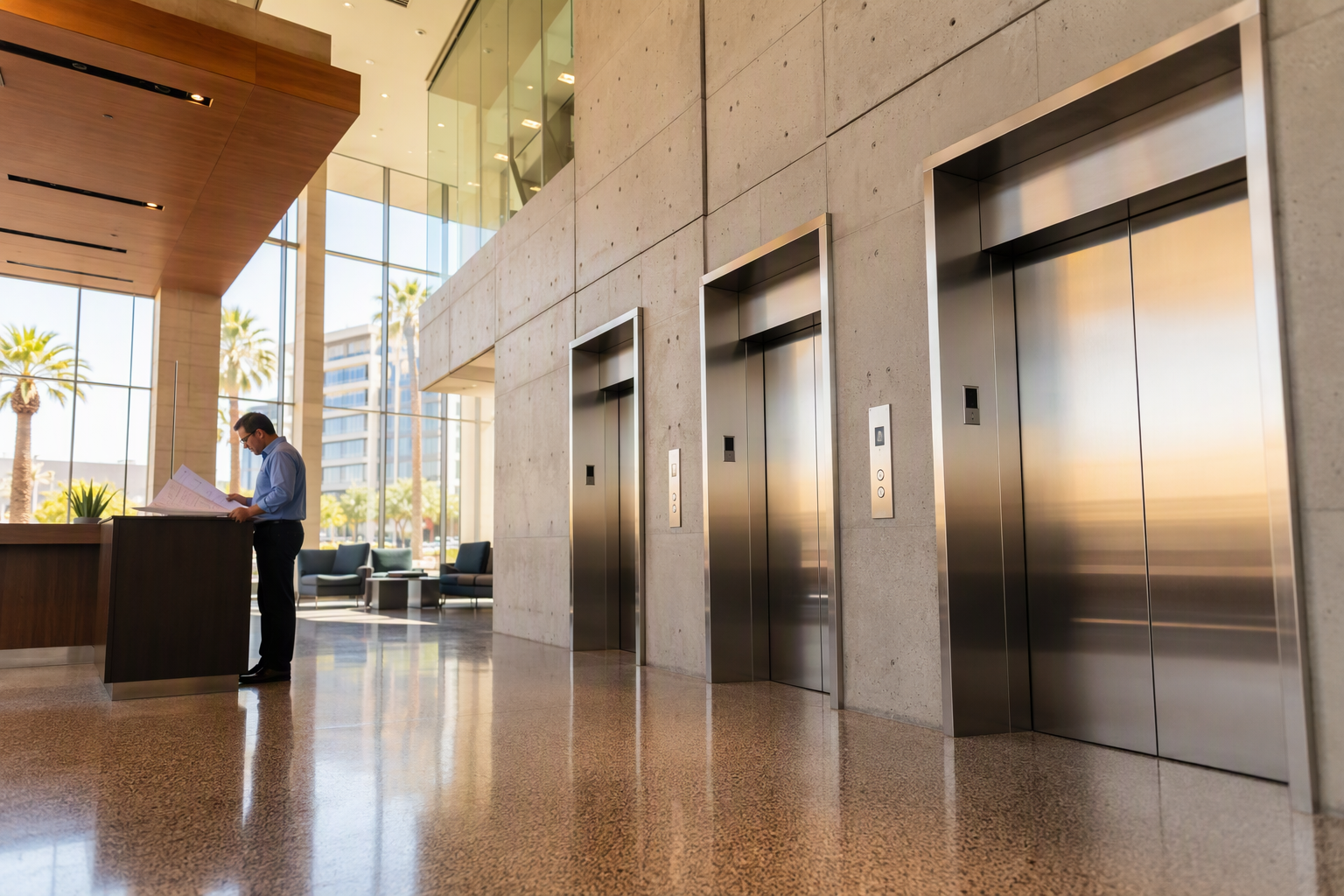
Determining the right number of elevators — and the correct capacity and speed for each — is one of the most consequential decisions a commercial building owner or developer makes. Get it wrong and the building faces code violations, accessibility complaints, and frustrated occupants. Get it right and the vertical transportation system quietly serves the building for decades. The guidance below explains how Arizona buildings are evaluated, what state and federal codes apply, and how Arizona Elevator Solutions supports owners in Phoenix and across Arizona.
How Many Elevators Does a Commercial Building in Arizona Typically Need?
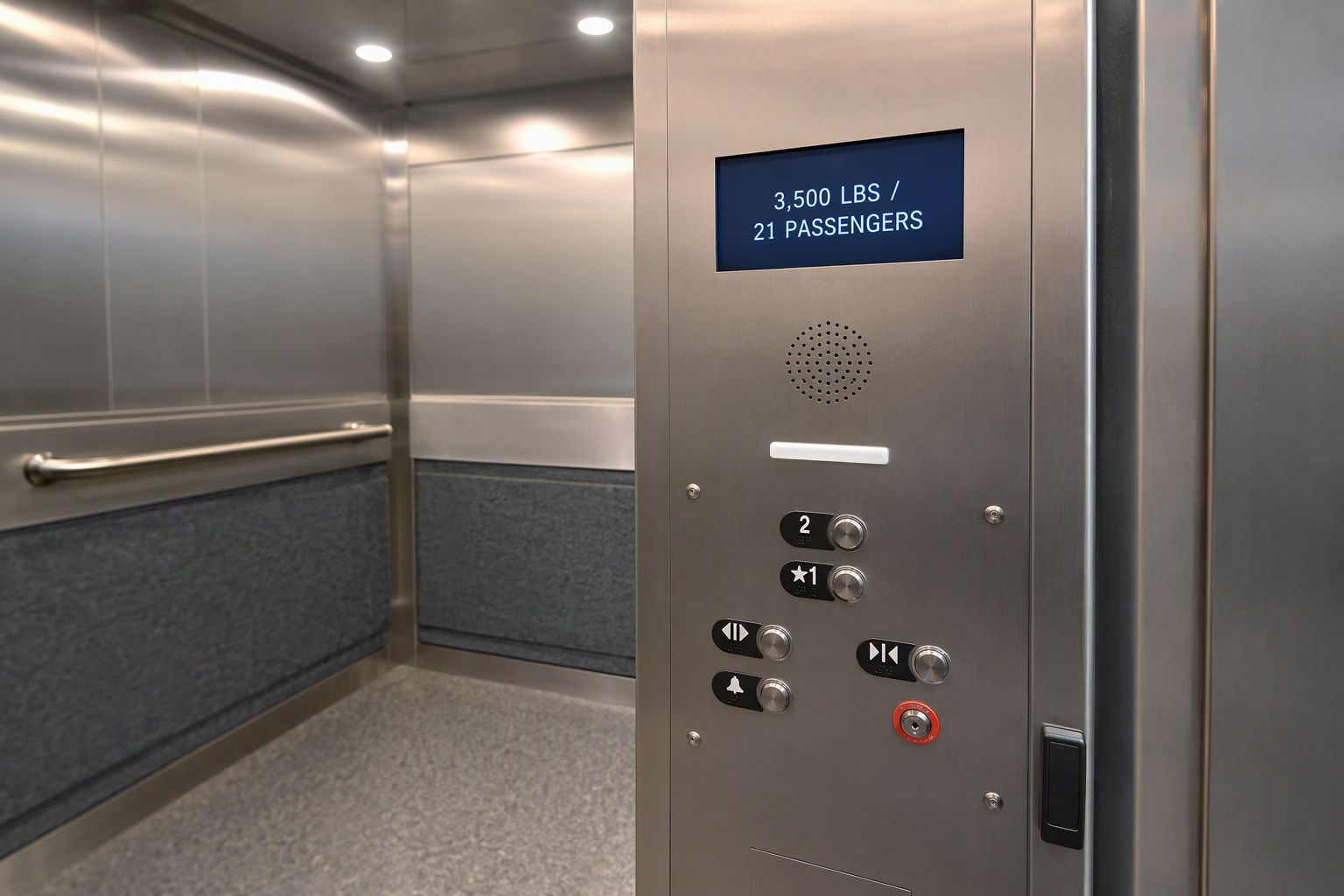
There is no single universal number; the calculation depends on occupant load, building height, number of floors, and intended use. Building code consultants and elevator specialists use a methodology called traffic analysis — sometimes called interval and handling-capacity analysis — to determine how many elevator cars a building needs to move a defined percentage of occupants within an acceptable wait time during peak periods.
As a general planning benchmark, low-rise commercial buildings of two to four stories often serve their occupants adequately with a single elevator, while mid-rise buildings of five to ten floors typically require at least two cars to provide redundancy and acceptable service. High-rise buildings above ten floors generally require grouped banks of three or more cars, with separate service elevators for freight and maintenance. These are planning guides, not code mandates; a qualified traffic analysis specific to your building’s occupancy type and population will produce the most defensible number.
The Americans with Disabilities Act establishes minimum accessibility requirements independently of traffic analysis. Most commercial facilities must provide at least one accessible route that includes an elevator where a building has more than one story, unless a specific ADA exemption applies. Arizona Elevator Solutions reviews ADA applicability for each project during the consultation phase.
What Elevator Capacity Is Required for a Commercial Building in Arizona?
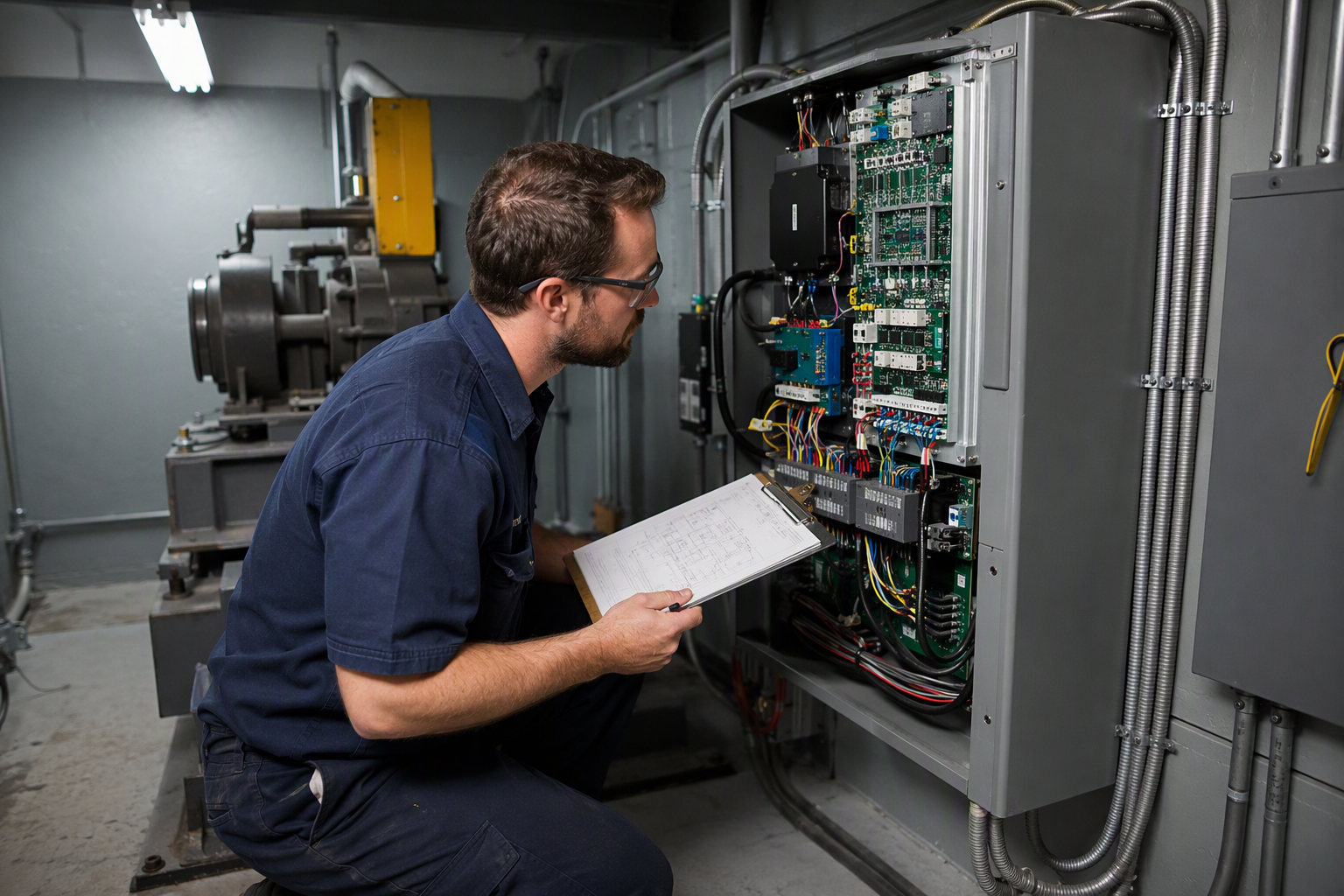
Elevator capacity — expressed in pounds and in rated number of passengers — is governed by the ASME A17.1/CSA B44 Safety Code for Elevators and Escalators. Arizona adopted the 2019 edition of ASME A17.1 for equipment installed, repaired, or altered on or after January 1, 2023. For new commercial installations, capacity sizing begins with the intended use:
- Office buildings: Passenger elevators are commonly sized to accommodate the density of occupants on the busiest floor. Standard commercial passenger cars are frequently specified in ranges that support high-traffic lobby service.
- Medical and healthcare facilities: Larger platform dimensions and higher weight capacities are standard to accommodate beds, stretchers, and medical equipment.
- Retail and mixed-use: Public-facing retail elevators must meet ADA platform dimension requirements and are typically sized for heavy public use.
- Freight and service: Freight elevators follow separate ASME A17.1 provisions and are rated for the actual loads to be carried.
The ASME A17.1-2019 standard specifies minimum platform areas and rated load relationships. Because a wrong capacity specification creates both a safety and a code-compliance risk, Arizona Elevator Solutions recommends that capacity decisions be made in coordination with the project’s architect, structural engineer, and a qualified elevator consultant or contractor.
What Elevator Speed Is Required for Commercial Buildings in Arizona?
Speed requirements are not expressed as a single mandatory figure in ASME A17.1; rather, the code sets safety requirements that apply at whatever speed the elevator is designed to operate. Speed is primarily determined by building height and desired service quality:
- Low-rise buildings (two to four floors): Slower speeds are typical and sufficient to deliver acceptable round-trip times.
- Mid-rise buildings (five to ten floors): Moderate speeds reduce floor-to-floor travel time and improve overall handling capacity.
- High-rise buildings (above ten floors): Higher speeds are necessary to maintain acceptable round-trip times and interval performance as the number of floors served increases.
Speed selection also affects hoistway depth, machine room or machine-room-less (MRL) configuration, and long-term energy consumption. Arizona Elevator Solutions evaluates speed alongside capacity and quantity during the design phase so that all three variables are optimized together.
What Are Arizona’s Regulatory Requirements for Commercial Elevators?
In Arizona, elevator safety is administered by the Industrial Commission of Arizona (ICA), Elevator Division (formerly the ADOSH Elevator Safety Section until September 12, 2026). The governing statute is A.R.S. §§ 23-491 through 23-491.16, as amended by Laws 2026, Ch. 73. The applicable administrative rules are Arizona Administrative Code R20-5-502 through R20-5-515.
Key requirements Arizona building owners must understand include:
- No conveyance may operate in Arizona without an annual certificate of inspection issued by the state.
- Each conveyance must be inspected before it first goes into service, after any modification or alteration, and annually after that.
- The owner must keep the state certificate at the same location as the conveyance and make it available for inspection on request.
- The state serial number or the certificate must be posted in or close to the conveyance in an easily accessible location.
- Arizona owners must notify the state at least 90 days before installing, relocating, or altering a conveyance.
- Arizona owners must notify the state within 24 hours of any accident that injures a person or disables a conveyance.
- Conveyances with firefighters’ emergency operation must use the Arizona Firefighters Service (AZFS) key.
Within the City of Phoenix, the City of Phoenix Elevator Section (Planning and Development Department) inspects elevators, escalators, moving walks, dumbwaiters, and chair lifts. The state ICA Elevator Division handles equipment located outside Phoenix city limits. Arizona Elevator Solutions is familiar with the requirements of both the city and state authorities and coordinates with whichever jurisdiction applies to each project.
Installation and repair work must be performed by a contractor holding an R-12 or C-12 license from the Arizona Registrar of Contractors. Note that the Registrar of Contractors licenses the contractor but does not issue the annual certificate of inspection — that certificate comes from the state.
Can a Private Inspector Perform the Required Arizona Elevator Inspection?
Yes. Arizona owners may hire a private elevator inspector authorized by the Industrial Commission of Arizona to perform initial or annual inspections. However, several important conditions apply:
- The private inspector must register with the ICA Elevator Division every year.
- The inspector must demonstrate at least eight hours of approved continuing education annually.
- The inspector may not inspect a conveyance owned, operated, or last serviced by the inspector, a company the inspector owns, or the inspector’s employer — this conflict-of-interest rule is strictly enforced.
- Using a private inspector does not relieve the owner or operator of their legal obligations under A.R.S. §§ 23-491 through 23-491.16.
Arizona Elevator Solutions can help building owners understand inspection options and ensure that all documentation is in order before and after each inspection cycle.
How Does ADA Compliance Affect Elevator Planning for Arizona Commercial Buildings?
The Americans with Disabilities Act requires that most commercial facilities with more than one story provide at least one accessible elevator unless a specific statutory exemption applies. ADA elevator requirements address platform dimensions, door clear width, hall call button placement, cab controls, floor designation signage, and emergency communication systems, among other elements.
ADA compliance is a federal obligation that applies in Arizona alongside state code. Failure to provide compliant vertical access can expose building owners to federal civil rights complaints and litigation. Arizona Elevator Solutions incorporates ADA review into every new installation and modernization project.
What Is the Process for Installing a New Commercial Elevator in Arizona?
- Traffic and needs analysis: Determine the number, capacity, and speed of elevators required based on occupant load, building height, and use type.
- Design and specification: Work with the project architect, structural engineer, and elevator contractor to finalize hoistway dimensions, equipment type, and code compliance strategy.
- Contractor licensing verification: Confirm that the elevator contractor holds a current R-12 or C-12 license from the Arizona Registrar of Contractors.
- State notification: Notify the Industrial Commission of Arizona Elevator Division at least 90 days before installation begins, as required by Arizona law.
- City of Phoenix coordination (if applicable): Submit required documentation to the City of Phoenix Elevator Section if the building is within Phoenix city limits.
- Installation: Complete installation in accordance with ASME A17.1-2019 and applicable Arizona Administrative Code provisions.
- Pre-service inspection: Arrange an inspection by the ICA Elevator Division or an authorized private inspector before the conveyance enters service.
- Certificate posting: Obtain the state certificate of inspection, keep it at the conveyance location, and post the state serial number or certificate as required by Arizona law.
- Annual inspection program: Schedule annual inspections to maintain continuous compliance and valid certification.
How Does Arizona Elevator Solutions Support Commercial Building Owners in Phoenix and Across Arizona?
Arizona Elevator Solutions serves commercial, healthcare, retail, industrial, and residential clients throughout Arizona, with deep familiarity in the Phoenix metropolitan market. The company provides new installation planning, modernization of existing systems, maintenance programs, and compliance support for owners navigating both state ICA Elevator Division requirements and City of Phoenix Elevator Section requirements.
Because elevator regulations changed significantly with Laws 2026, Ch. 73 — which transferred administration to the ICA Elevator Division from the former ADOSH Elevator Safety Section — building owners with long-standing relationships with the prior agency benefit from working with a service provider who tracks those regulatory transitions and understands the current authority structure.
When a conveyance is disabled or an incident occurs, building owners are legally required to notify the state within 24 hours. Arizona Elevator Solutions helps clients understand their notification obligations and supports owners in preparing documentation when incidents require state reporting.
Schedule a Free Consultation
Understanding how many elevators a commercial building needs — and ensuring those elevators meet Arizona’s capacity, speed, accessibility, and inspection requirements — is a complex undertaking. Arizona Elevator Solutions provides no-obligation consultations to help Phoenix-area and statewide building owners plan new installations, assess existing equipment, and maintain continuous compliance with the Industrial Commission of Arizona Elevator Division, the City of Phoenix Elevator Section, ASME A17.1-2019, and the ADA.
Contact Arizona Elevator Solutions today to schedule your free consultation: 480-557-7600
Need elevator service you can rely on? Arizona Elevator Solutions is ready to help.






