

Switching elevator maintenance contractors is a routine business decision for Arizona building owners and property managers — but it carries real compliance and warranty risks if the transition is handled carelessly. This guide walks through every step of a compliant handover, explains what Arizona law requires you to preserve, and helps you compare service providers so you make a confident, informed choice.
What Are the Key Factors in Switching Elevator Maintenance Companies?
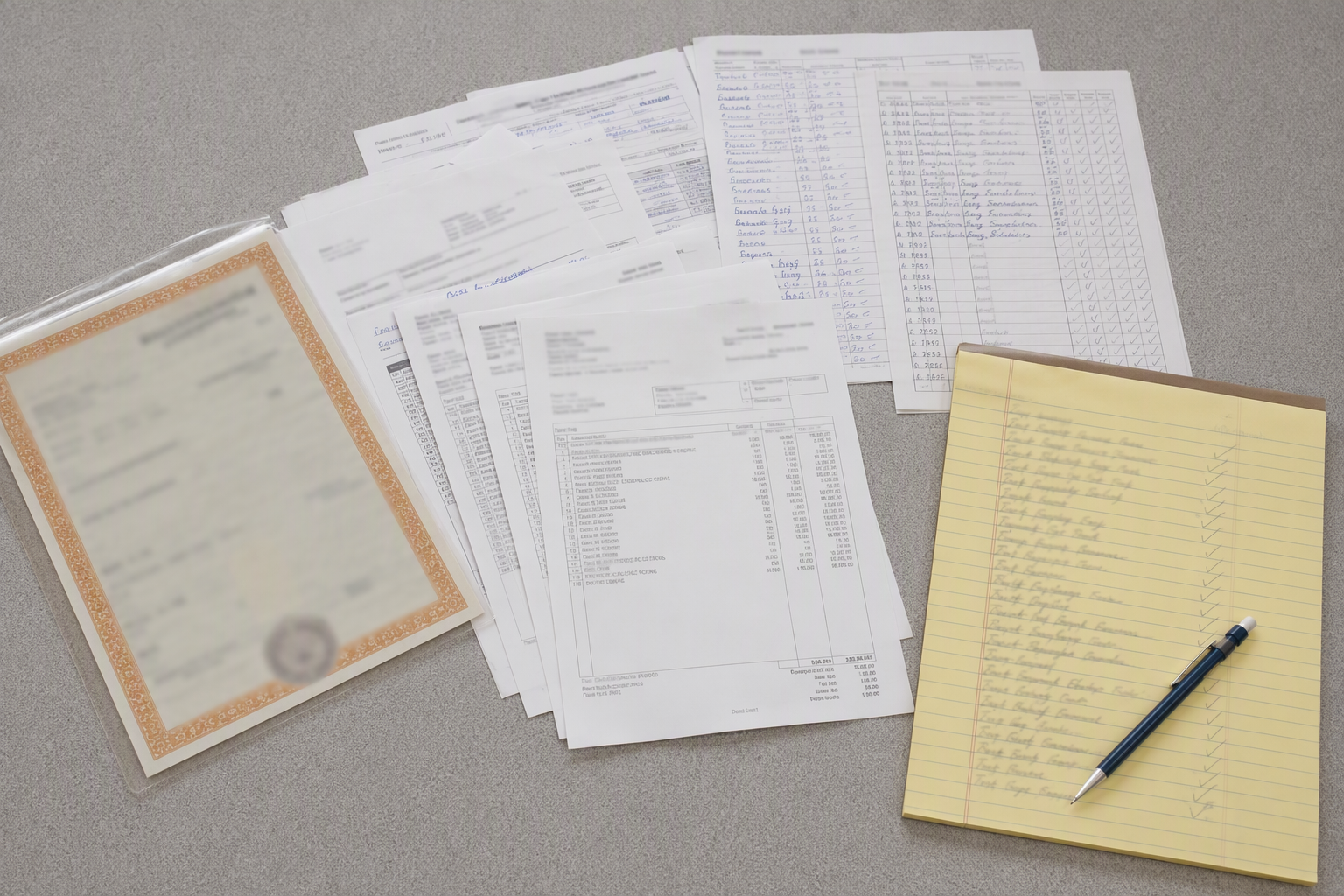
Before initiating any transition, building owners should evaluate four core factors: contractual obligations with the current vendor, documentation completeness, regulatory standing with the Industrial Commission of Arizona (ICA) Elevator Division, and the incoming contractor’s licensing credentials. Missing any one of these can create compliance gaps, equipment downtime, or disputes over equipment warranty coverage.
| Factor | What to Check | Who Is Responsible | Risk If Skipped |
|---|---|---|---|
| Current Contract Terms | Termination clauses, notice period, auto-renewal dates | Building owner / property manager | Early-termination penalties; contract disputes |
| Service & Inspection Records | Full service history, lubrication logs, repair invoices | Outgoing contractor (must provide) | Warranty disputes; inability to prove compliance |
| State Certificate of Inspection | Current annual certificate issued by ICA Elevator Division | Building owner (must retain on-site) | Operating without valid certificate is a violation under A.R.S. §§ 23-491 through 23-491.16 |
| Incoming Contractor Licensing | Arizona Registrar of Contractors R-12 or C-12 classification | Building owner (verify before signing) | Unlicensed work; potential liability for building owner |
| Equipment Warranty Terms | OEM warranty conditions; authorized service requirements | Building owner / incoming contractor | Warranty voided if non-authorized parts or service used |
| Proprietary Parts & Tools | Whether current vendor uses proprietary components | Outgoing contractor disclosure | New vendor may be unable to service without OEM parts |
What Does Arizona Law Require You to Keep When You Switch Contractors?
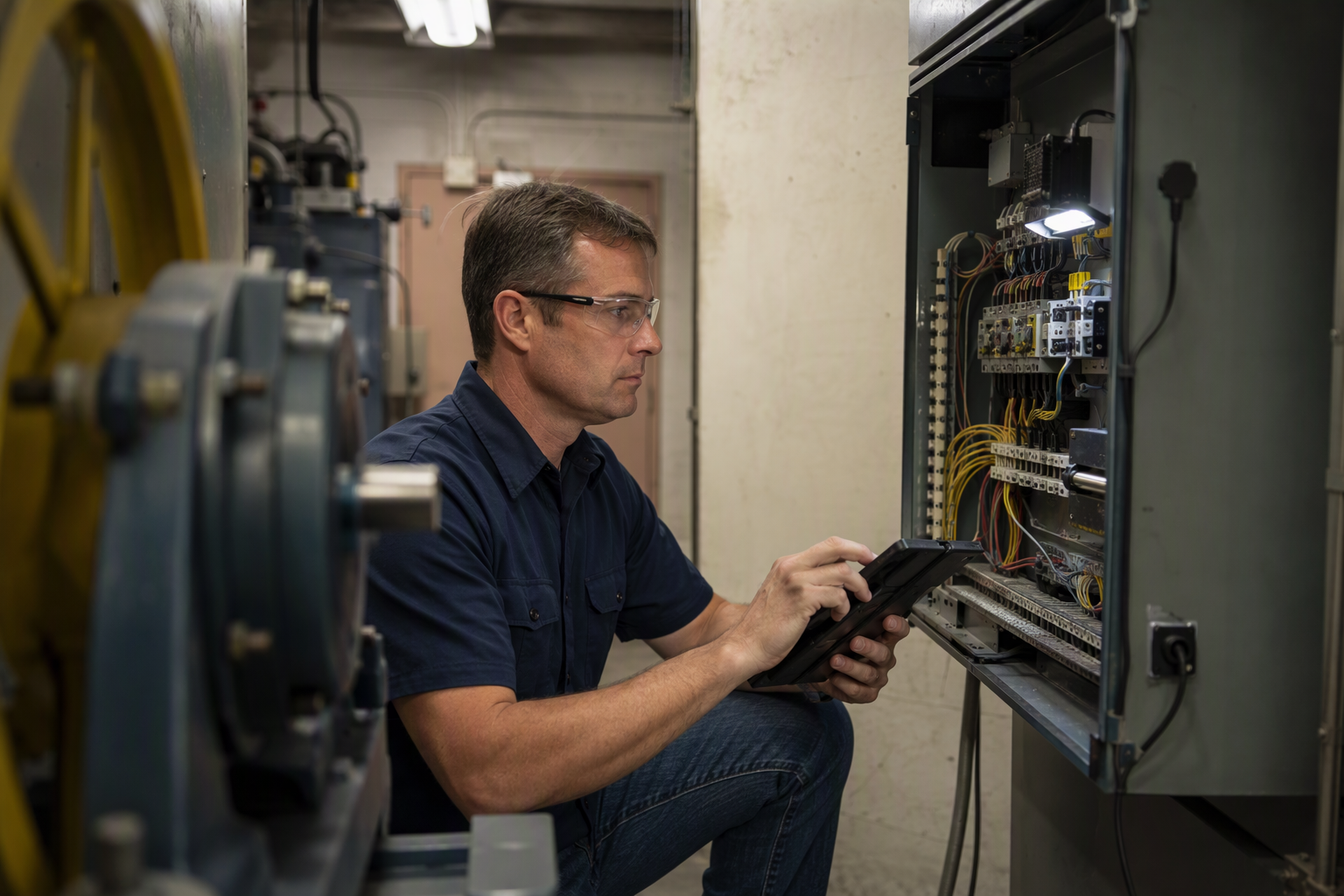
Under A.R.S. §§ 23-491 through 23-491.16 and Arizona Administrative Code R20-5-502 through R20-5-515, the legal obligations that travel with the equipment — not the contractor — include:
- Annual Certificate of Inspection: The ICA Elevator Division issues this certificate; it must be kept at the same location as the conveyance and made available on request at all times. The certificate belongs to the equipment and the owner, not to the maintenance contractor.
- State Serial Number Tag: Every Arizona conveyance is assigned a state serial number displayed on a tag fixed to the controller or mainline disconnect. This tag must remain intact and is used to track all inspection and service history with the ICA Elevator Division.
- Posted Certificate or Serial Number: Arizona law requires that the state serial number or the certificate be posted in or close to the conveyance in an easily accessible location at all times.
- Incident Notification: The owner — not the contractor — must notify the ICA Elevator Division within 24 hours of any accident that injures a person or disables a conveyance, regardless of which company was servicing the equipment at the time.
Key takeaway: Arizona places legal responsibility on the building owner, not the maintenance contractor. Switching vendors does not transfer or relieve any of these obligations.
What Steps Should You Follow to Switch Elevator Maintenance Contractors in Arizona?
- Review your current maintenance contract. Identify the notice period, termination language, and any auto-renewal clauses. Provide written notice within the required window to avoid penalties or unintended contract extensions.
- Request your complete service file in writing. Send a formal written request to your outgoing contractor for all service records, inspection reports, lubrication logs, repair invoices, parts replacement history, and any open work orders. Do this before the contract end date — contractors may be less responsive after termination.
- Obtain your current state certificate of inspection. Confirm you have a physical or digital copy of the annual certificate issued by the ICA Elevator Division. If you cannot locate it, contact the ICA Elevator Division directly using the state serial number on your equipment controller tag.
- Identify and document any open warranties. Review OEM warranties on the cab, controller, drive system, door operators, and any recently replaced components. Note whether the warranty requires service by an authorized technician or specific parts.
- Verify the incoming contractor’s licensing. Confirm the new contractor holds an active Arizona Registrar of Contractors R-12 (residential) or C-12 (commercial) elevator license classification. You can verify license status through the Arizona Registrar of Contractors public database.
- Conduct a joint walkthrough inspection. Before the new contractor takes over, arrange a physical assessment of each conveyance with the incoming provider present. Document the current condition of all major components, control systems, and safety devices.
- Confirm inspection scheduling continuity. Arizona requires annual inspections without exception. Confirm the incoming contractor’s plan for scheduling the next inspection — whether with a private inspector authorized by the ICA Elevator Division or through the ICA Elevator Division directly — before any gap can occur.
- Update your emergency contact and firefighters’ service key information. Arizona conveyances with firefighters’ emergency operation must use the Arizona Firefighters Service (AZFS) key. Verify the new contractor is familiar with this requirement and that all key accountability records are transferred.
- Execute the new maintenance agreement and set a transition date. Coordinate the start date carefully so there is no period during which the conveyance lacks a maintenance contractor of record. Overlapping coverage by a few days is preferable to a gap.
- File any required notifications with the ICA Elevator Division. While a routine contractor change does not typically trigger a formal notification requirement, any planned modifications or alterations that coincide with the transition require at least 90 days’ advance notice to the ICA Elevator Division under Arizona law.
Can Switching Elevator Contractors Actually Void Your Warranty?
This is one of the most common concerns — and one of the most misunderstood. Whether a warranty is voided depends entirely on the terms written into the warranty document, not on a general rule of law. There are two distinct warranty types to consider:
| Warranty Type | Issued By | Typical Condition for Validity | Risk When Switching | Mitigation |
|---|---|---|---|---|
| OEM Equipment Warranty | Elevator manufacturer | May require service by authorized technician or OEM parts | Medium — depends on specific warranty language | Read warranty document; ask incoming contractor if they are OEM-authorized |
| Contractor Workmanship Warranty | Outgoing contractor | Usually tied to their ongoing service relationship | High — typically terminates when the service contract ends | Document all work completed under warranty before transition; photograph component condition |
| Parts/Component Warranty | Parts manufacturer | Generally tied to the part, not the service provider | Low — usually transfers with the part | Retain all parts receipts and installation records |
| New Installation Warranty | Installing contractor | Often requires the installing contractor to perform maintenance | High if within warranty period | Check installation contract; negotiate warranty assignment if possible |
Important: Some large original equipment manufacturers include language that limits or voids warranties if a non-authorized provider services the equipment. Review the specific warranty document — not a verbal representation from the outgoing contractor — before making a final decision.
How Do Independent Elevator Service Companies Compare to OEM-Affiliated Providers?
| Criteria | Independent Provider (e.g., Arizona Elevator Solutions) | OEM-Affiliated Provider |
|---|---|---|
| Equipment Brands Serviced | Typically multi-brand; can service a mixed portfolio | May prioritize or exclusively service their own brand |
| Parts Availability | Uses OEM-equivalent and aftermarket parts; may source OEM parts | Direct access to proprietary OEM parts |
| Contract Flexibility | Generally more flexible contract terms | Often longer-term contracts with stricter termination clauses |
| Proprietary Lock-In Risk | Low — typically avoids proprietary components | Higher — may install proprietary parts that limit future options |
| Local Responsiveness | Often strong local presence in Arizona markets | Varies; may rely on regional dispatch |
| Compliance Knowledge | Must be knowledgeable in Arizona-specific ICA Elevator Division rules | Same requirement; varies by individual technician |
| Warranty Considerations | May not be OEM-authorized; verify before signing | Typically OEM-authorized for own brand |
| Arizona ROC Licensing | Must hold R-12 or C-12 classification | Must hold R-12 or C-12 classification |
Arizona Elevator Solutions is an independent, certified elevator service provider operating across Arizona. As an independent provider, Arizona Elevator Solutions services a wide range of equipment brands, offers flexible service agreements, and maintains compliance expertise specific to the ICA Elevator Division’s requirements and Arizona Administrative Code R20-5-502 through R20-5-515.
What Records Should You Demand From Your Outgoing Contractor?
A complete records handover is the single most important step in any elevator contractor transition. Building owners should request — and confirm receipt of — the following before the contract termination date:
- Full preventive maintenance logs with dates, technician sign-offs, and tasks performed
- All inspection reports (state annual inspections and any interim inspections)
- Copies of ICA Elevator Division certificates of inspection for all conveyances
- Repair and replacement invoices, including parts numbers and quantities
- Any open or active warranty documentation for replaced components
- Records of any violations, corrections, or correspondence with the ICA Elevator Division or City of Phoenix Elevator Section (for equipment inside Phoenix city limits)
- Emergency call logs and incident reports
- As-built drawings or modernization records for any equipment that has been altered
- Documentation of any firefighters’ service key (AZFS key) accountability
If an outgoing contractor refuses to provide these records, building owners should consult legal counsel. The state certificate of inspection and ICA Elevator Division records can be obtained directly from the agency using your equipment’s state serial number, but contractor-held service logs are a separate matter governed by contract law.
How Does the City of Phoenix Elevator Section Factor Into a Contractor Switch?
Arizona’s regulatory structure includes both state and local jurisdiction, depending on equipment location. For equipment located within City of Phoenix limits, the City of Phoenix Elevator Section (Planning and Development Department) inspects elevators, escalators, moving walks, dumbwaiters, and chair lifts. The ICA Elevator Division handles equipment outside Phoenix.
When switching contractors for equipment inside Phoenix, building owners should:
- Confirm whether the most recent inspection certificate was issued by the City of Phoenix or the ICA Elevator Division
- Ensure the incoming contractor is familiar with City of Phoenix Elevator Section processes and documentation requirements
- Verify that the city’s certificate is posted as required, separate from any ICA Elevator Division certificate that may also apply
What Code Standards Should Your New Contractor Be Familiar With?
Arizona adopted the ASME A17.1/CSA B44 Safety Code for Elevators and Escalators, 2019 edition, for equipment installed, repaired, or altered on or after January 1, 2023, effective January 9, 2023. Any contractor performing work on Arizona conveyances must be current with this edition.
For platform lifts and stairway chairlifts installed, repaired, or altered on or after January 1, 2023, the applicable standard is ASME A18.1-2020.
When evaluating incoming contractors, ask specifically whether their technicians are trained to the ASME A17.1-2019 edition and whether their maintenance procedures reflect the current Arizona Administrative Code R20-5-502 through R20-5-515.
Additionally, any elevator providing access to the public must meet applicable accessibility requirements under the Americans with Disabilities Act (ADA). Confirm the incoming contractor documents ADA-relevant device conditions during routine maintenance.
How Long Does a Contractor Transition Typically Take?
| Phase | Activity | Estimated Duration |
|---|---|---|
| Phase 1 | Review current contract; identify notice period; issue written termination notice | 1–2 weeks |
| Phase 2 | Solicit proposals from qualified incoming contractors; verify ROC licensing | 2–4 weeks |
| Phase 3 | Request and receive complete records from outgoing contractor | 2–4 weeks (begin immediately after notice) |
| Phase 4 | Joint condition assessment with incoming contractor | 1–3 days per unit |
| Phase 5 | Execute new maintenance agreement; coordinate start date | 1–2 weeks |
| Phase 6 | Incoming contractor onboarding; first scheduled maintenance visit | First 30 days of new contract |
| Total | Full, compliant transition | 60–90 days from decision to active service |
Contracts with longer notice periods (commonly 90 days) may extend Phase 1, but the remaining phases can proceed in parallel. Building owners inside Phoenix with equipment subject to City of Phoenix Elevator Section oversight should account for any city-specific notification or documentation steps when planning the timeline.
What Are the Pros and Cons of Switching Elevator Maintenance Companies?
| Pros | Cons |
|---|---|
| Opportunity to secure better service terms or coverage scope | Contractor workmanship warranties typically do not transfer |
| New provider may identify deferred maintenance missed by outgoing vendor | OEM warranties may have conditions tied to authorized service |
| Greater flexibility with an independent provider across mixed equipment brands | Transition period carries a small risk of compliance gap if not managed carefully |
| Potential to eliminate proprietary lock-in from outgoing contractor’s parts | Early-termination fees may apply if current contract has not expired |
| Ability to consolidate multiple buildings under one Arizona-based provider | New provider requires time to learn equipment history and quirks |
| Fresh compliance review against current ASME A17.1-2019 requirements | Record gaps are possible if outgoing contractor delays documentation handover |
What Questions Should You Ask a Prospective New Elevator Maintenance Contractor?
- Do you hold an active Arizona Registrar of Contractors R-12 or C-12 license classification?
- Are you familiar with the current ICA Elevator Division requirements under Arizona Administrative Code R20-5-502 through R20-5-515?
- Are your technicians trained to ASME A17.1-2019, the edition currently adopted in Arizona?
- Do you use proprietary parts that could restrict future contractor changes?
- How do you handle annual inspection scheduling — do you work with private ICA-authorized inspectors or through the ICA Elevator Division directly?
- What is your process for documenting and transferring service records if I ever choose to switch again?
- Are you OEM-authorized for the brand(s) of equipment in my building?
- What is your 24-hour incident notification procedure, and how do you support the owner in meeting the ICA Elevator Division’s 24-hour reporting requirement?
Is It Possible to Switch Contractors Mid-Inspection Cycle Without Creating a Compliance Gap?
Yes — because Arizona’s annual inspection requirement is tied to the equipment and the owner, not to any specific maintenance contractor. As long as the current annual certificate of inspection remains valid and the incoming contractor maintains the equipment in compliance with the adopted code, no gap is created simply by changing service providers.
The risk of a compliance gap arises only if:
- The certificate of inspection expires and neither the owner nor the new contractor has scheduled the annual inspection in time
- A modification or alteration is performed during the transition without required advance notification to the ICA Elevator Division
- The outgoing contractor delays the handover of records, causing the incoming provider to be unaware of outstanding violations or open items
Careful planning using the step-by-step process described above eliminates these risks in most cases.
Why Choose Arizona Elevator Solutions for Your Contractor Transition?
Arizona Elevator Solutions is an independent elevator service provider serving building owners and property managers across Arizona. The company focuses exclusively on the Arizona market, meaning all service practices, compliance knowledge, and contractor relationships are oriented toward ICA Elevator Division requirements, Arizona Administrative Code R20-5-502 through R20-5-515, and local authority requirements such as the City of Phoenix Elevator Section.
As an independent provider, Arizona Elevator Solutions is not tied to a single equipment manufacturer — a meaningful advantage when a building portfolio contains mixed brands or when an owner wants to eliminate proprietary lock-in created by a prior contractor. The company works with building owners to obtain and organize service documentation during transitions, supports compliance with the ASME A17.1-2019 code currently adopted in Arizona, and coordinates with authorized private inspectors where appropriate.
Arizona Elevator Solutions also assists owners in navigating the regulatory distinction between equipment inside City of Phoenix limits (City of Phoenix Elevator Section) and equipment elsewhere in Arizona (ICA Elevator Division), reducing the risk of oversight during contractor changeovers.
Contact Arizona Elevator Solutions for a Free Elevator Assessment
Switching elevator maintenance contractors is manageable when you have the right partner guiding the process. Arizona Elevator Solutions provides a free elevator assessment to help building owners evaluate their current equipment condition, documentation completeness, and compliance standing before committing to a new service agreement.
Call Arizona Elevator Solutions today at 480-557-7600 to schedule your free assessment and start your transition with confidence.
Need elevator service you can rely on? Arizona Elevator Solutions is ready to help.






