
How to Compare Elevator Service Companies in Phoenix and Mesa, Arizona Before Signing a Healthcare Maintenance Contract
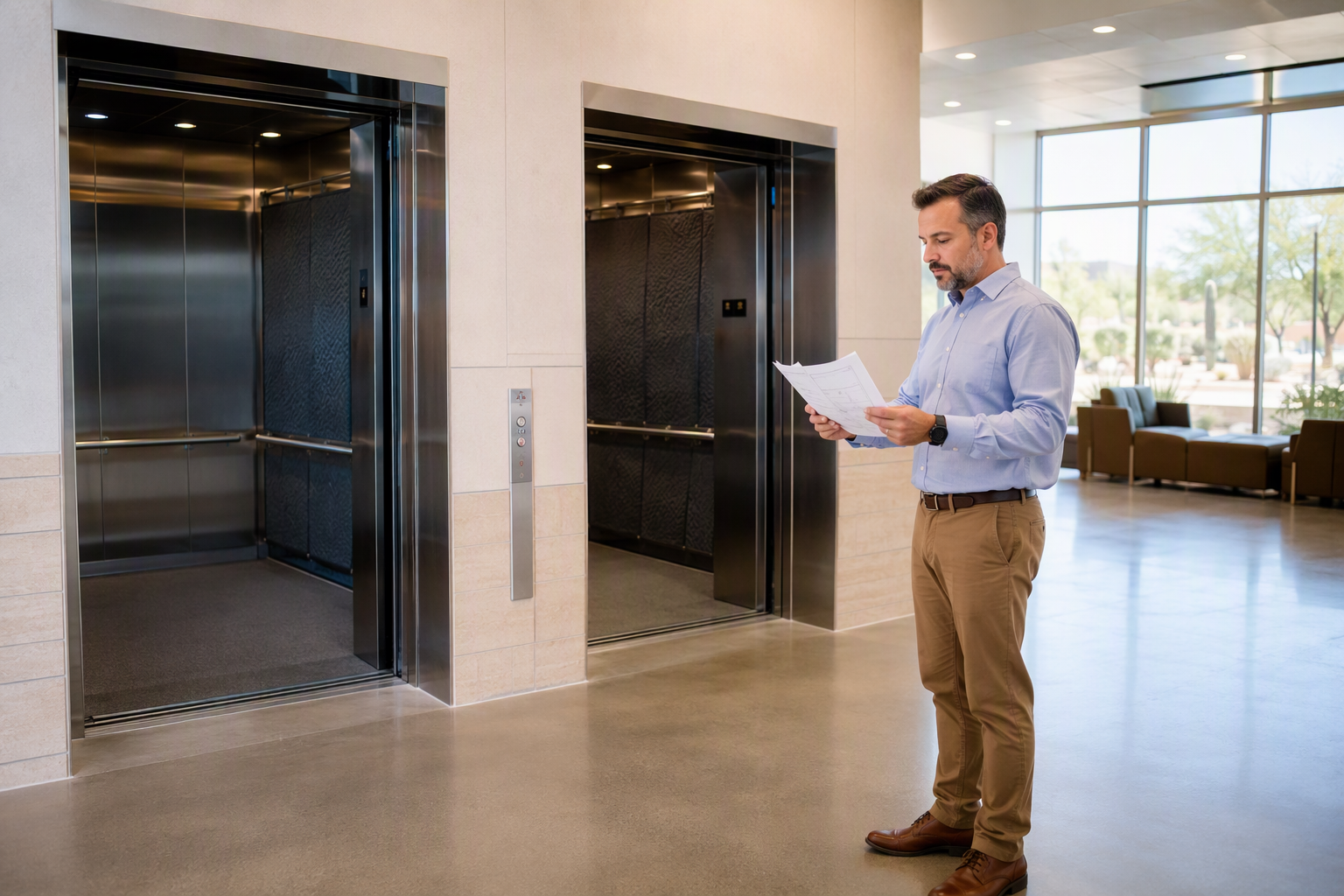
Hospitals, medical office buildings, skilled nursing facilities, and outpatient surgery centers in the Phoenix and Mesa metro area face a category of elevator liability that general commercial properties do not. Patients in wheelchairs, hospital beds, and medical transport carts depend on vertical transportation around the clock. A lapsed inspection certificate, an out-of-compliance cab interior, or an untrained technician responding to a breakdown can create patient safety incidents and regulatory exposure simultaneously. Choosing the right elevator service company before signing a maintenance contract is one of the most consequential facilities decisions a healthcare property manager will make.
—
What Are the Core Criteria for Comparing Elevator Service Companies in Arizona?
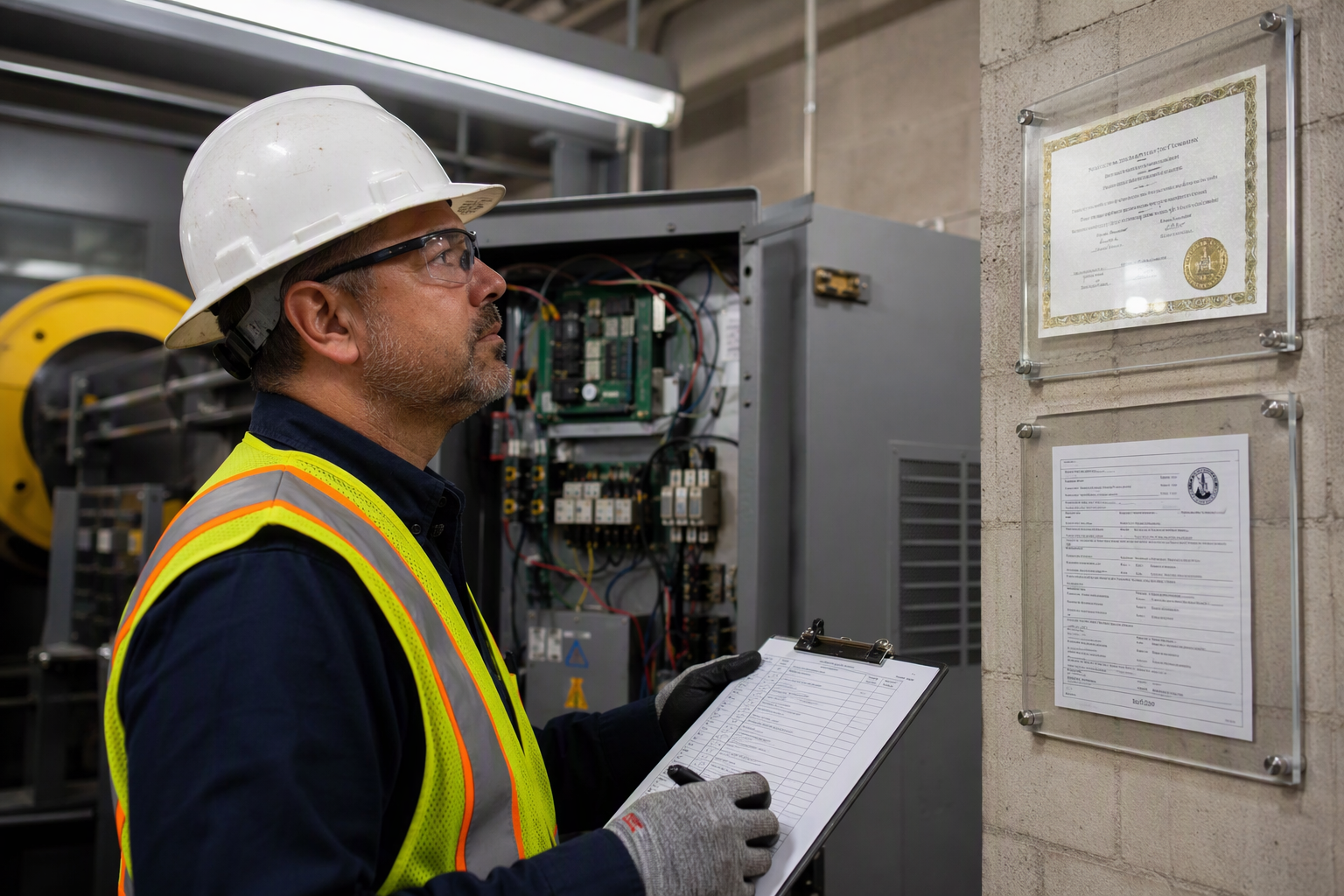
Any structured vendor comparison for an Arizona healthcare facility should begin with licensure, inspection authority, and contract scope — in that order.
- Contractor licensure: The Arizona elevator statute (A.R.S. §§ 23-491 through 23-491.16) governs elevator safety statewide. Companies that install or maintain elevators in Arizona must hold an R-12 (residential) or C-12 (commercial) elevator contractor license from the Arizona Registrar of Contractors (ROC). Verify each candidate’s ROC license number before any other evaluation step.
- Inspection authority: Arizona owners must have each conveyance inspected annually. A vendor may offer to coordinate private inspections. Confirm that any private inspector a vendor uses is registered with the Industrial Commission of Arizona (ICA) Elevator Division and holds the required annual registration with at least eight hours of approved continuing education.
- Contract scope alignment: A maintenance contract should reference the ASME A17.1-2019 code edition adopted by Arizona for equipment installed, repaired, or altered on or after January 1, 2023. Contracts that reference outdated code editions or omit code references entirely are a red flag.
- Healthcare operational experience: General commercial experience does not substitute for familiarity with hospital-grade cab interiors, bariatric capacity requirements, infection control protocols for cab entry and exit, and the operational tempo of a 24-hour clinical environment.
Arizona Elevator Solutions works exclusively within Arizona and structures its maintenance agreements around these criteria as baseline requirements, not optional add-ons.
—
What Arizona Regulations Govern Elevator Maintenance in Healthcare Facilities?
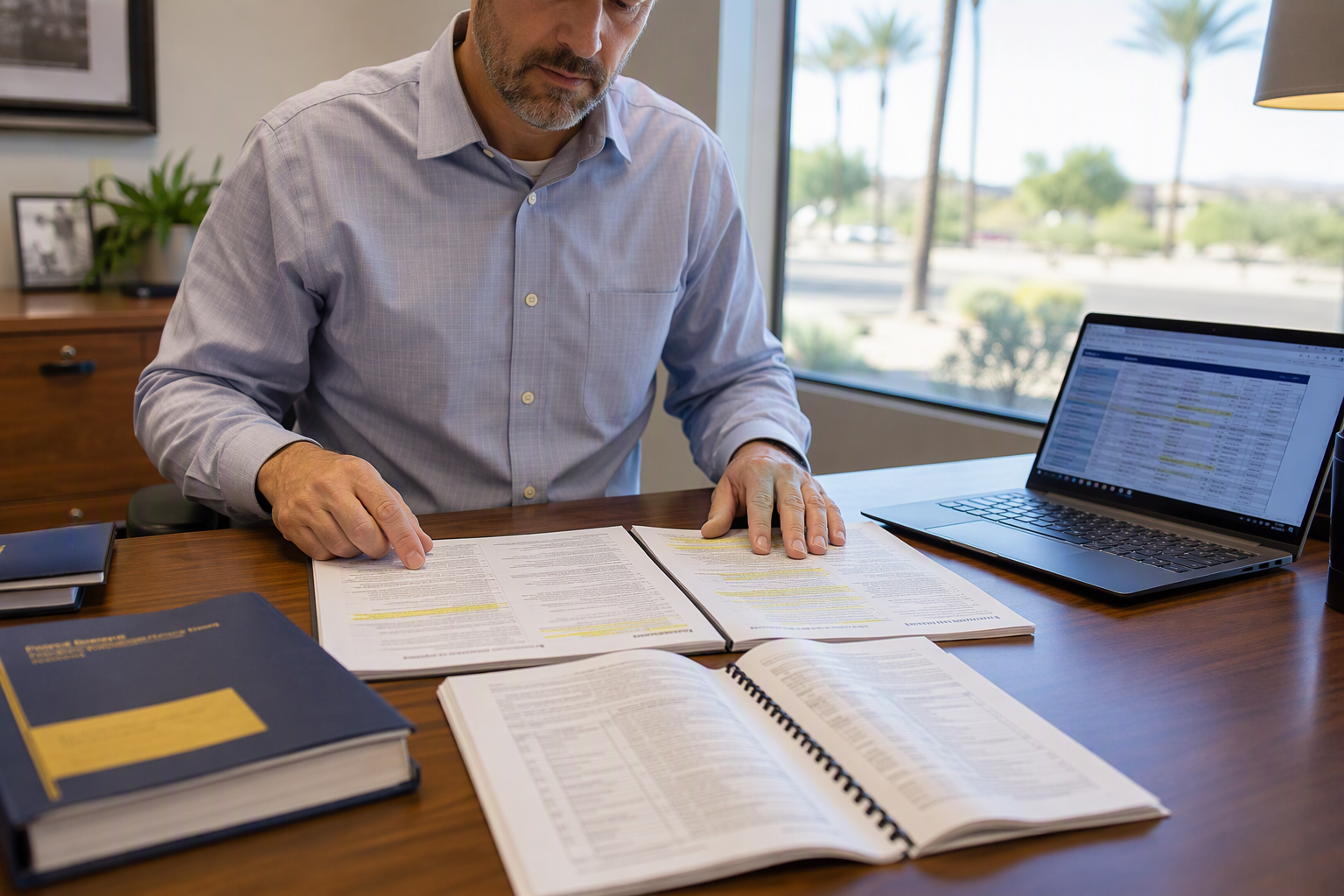
Healthcare elevator owners in Phoenix and Mesa operate under a layered regulatory framework.
State level: The Industrial Commission of Arizona’s Elevator Division (formerly the ADOSH Elevator Safety Section until September 12, 2026) enforces elevator safety under A.R.S. §§ 23-491 through 23-491.16, as amended by Laws 2026, Ch. 73, and the Arizona Administrative Code R20-5-502 through R20-5-515. Arizona has adopted the ASME A17.1/CSA B44, 2019 edition for equipment installed, repaired, or altered on or after January 1, 2023.
Annual certificate requirement: No conveyance may legally operate in Arizona without an annual certificate of inspection issued by the state. The owner must keep that certificate at the same location as the conveyance and make it available for inspection on request. The state serial number or certificate must also be posted in or near the conveyance in an easily accessible location.
City of Phoenix: Elevators, escalators, moving walks, dumbwaiters, and chair lifts inside the City of Phoenix are inspected by the City of Phoenix Elevator Section within the Planning and Development Department. Equipment outside Phoenix city limits falls under state jurisdiction. Healthcare facilities in Mesa, Scottsdale, and Tucson are regulated by the ICA Elevator Division.
Federal level: Healthcare facilities receiving Medicare or Medicaid reimbursement must comply with ADA requirements for accessible vertical transportation, including cab dimensions, door timing, and control panel height. OSHA standards apply to technician safety during maintenance and repair operations.
Platform lifts and stairway chairlifts: Arizona platform lifts and stairway chairlifts installed, repaired, or altered on or after January 1, 2023 must comply with ASME A18.1-2020 — an important consideration for facilities using these devices for patient transfers between floor levels.
—
What Should a Healthcare Elevator Maintenance Contract Include?
A contract that protects a healthcare facility goes beyond a basic parts-and-labor agreement. Before signing, confirm the contract addresses each of the following.
- Explicit reference to ASME A17.1-2019 and applicable Arizona Administrative Code sections as the performance standard
- Scope covering all conveyances at the facility, including dumbwaiters and platform lifts — not just passenger elevators
- Coordination of or support for the annual inspection required by the ICA Elevator Division
- Documentation procedures for maintaining the annual certificate of inspection on-site
- Accident and incident notification support, given that Arizona owners must notify the state within 24 hours of any accident that injures a person or disables a conveyance
- Confirmation that the company’s inspectors comply with the conflict-of-interest rule: an Arizona private elevator inspector may not inspect a conveyance owned, operated, or last serviced by the inspector’s own employer
- ADA compliance checks as part of routine maintenance visits
- Firefighters’ emergency operation verification — Arizona conveyances with this feature must use the Arizona Firefighters Service (AZFS) key
—
How Does ADA Compliance Affect Healthcare Elevator Selection and Maintenance?
Healthcare facilities are among the highest-traffic ADA-regulated environments in any market. Under ADA standards, passenger elevators serving multi-story healthcare facilities must meet requirements for cab size, door clear width, door reopening devices, floor and car controls, visual and audible signals, and Braille and raised character signage.
A maintenance contract that does not include ADA compliance checks creates silent liability. Deteriorated door edge sensors, worn tactile markings, or malfunctioning audible signals may not trigger an ASME inspection flag but will trigger an ADA complaint. Ask each vendor candidate specifically how ADA compliance is documented during routine maintenance visits.
—
What Questions Should Healthcare Facilities Ask Every Vendor Candidate?
- Can you provide your current Arizona Registrar of Contractors R-12 or C-12 license number for verification?
- Are the inspectors you use for annual inspections registered with the Industrial Commission of Arizona Elevator Division, and do they hold current continuing education credentials?
- Does your maintenance agreement reference ASME A17.1-2019 as the applicable performance standard?
- How do you handle the 24-hour accident notification requirement to the state on behalf of our facility?
- What is your process for verifying and maintaining ADA-compliant cab interiors, controls, and signage?
- Have you maintained elevators in licensed acute care, skilled nursing, or outpatient surgery environments in Arizona?
- How do you manage preventive maintenance scheduling to avoid clinical workflow disruption?
- Will you provide written documentation after every service visit sufficient for our facility’s accreditation records?
—
What Is the Difference Between Preventive and Full-Coverage Maintenance Contracts?
Preventive maintenance (PM) contracts cover scheduled inspections and lubrication but typically exclude parts and repairs beyond routine adjustments. Full-coverage or comprehensive contracts include parts replacement and repair labor. For healthcare facilities, the risk calculus generally favors broader coverage because elevator downtime has direct patient care implications that do not apply in office or retail settings. When comparing contracts, map the exclusion list against the age and manufacturer of your specific equipment — older units with proprietary components may have exclusions that effectively convert a full-coverage contract into a PM contract in practice.
—
How Should Arizona Healthcare Facilities Handle the 90-Day Notification Rule for Alterations?
Under Arizona law, owners must notify the state at least 90 days before installing, relocating, or altering a conveyance. For healthcare facilities planning capital projects — new tower additions, imaging suite retrofits, or lobby renovations that require elevator modifications — this requirement must be built into the project planning timeline. A service company that does not proactively raise this obligation during contract discussions is demonstrating a gap in its regulatory knowledge that will become your facility’s problem, not theirs. Arizona Elevator Solutions incorporates this notification planning as a standard part of the pre-contract assessment process for healthcare clients.
—
What Are Common Contract Red Flags Healthcare Facilities Should Watch For?
- No code edition referenced in the contract scope of work
- Blanket exclusions for “proprietary parts” without a defined resolution process
- No documentation of inspector registration with the ICA Elevator Division
- Automatic multi-year renewal clauses with no performance review provision
- No mention of ADA compliance verification in the maintenance scope
- Verbal-only commitments on scheduling or documentation — nothing in writing
- A vendor operating without a current ROC R-12 or C-12 license
—
How Do Local Service Area and Jurisdiction Affect Vendor Choice in Phoenix vs. Mesa?
Healthcare campuses that span both Phoenix city limits and unincorporated Maricopa County — or that operate facilities in both Phoenix and Mesa — may have equipment under different inspection jurisdictions. As noted above, the City of Phoenix Elevator Section handles inspections within Phoenix city limits, while the ICA Elevator Division handles equipment outside Phoenix. A vendor serving a multi-campus health system must demonstrate working familiarity with both inspection workflows and the documentation each jurisdiction requires. Arizona Elevator Solutions serves Phoenix, Mesa, Scottsdale, Tucson, and surrounding Arizona markets and understands the practical differences between these local authority requirements.
—
Questions Your Inspector Will Ask
When an ICA Elevator Division inspector or City of Phoenix Elevator Section inspector arrives at a healthcare facility, the questions and observations typically include the following. Healthcare facilities managers who work with a qualified maintenance contractor should be prepared to address all of these without hesitation.
- Is the annual certificate of inspection posted in or near the conveyance and available on request?
- Is the state serial number tag fixed to the controller or mainline disconnect and legible?
- Have all alterations or modifications been preceded by the required 90-day state notification?
- Is the Arizona Firefighters Service (AZFS) key in place for any conveyance equipped with firefighters’ emergency operation?
- Are maintenance logs current, complete, and available on-site?
- Can the facility produce documentation that the private inspector used for the most recent annual inspection holds a current ICA Elevator Division registration?
- Are platform lifts or stairway chairlifts on-site compliant with ASME A18.1-2020 if installed, repaired, or altered on or after January 1, 2023?
- Have any accidents or incidents been reported to the state within the required 24-hour window?
Arizona Elevator Solutions helps healthcare clients build the documentation and maintenance records needed to answer every one of these questions with confidence before an inspection visit occurs.
—
How to Structure a Side-by-Side Comparison of Vendor Proposals
- Collect written proposals from all candidate vendors — verbal commitments cannot be compared or enforced.
- Confirm ROC licensure (R-12 or C-12) for each vendor through the Arizona Registrar of Contractors public lookup.
- Verify that each vendor’s inspectors are registered with the ICA Elevator Division.
- Map each proposal’s scope of work against the checklist in this guide — note any items that are absent.
- Compare contract exclusions line by line against the actual equipment make, model, and age at your facility.
- Evaluate documentation and reporting commitments in writing — not as described verbally by a sales representative.
- Ask each vendor for references from Arizona healthcare clients with comparable facility types and conveyance counts.
- Review the termination and performance review provisions to understand your options if service quality deteriorates.
—
Why Does Code Adoption History Matter When Comparing Vendors?
Arizona adopted ASME A17.1-2019 for equipment installed, repaired, or altered on or after January 1, 2023. Equipment installed before that date may lawfully remain in service under earlier code editions unless a modification triggers the current adoption. A vendor who applies uniform 2019-edition standards to a 1998-vintage hydraulic elevator may be recommending unnecessary upgrades. Conversely, a vendor who applies outdated standards to equipment that has been altered since January 1, 2023 may be leaving the facility non-compliant. Ask each vendor specifically how they determine which code edition applies to each conveyance in your portfolio, and ask them to document that determination in writing as part of the contract.
—
Healthcare vertical transportation is not a category where a generic maintenance contract provides adequate protection. The combination of Arizona’s annual inspection certificate requirement, the ICA Elevator Division’s enforcement authority under A.R.S. §§ 23-491 through 23-491.16, ADA obligations, and the clinical environment’s zero-tolerance threshold for unplanned downtime demands a vendor with demonstrated Arizona-specific expertise and a contract scope built for healthcare operations.
Ready to Protect Your Healthcare Facility’s Vertical Transportation?
Contact Arizona Elevator Solutions for a free elevator assessment. A qualified team member will review your current contracts, conveyance inventory, and compliance documentation — and identify any gaps before your next inspection. Call 480-557-7600 today to schedule your assessment in Phoenix, Mesa, Scottsdale, Tucson, or the surrounding Arizona area.
Need elevator service you can rely on? Arizona Elevator Solutions is ready to help.






