Top Rated Elevator Maintenance Company Phoenix: Complete FAQ Guide
After 15 years maintaining elevators across Phoenix, Scottsdale, Mesa, and Tucson, I’ve seen what separates a truly reliable elevator maintenance company from one that just shows up when something breaks. This guide answers every question building owners, property managers, and facility directors ask when searching for professional elevator service in the Phoenix metro area. Whether you’re evaluating vendors, facing a compliance deadline, or dealing with a mid-rise that’s overdue for modernization, you’ll find direct, experience-backed answers here.
What makes a top-rated elevator maintenance company in Phoenix?
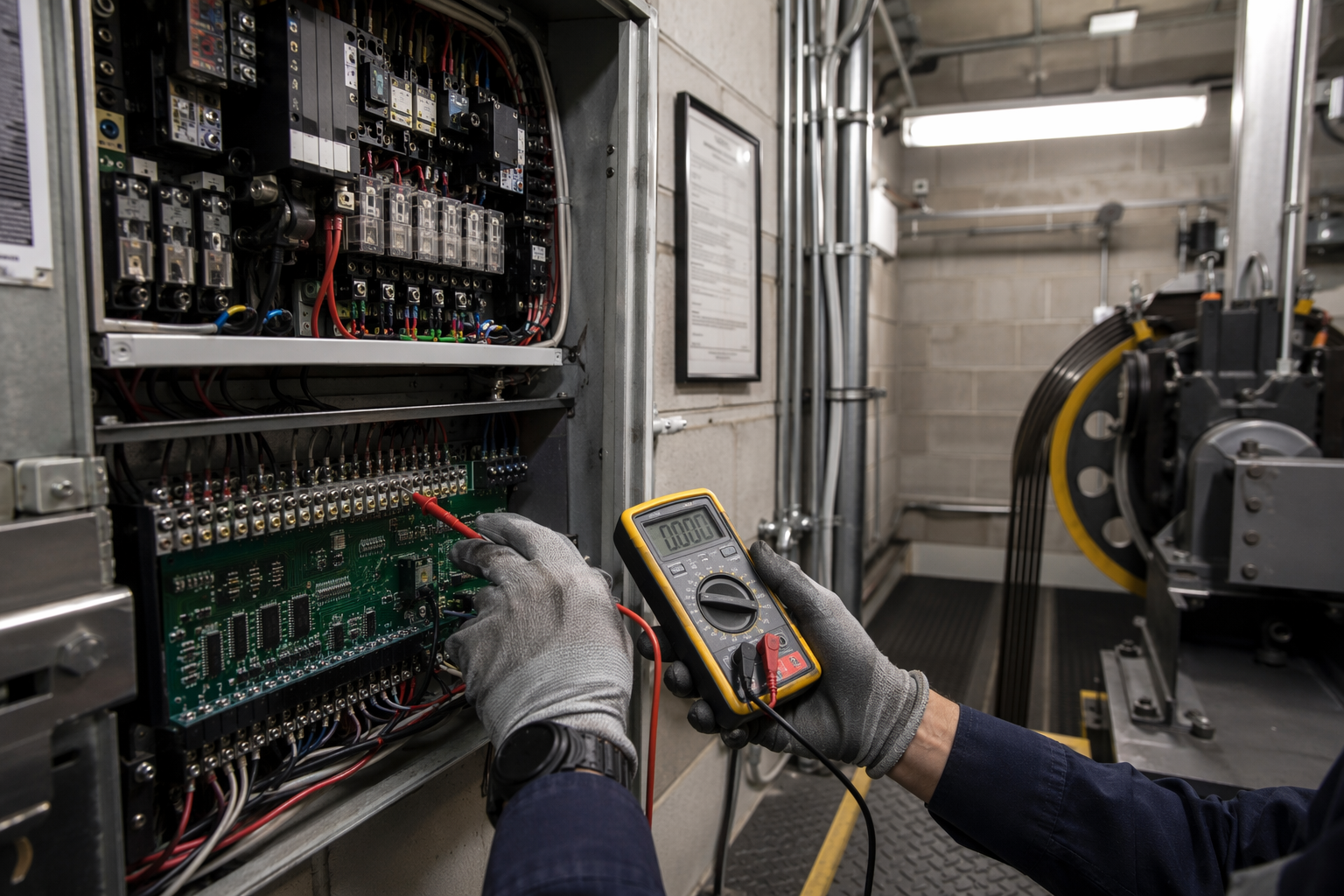
A top-rated elevator maintenance company in Phoenix combines ASME A17.1 code compliance, IUEC-certified technicians, documented response time guarantees, and transparent maintenance agreements tailored to Arizona’s specific inspection requirements.
In the Phoenix market, “top-rated” means more than good reviews. It means a company holds active contractor licensing through the Arizona Registrar of Contractors, employs technicians certified under the International Union of Elevator Constructors (IUEC), and can demonstrate a consistent inspection record traceable to the ASME A17.1 Safety Code for Elevators and Escalators. It also means local knowledge — understanding how Phoenix’s extreme summer heat (regularly exceeding 115°F) stresses hydraulic fluid viscosity, motor cooling systems, and door operator components in ways technicians in cooler climates rarely encounter.
Arizona Elevator Solutions meets every benchmark on this list, serving commercial, residential, and government properties across Phoenix, Scottsdale, Mesa, and Tucson since our founding.
How often should elevators be inspected in Arizona?

In Arizona, elevators must receive a full safety inspection at least once every 12 months, with periodic maintenance checks recommended quarterly under ASME A17.1 guidelines.
Arizona follows the ASME A17.1 / CSA B44 Safety Code, which mandates annual Category 1 tests for most traction and hydraulic elevators. Certain high-use commercial elevators — those in hospitals, high-rise office towers, or airports — may require more frequent Category 3 and Category 5 load tests on a five-year cycle. The Arizona Department of Occupational Safety and Health (ADOSH) enforces these requirements and has authority to issue stop-use orders for non-compliant equipment.
Beyond mandatory inspections, best practice from my 15 years of field experience is a quarterly preventive maintenance visit. Phoenix’s dust storms (haboobs) push fine particulate matter into machine rooms and hoistways, accelerating wear on guide rails, rollers, and door tracks. Quarterly service catches this contamination before it becomes a costly breakdown — or worse, a safety incident.
What does elevator maintenance typically cost in Phoenix in 2026?
Elevator maintenance contracts in Phoenix in 2026 typically range from $250 to $1,200 per month per unit, depending on elevator type, age, usage frequency, and the scope of services included.
Cost variance is significant and worth understanding in detail. A basic oil-hydraulic elevator in a small office building may cost $250–$400/month under a “oil and grease” (lubrication-only) contract. A full-coverage contract for a traction elevator in a mid-rise residential tower — covering all parts, labor, callbacks, and annual testing — can run $800–$1,200/month per unit. High-rise buildings with multiple cars often negotiate per-unit discounts.
| Contract Type | Coverage | Typical Monthly Cost (Per Unit) | Best For |
|---|---|---|---|
| Oil & Grease (Basic) | Lubrication, adjustment, visual inspection | $250 – $400 | Low-traffic, newer hydraulic units |
| Maintenance Only | Labor + limited parts | $400 – $650 | Mid-size commercial buildings |
| Full Coverage | All parts, labor, callbacks, annual test | $650 – $1,200 | High-traffic, aging traction elevators |
| Modernization + Maintenance Bundle | Upgrade scope + ongoing service | $900 – $1,500 | Buildings with 20+ year old equipment |
Always compare contracts line by line. Some companies advertise a low base rate but exclude callback labor (after-hours rescue and repair), which in Phoenix can easily add $150–$300 per incident. Arizona Elevator Solutions publishes transparent, itemized contracts so you know exactly what you’re paying for before signing.
What certifications should a Phoenix elevator company hold?
A qualified Phoenix elevator company should hold Arizona Registrar of Contractors licensing, employ IUEC-certified mechanics, and maintain QEI (Qualified Elevator Inspector) credentials for inspection personnel.
Here’s the certification checklist I use when evaluating any elevator contractor:
- Arizona Registrar of Contractors (ROC) License — required for any elevator installation or major repair work in the state
- IUEC Journeyman or Mechanic Certification — confirms hands-on, apprenticeship-based training
- QEI Certification (ASME QEI-1) — required for third-party inspection personnel under ASME QEI-1 Standard for the Qualification of Elevator Inspectors
- OSHA 10 or OSHA 30 Construction Safety — verifiable at OSHA.gov
- Manufacturer-Specific Training — particularly important for proprietary systems (Otis, KONE, Schindler, ThyssenKrupp)
What is included in a standard elevator preventive maintenance visit?
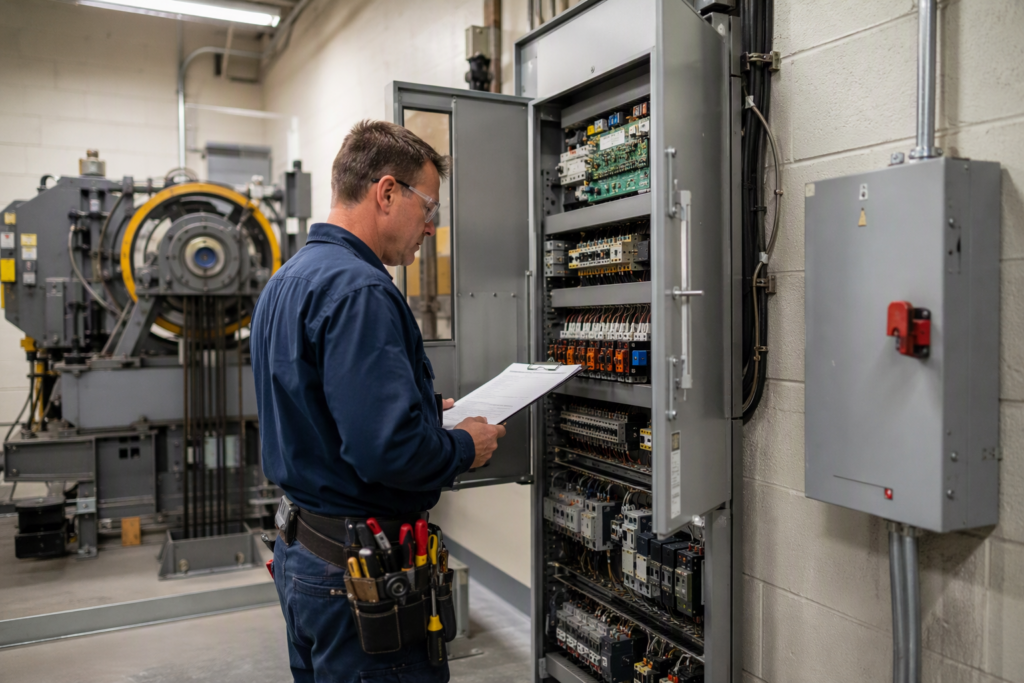
A standard preventive maintenance visit covers lubrication of all moving components, inspection of safety devices, door operator adjustment, controller diagnostics, rope or hydraulic fluid evaluation, and a written service report.
A thorough PM visit on a traction elevator takes approximately 2–4 hours per car and systematically works through every mechanical and electrical subsystem. On hydraulic units, the technician also checks for underground cylinder leaks — a significant concern in Phoenix’s alkaline soil — and evaluates hydraulic fluid condition, which degrades faster in extreme heat. Every visit should produce a written or digital service log that becomes part of your equipment’s compliance record for ADOSH inspections.
What do Arizona elevator compliance regulations require for commercial buildings?
Arizona commercial buildings must comply with ASME A17.1, pass annual ADOSH-administered inspections, maintain posted certificates of operation, and meet ADA accessibility standards for public-use elevators.
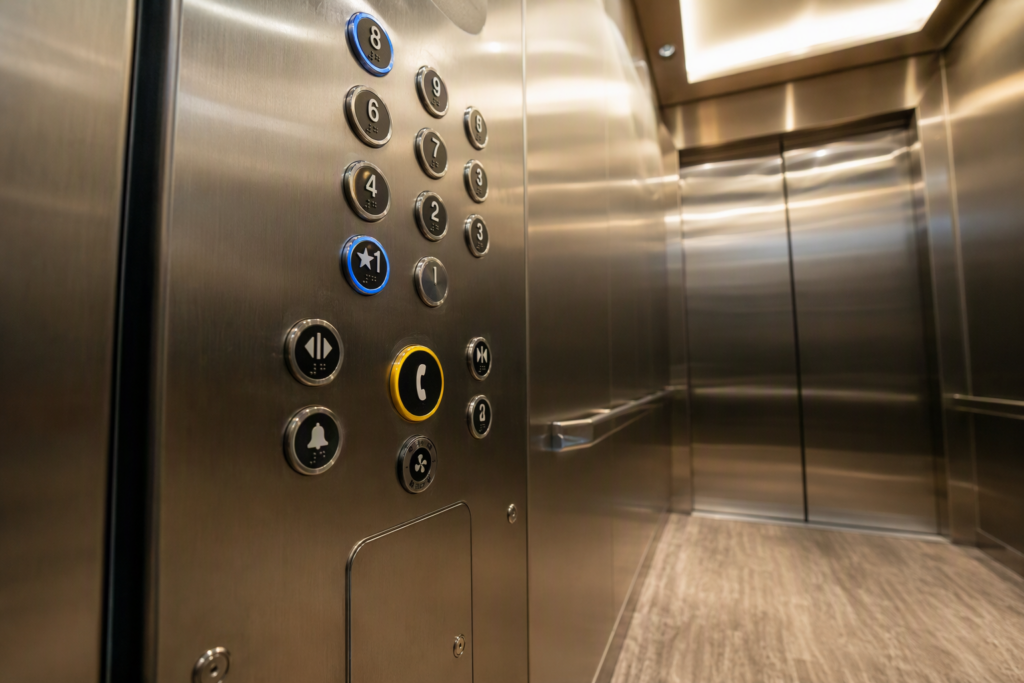
The Americans with Disabilities Act (ADA) mandates that elevators in buildings with three or more floors must meet specific cab dimensions (minimum 68″ × 51″ for standard passenger units), provide Braille floor markings, audible signals, and compliant control panel heights. Non-compliance exposes building owners to federal complaints and potential litigation. Arizona’s own elevator safety rules are enforced through ADOSH, and failure to display a current certificate of inspection is itself a citable violation. My recommendation: schedule your annual inspection at least 60 days before the certificate expiration date to allow time for any corrective work.
How quickly should a Phoenix elevator company respond to a breakdown?
A reliable Phoenix elevator maintenance company should guarantee emergency response within 2–4 hours for passenger entrapment situations and within 24 hours for non-entrapment breakdowns.
Response time is the single most consequential performance metric for an elevator service company, yet it’s also the most frequently overpromised. In a city the geographic size of Phoenix, a company without local dispatch and stocked service vehicles will routinely miss 4-hour windows. Arizona Elevator Solutions operates dedicated service trucks throughout the Phoenix metro, Scottsdale, and Mesa corridors, enabling us to meet or beat our guaranteed response windows on over 97% of dispatch calls. For Tucson properties, we maintain a separate southern Arizona service team.
What should I do immediately if someone is trapped in an elevator?
If someone is trapped in an elevator, follow these steps immediately to ensure safety and proper professional response.
- Stay calm and communicate. Use the in-cab emergency phone (required by ASME A17.1) to speak with the trapped passenger. Reassure them they are safe and help is coming.
- Do not attempt to force open the doors. Manually forcing doors on a stalled elevator can cause the car to move unexpectedly, creating a fall hazard.
- Call your elevator service company’s emergency line immediately. Have the building address, elevator ID number, and approximate floor location ready.
- Call 911 if the passenger has a medical emergency or if the cab is between floors and the service company cannot respond within 30 minutes.
- Post someone at the elevator entrance to prevent others from attempting to use the unit and to guide emergency responders.
- Document the incident — time of entrapment, duration, conditions — for your maintenance records and any required incident reports.
- Do not restore elevator to service until your certified technician has inspected and cleared the unit and documented the cause of the failure.
How does Phoenix’s extreme heat affect elevator equipment?
Phoenix’s extreme summer heat — routinely above 110°F — accelerates hydraulic fluid breakdown, stresses motor windings, degrades rubber seals, and can trigger thermal overload shutdowns, making heat-specific maintenance protocols essential.
This is one of the most underappreciated regional maintenance factors I see mishandled by out-of-state elevator companies entering the Phoenix market. Hydraulic oil viscosity drops significantly above 100°F, reducing lifting efficiency and increasing pump wear. Machine room temperatures in older Phoenix commercial buildings can exceed 130°F without adequate HVAC — a direct violation of ASME A17.1 machine room temperature requirements. We always evaluate machine room ventilation as part of every maintenance contract renewal and recommend supplemental cooling units where necessary. Proactive heat management reduces emergency callbacks by an estimated 30–40% during Phoenix’s May–September peak heat season.
When does an elevator need to be modernized versus maintained?
An elevator typically requires modernization rather than ongoing maintenance when it is 20+ years old, experiences frequent breakdowns, has obsolete controls or discontinued parts, or no longer meets current ADA or ASME A17.1 code requirements.
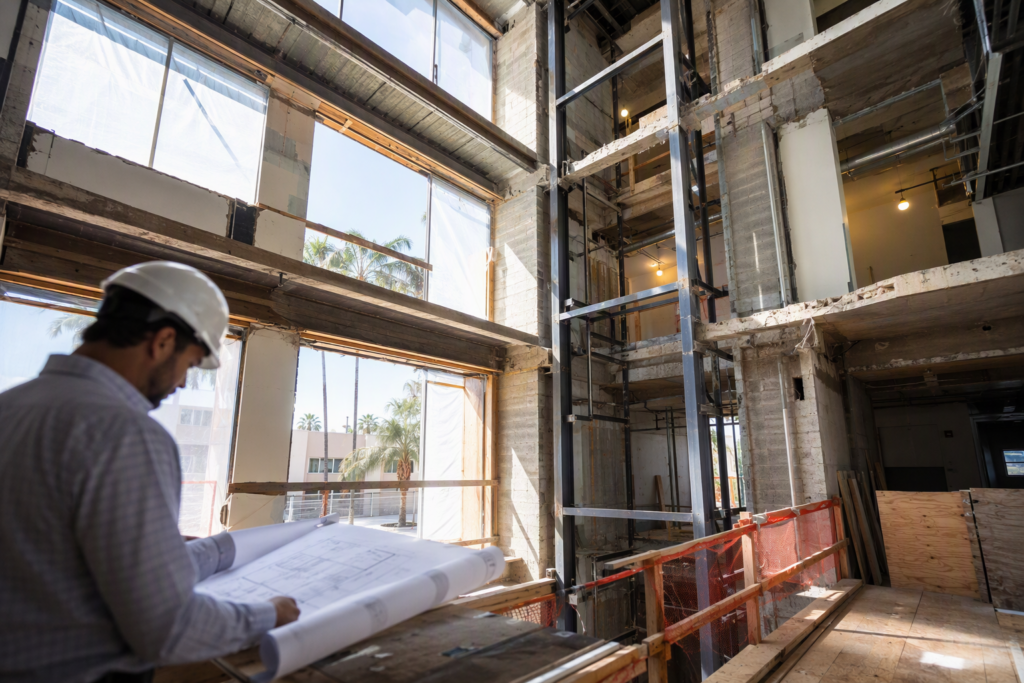
The decision matrix I walk clients through involves four factors: parts availability, breakdown frequency, energy consumption, and code compliance exposure. If a unit is having more than 3–4 significant breakdowns per year and its controller board is no longer manufactured, maintenance costs will soon exceed the ROI threshold. Modernization projects — which can range from $15,000 for a controller upgrade to $150,000+ for a full cab and machine renovation — typically yield 15–25 years of reliable service life and often reduce energy consumption by 30–40% through variable-frequency drive (VFD) technology. Arizona Elevator Solutions provides no-obligation modernization assessments for all contract clients.
What questions should I ask before hiring an elevator maintenance company in Phoenix?
Before hiring any Phoenix elevator maintenance company, ask about technician certifications, average response times, contract exclusions, parts inventory practices, and local service history.
Here’s my field-tested list of due-diligence questions:
- Are your technicians IUEC-certified, and can you provide license numbers for verification?
- What is your guaranteed response time for after-hours entrapment calls, in writing?
- What is excluded from your full-coverage contract? (Ask specifically about door operators, governor ropes, and hydraulic cylinders.)
- Do you stock common replacement parts on your service vehicles, or do you order them per job?
- How many active contracts do you currently hold in Phoenix, and can you provide references?
- Are annual Category 1 tests included, or billed separately?
- What is the contract termination clause and notice period?
How do I compare elevator maintenance companies in Phoenix?
Compare Phoenix elevator companies on technician credentials, contract transparency, response time guarantees, local parts availability, customer references, and verified compliance history rather than price alone.
Price is a starting point, not a decision criterion. I’ve seen buildings that signed with the lowest bidder spend twice the first-year savings on emergency callback charges within 18 months. Request a sample contract from every vendor you’re evaluating. Compare the exclusions list carefully — this is where budget contracts hide their true cost. Also verify Arizona ROC license status independently through the state’s online contractor lookup tool before executing any agreement.
Does elevator maintenance affect building insurance and liability in Arizona?
Yes — documented elevator maintenance directly affects commercial property insurance premiums and substantially reduces owner liability exposure in the event of an injury or code violation.
Arizona property and casualty insurers increasingly require proof of current inspection certificates and maintenance contracts as conditions of coverage for buildings with elevators. In the event of an injury claim, plaintiff attorneys routinely subpoena maintenance logs. A building owner with a complete, unbroken service record from a certified company like Arizona Elevator Solutions is in a fundamentally stronger legal position than one with gaps in documentation. Conversely, buildings with lapsed certificates have seen claims result in significantly higher settlement values due to inferred negligence. Treat your maintenance records as a legal asset.
What are the ADA requirements for elevators in Phoenix commercial buildings?
Phoenix commercial buildings subject to the ADA must provide elevators in multi-story structures with three or more floors, meeting specific dimensional, signage, control height, and audible signal requirements under ADA Standards for Accessible Design.
The ADA Standards for Accessible Design specify that elevator cab doors must provide a minimum 36″ clear opening, cabs must accommodate a standard wheelchair (minimum 68″ depth × 51″ width for most configurations), floor buttons must be no higher than 48″ from the floor, and raised/Braille characters must accompany all floor and function buttons. Emergency communication devices must be operable without voice (visual/tactile confirmation). Many Phoenix buildings constructed before 1993 are still operating with non-compliant controls or call stations and face ongoing legal exposure. An accessibility audit is a standard component of our maintenance assessments.
How long does elevator maintenance typically take?
A routine preventive maintenance visit for a single elevator takes 2–4 hours; annual safety tests requiring load weights and witnessing take 4–8 hours per unit, and major component replacements may require the elevator to be out of service for 1–5 business days.
Planning around maintenance downtime is a real operational concern for Phoenix property managers. Best practice is to schedule PM visits and annual tests during off-peak building hours — early morning or evenings for office towers, mid-morning for residential high-rises. For buildings with a single elevator serving mobility-impaired residents, ADA obligations around accessibility mean unplanned outages can trigger complaints. We coordinate our scheduling directly with building management to minimize tenant impact and provide advance notice for all planned downtime.
What types of elevators does a Phoenix maintenance company service?
A full-service Phoenix elevator maintenance company should service hydraulic elevators, traction (geared and gearless) elevators, MRL (machine-room-less) units, home elevators, and commercial freight elevators across all major manufacturer platforms.
Phoenix’s commercial real estate mix includes a broad range of elevator types: two- and three-stop hydraulic units in medical office buildings; gearless traction elevators in high-rises along Camelback Corridor and downtown Phoenix; MRL traction units in newer Class A office parks in Scottsdale; and freight elevators in Mesa’s industrial warehouse corridor. Each type has distinct maintenance requirements. Hydraulic units require cylinder and valve inspections that traction units don’t; MRL units demand specialized controller diagnostics. Ensure your vendor has documented experience with your specific equipment type before signing a contract.
What OSHA regulations apply to elevator maintenance workers in Arizona?
Elevator maintenance technicians in Arizona are subject to OSHA 29 CFR 1926 Subpart R (Steel Erection) for construction-phase work and OSHA 29 CFR 1910 General Industry standards for maintenance, including lockout/tagout (LOTO) and confined space protocols.
Under OSHA standards, elevator technicians working in hoistways and machine rooms must follow strict lockout/tagout (LOTO) procedures under 29 CFR 1910.147, ensuring all energy sources are de-energized and locked before maintenance begins. Pit environments may qualify as permit-required confined spaces under 29 CFR 1910.146. Arizona operates its own OSHA-approved state plan through ADOSH, which adopts federal OSHA standards with some state-specific modifications. Any maintenance company operating in Phoenix must demonstrate full LOTO compliance — this is a question worth asking explicitly during vendor evaluation.
How does Arizona Elevator Solutions compare to national elevator companies in Phoenix?
Arizona Elevator Solutions offers faster local response times, Phoenix-specific maintenance expertise, and more flexible contract terms than most national elevator companies, without sacrificing technical certification standards.
National elevator OEM service divisions (associated with major manufacturers) often provide strong proprietary system knowledge but operate on regional dispatch models that stretch response times in sprawling metro areas like Phoenix. Independent certified companies like Arizona Elevator Solutions can service multi-manufacturer equipment, typically offer more negotiable contract terms, and maintain local parts inventory for faster turnaround on common repairs. The key is ensuring any independent company you consider holds equivalent technical certifications — which our team does, including IUEC journeyman credentials and QEI-1 qualified inspectors on staff.
What are the consequences of failing an elevator inspection in Arizona?
Failing an elevator inspection in Arizona can result in an immediate out-of-service order from ADOSH, civil penalties, suspension of the certificate of operation, and significant liability exposure if the elevator is operated while non-compliant.
ADOSH has authority to post physical stop-use notices on non-compliant elevators and can issue civil monetary penalties to building owners. Operating an elevator under a stop-use order — even temporarily while awaiting repairs — creates direct personal liability for building management. In 2026, Arizona has increased enforcement activity around deferred maintenance and lapsed certificates in the greater Phoenix metro area, particularly in commercial office and multifamily residential properties. The corrective action timeline after a failed inspection varies by the nature of the violation: minor adjustments may be corrected same-day, while major safety device failures can mean days or weeks of required downtime. Proactive maintenance — not reactive repair — is the only reliable strategy for avoiding this scenario.
How do I get started with a professional elevator maintenance contract in Phoenix?
To start an elevator maintenance contract in Phoenix, request a site assessment from a certified provider, review your current equipment condition and compliance status, and compare at least two to three contractor proposals before signing.
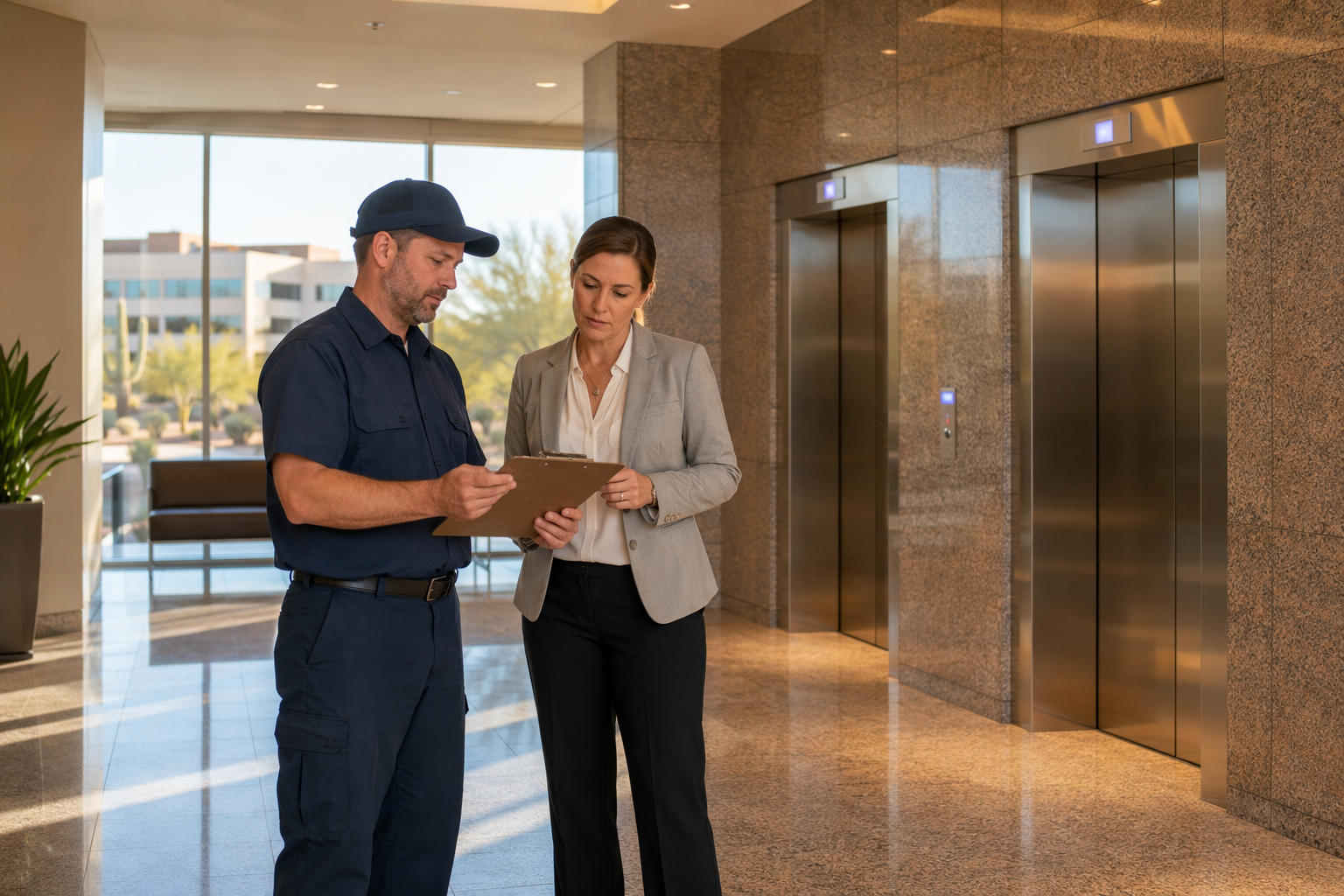
The onboarding process with a qualified maintenance company should begin with a no-obligation equipment audit — not a sales pitch. At Arizona Elevator Solutions, our initial assessment documents the make, model, age, condition, and current compliance status of every unit, then presents a tailored maintenance plan with transparent pricing. We serve property owners, HOAs, commercial landlords, healthcare facilities, and government buildings across Phoenix, Scottsdale, Mesa, and Tucson. The entire assessment process takes less than one business day for most single-building clients, and we can typically begin service within two weeks of contract execution.
Need elevator service you can rely on? Arizona Elevator Solutions is ready to help.