How Much Does Elevator Modernization Cost in Arizona and What Affects the Price?
For building owners, property managers, and facility directors across the Phoenix metro, Tucson, and the broader Arizona market, elevator modernization represents one of the most significant capital expenditures in a building’s lifecycle. Understanding what drives cost — and what the modernization process actually involves — is essential before issuing a request for proposal or accepting the first quote that arrives. This guide covers every dimension of elevator modernization pricing in Arizona, from equipment and labor to code compliance, permitting, and vendor selection.
What Is Elevator Modernization and Why Does It Matter?
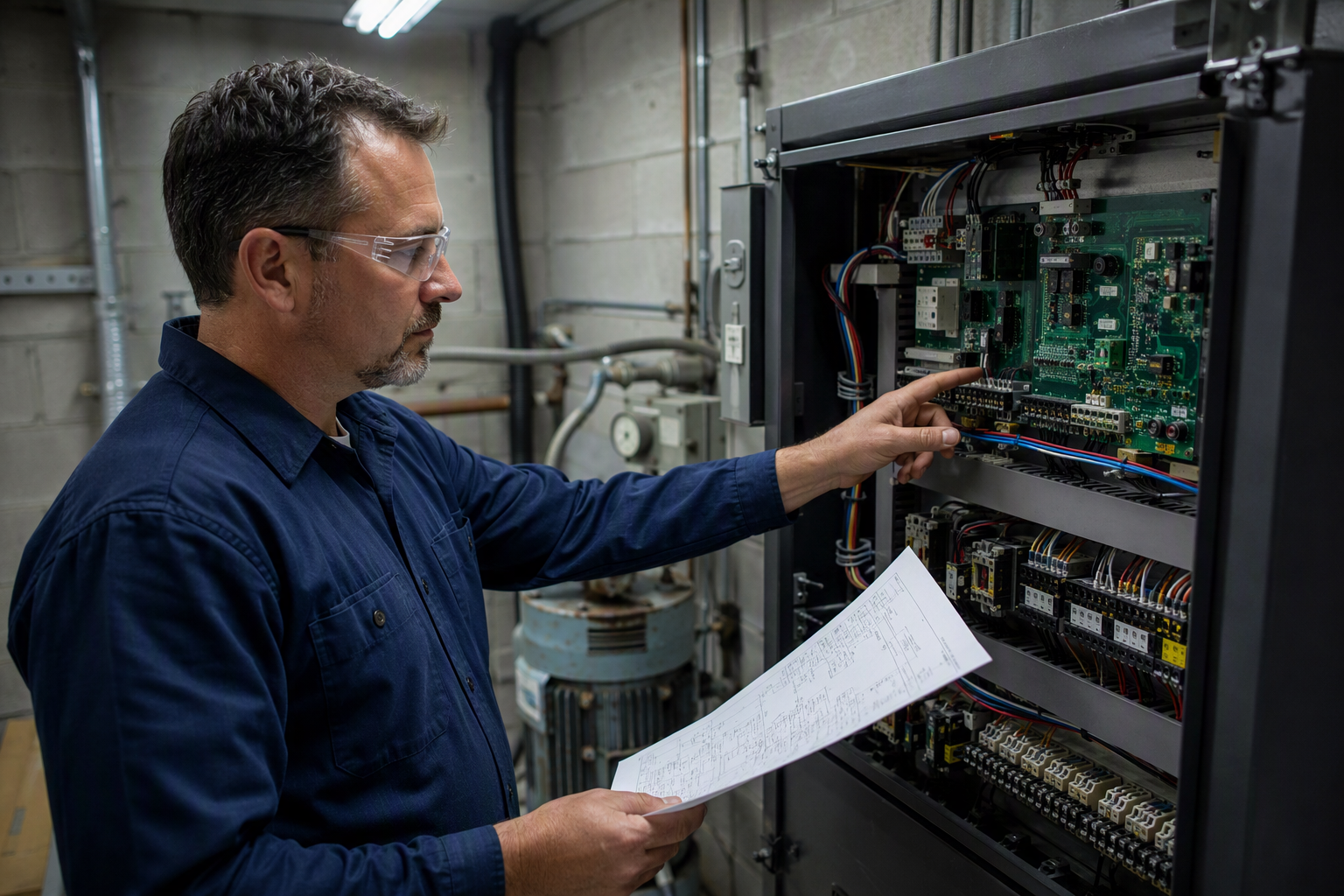
Elevator modernization refers to the partial or complete replacement and upgrade of elevator components — including the controller, drive system, cab interior, door operators, fixtures, safety devices, and sometimes the hoist machine itself — without necessarily replacing the entire hoistway structure. Modernization is distinct from routine maintenance and from a full new installation.
The rationale for modernization is multifold: aging equipment becomes unreliable, replacement parts for older systems grow scarce, energy consumption rises as components wear, and — critically — code editions evolve. Arizona buildings must comply with the ASME A17.1 Safety Code for Elevators and Escalators, and modernization projects trigger mandatory code upgrades. Accessibility obligations under the Americans with Disabilities Act (ADA) also apply when alterations occur.
What Are the Primary Cost Factors for Elevator Modernization in Arizona?
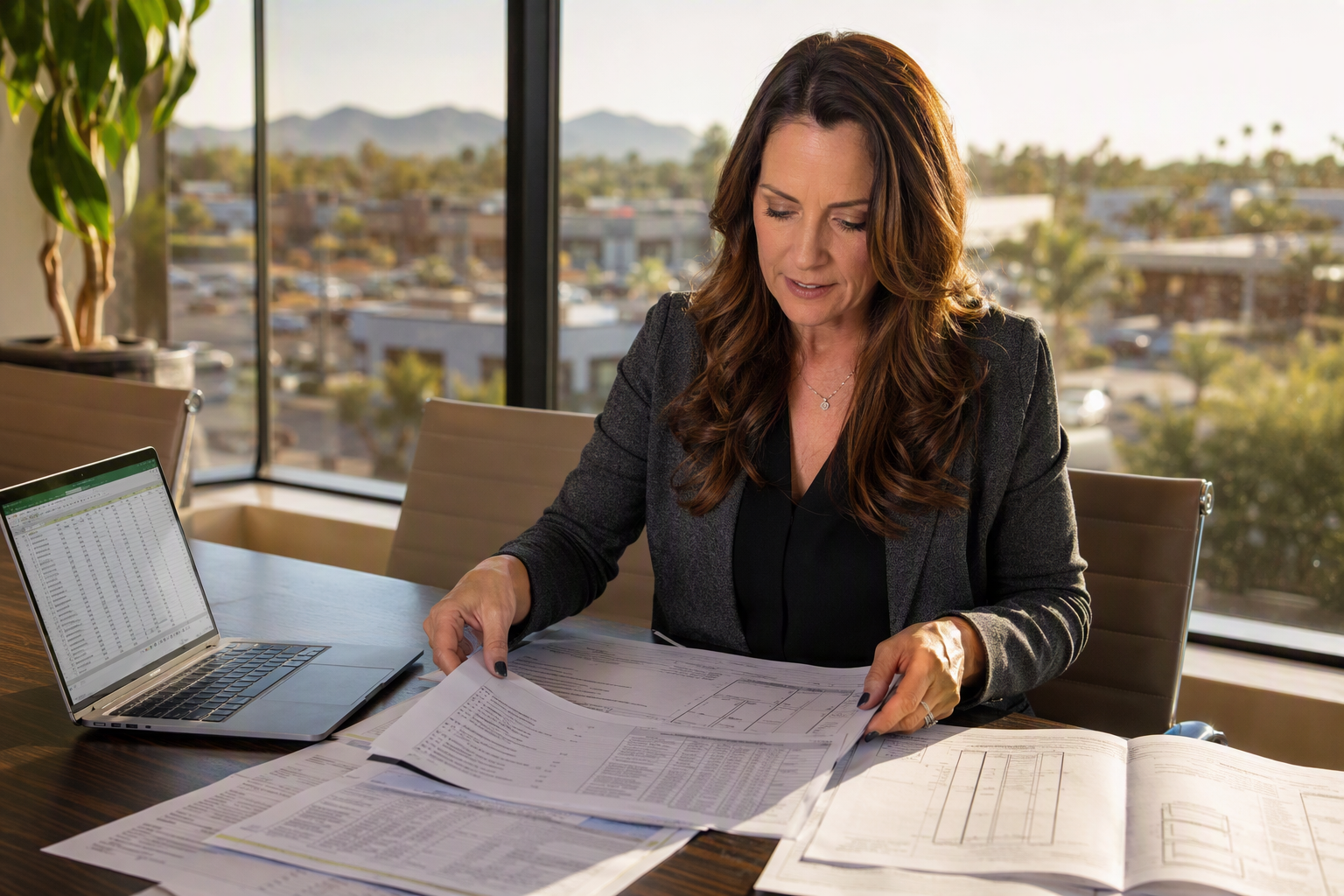
No two modernization projects are identical. The following factors are the principal cost drivers that Arizona Elevator Solutions and other industry professionals evaluate when scoping a project:
- Elevator type and configuration: Hydraulic elevators, traction elevators (geared and gearless), and machine-room-less (MRL) systems each carry different equipment and labor costs. Hydraulic systems are common in low-rise Arizona commercial buildings and may require environmental remediation of older oil-based systems alongside modernization.
- Number of stops and travel distance: A two-stop hydraulic elevator in a medical office building requires substantially less work and fewer components than a 20-stop traction elevator in a high-rise Phoenix tower.
- Scope of modernization: A targeted upgrade — replacing only the controller and fixtures — costs far less than a full-scope modernization that replaces the drive system, cab, door operators, and all safety devices simultaneously.
- Age and condition of existing equipment: Elevators manufactured before widespread adoption of modern solid-state controls often require more extensive replacement because components are no longer interchangeable with current technology. Unforeseen conditions discovered during teardown — corroded sheaves, compromised guide rails, deteriorated wiring — can add cost mid-project.
- Code compliance requirements triggered by modernization: Under the ASME A17.1 Safety Code for Elevators and Escalators, certain upgrades are mandated when alterations reach defined thresholds. These can include emergency lighting, door reopening devices, two-way communication systems, and seismic considerations particularly relevant to Arizona installations.
- ADA compliance scope: When modernization constitutes an “alteration” under the ADA, building owners must ensure cab dimensions, door widths, control panel heights, and tactile indicators meet current accessibility standards. This can add meaningful cost to projects in older Arizona buildings.
- Arizona permitting and inspection fees: The Arizona Department of Occupational Safety and Health (ADOSH) oversees elevator inspection and permitting in the state. Permit fees, inspection scheduling, and potential re-inspection costs are real line items in any modernization budget.
- Labor market conditions in Arizona: The Phoenix and Tucson metro areas have seen sustained construction and commercial development activity, which affects the availability and cost of licensed elevator mechanics and contractors.
- Building access and operational disruptions: Buildings that cannot take an elevator out of service for extended periods — hospitals, senior living facilities, high-traffic retail — may require phased modernization schedules with premium labor costs for off-hours or accelerated timelines.
- Energy efficiency upgrades: Incorporating variable-frequency drives (VFDs), LED cab lighting, and standby energy modes adds upfront cost but reduces long-term operating expense — a consideration that affects return-on-investment calculations for Arizona building owners.
What Does a Typical Elevator Modernization Project Include?
A comprehensive modernization scope generally encompasses several interconnected work packages. Understanding what each involves helps property managers evaluate quotes on an apples-to-apples basis:
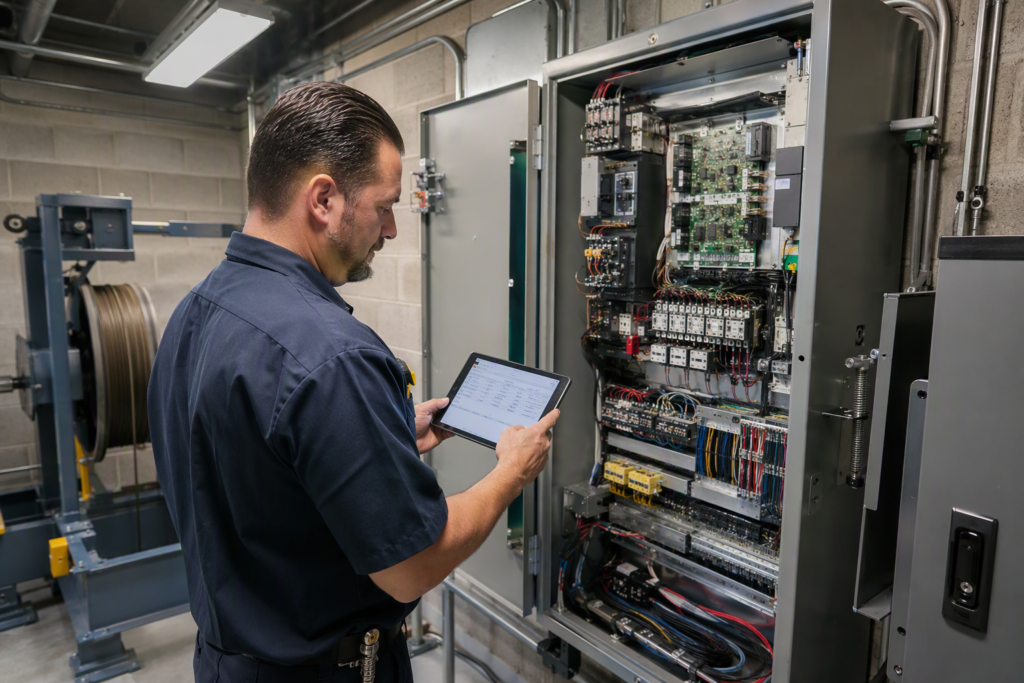
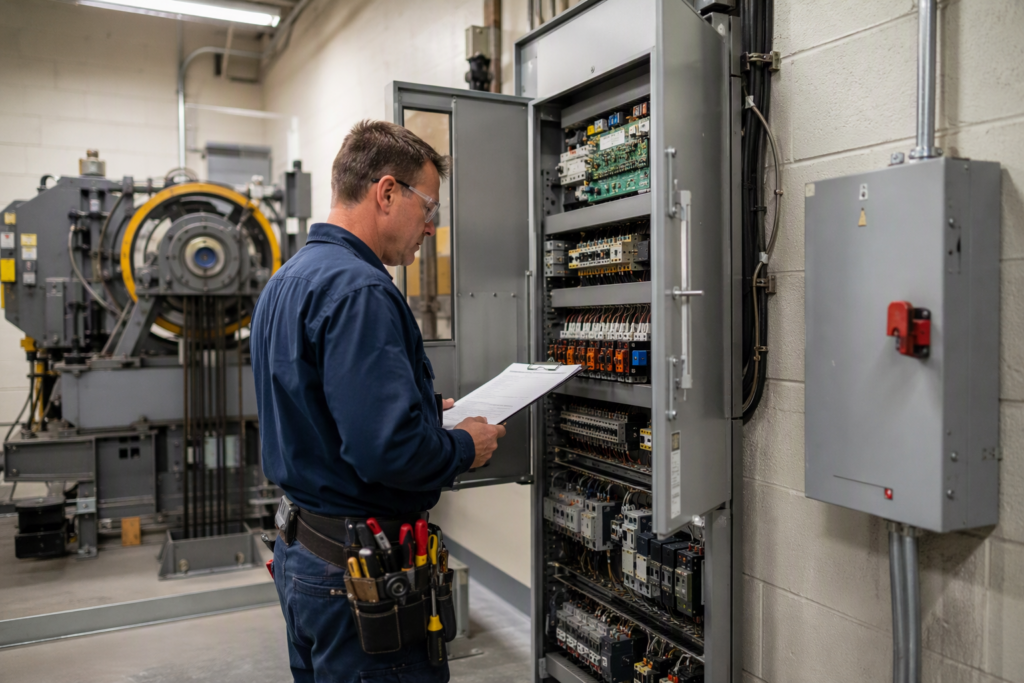
- Controller replacement: The elevator’s “brain” — modern solid-state or microprocessor-based controllers replace relay-logic panels and provide diagnostic capability, improved dispatching, and compatibility with current safety systems.
- Drive system upgrade: Hydraulic power units or traction drive systems are replaced to improve reliability and energy performance.
- Door operator and equipment modernization: Door operators represent a leading cause of elevator downtime. New operators improve reliability, reduce entrapment risk, and integrate with updated safety edge technology.
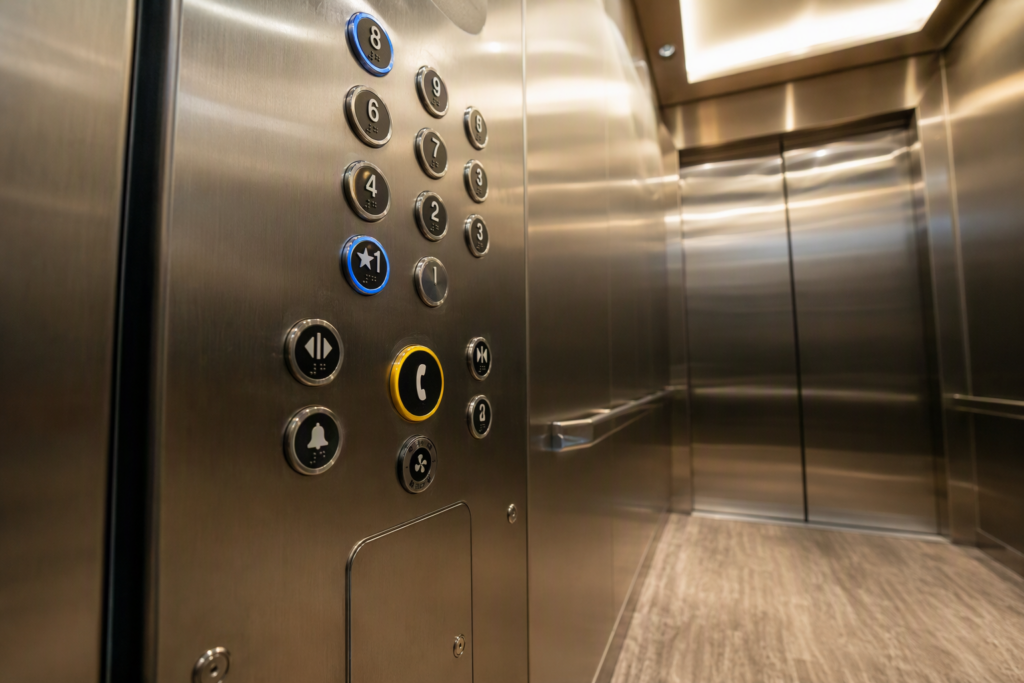
- Cab renovation: Flooring, wall panels, ceiling, lighting, and handrails are updated for aesthetics, accessibility, and code compliance.
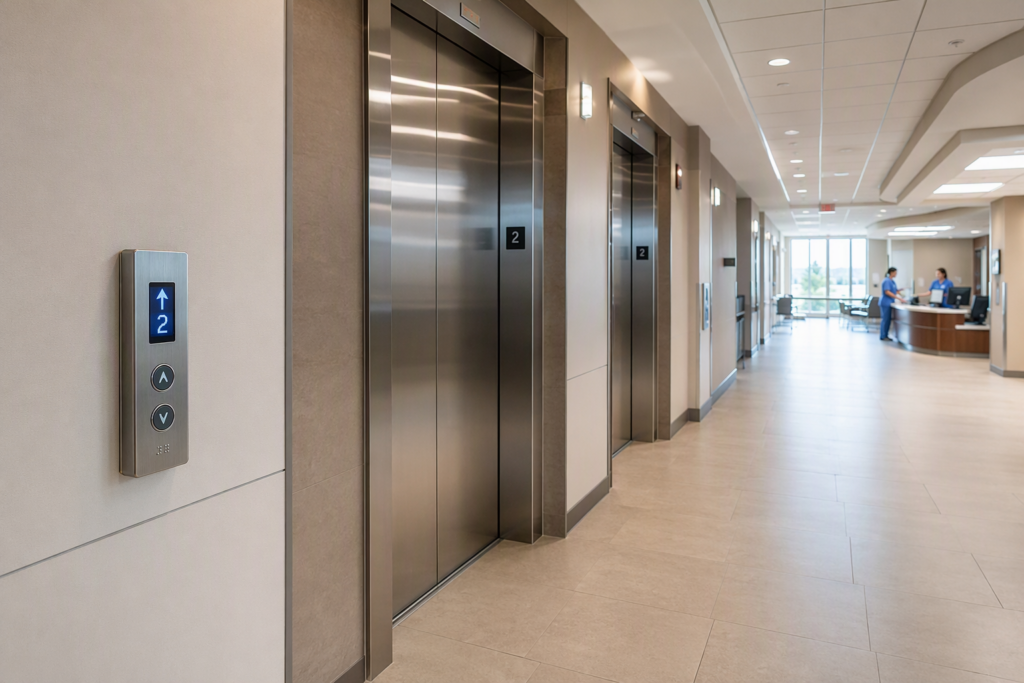
- Fixtures and signals: Hall stations, car operating panels, position indicators, and emergency communication devices are replaced to meet current ASME A17.1 and ADA requirements.
- Safety devices: Safeties, governors, buffers, and other life-safety components are inspected, tested, and replaced as required.
- Wiring and traveling cable: Aging wiring that no longer meets code or poses reliability risks is replaced as part of a full modernization.
How Long Does Elevator Modernization Take in Arizona?
Project duration varies based on scope and building constraints. A targeted component upgrade — replacing a controller and fixtures in a small hydraulic elevator — may be completed in a matter of days to a few weeks. A full-scope modernization of a traction elevator in a multi-story commercial building typically requires several weeks to a few months, accounting for equipment lead times, permitting, and inspection scheduling.
Lead times for elevator components have been a notable industry challenge in recent years. Supply chain conditions, equipment manufacturer backlogs, and the specificity of components for older elevator systems can extend procurement timelines significantly. Arizona Elevator Solutions recommends that building owners begin the scoping and permitting process well in advance of any planned building renovation or lease rollover event.
What Code Requirements Apply to Elevator Modernization in Arizona?
Arizona adopts the ASME A17.1 Safety Code for Elevators and Escalators as the governing technical standard for elevator installation, alteration, and inspection. When a modernization project constitutes an “alteration” under the code’s definitions, specific provisions are triggered — meaning the elevator cannot simply be upgraded in part without bringing the affected systems into compliance with the current code edition.
Key code-driven requirements that affect modernization cost include:
- Two-way communication capability in elevator cabs
- Door reopening devices and door protection systems
- Emergency lighting and power
- Firefighters’ emergency operation (Phase I and Phase II)
- Seismic provisions applicable to Arizona’s seismic zones
- Pit and machine room safety requirements
Workplace safety requirements during modernization work fall under OSHA regulations, which govern contractor safety protocols, lockout/tagout procedures, and confined space entry for pit work. Compliance with these requirements is non-negotiable and is incorporated into professional modernization proposals.
ADA requirements under the Americans with Disabilities Act must be evaluated whenever alterations are made to a commercial facility. The cab dimensions, door clear width, control panel reach ranges, tactile signage, and audible signals are all subject to ADA Standards for Accessible Design when alterations occur.
What Is the Step-by-Step Process for Planning an Elevator Modernization Project?
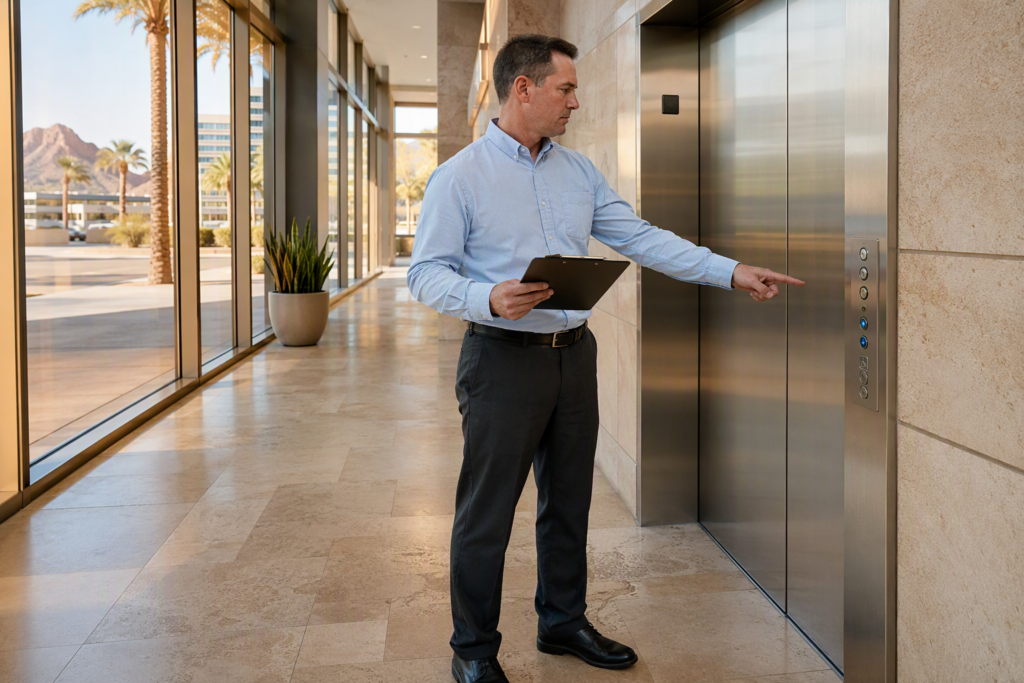
- Conduct a condition assessment: Have a qualified elevator professional inspect the existing equipment to document age, condition, code deficiencies, and remaining useful life of components.
- Define the project scope: Based on the assessment, determine whether a targeted upgrade, partial modernization, or full modernization is appropriate for the building’s needs and budget.
- Identify applicable code requirements: Work with your elevator contractor to identify which ASME A17.1 and ADA provisions are triggered by the planned alterations.
- Obtain multiple qualified proposals: Issue a detailed scope of work to licensed Arizona elevator contractors to receive comparable bids. Ensure each proposal addresses permitting, inspection, and code compliance costs explicitly.
- Review financing and capital planning options: Modernization may qualify for energy efficiency incentives, equipment financing, or capital reserve planning depending on building ownership structure.
- Submit for Arizona permitting: Work with your contractor to file required permits with ADOSH or the applicable local authority having jurisdiction (AHJ) before work begins.
- Schedule for minimal operational disruption: Coordinate the modernization timeline with building tenants and operations to minimize service interruptions.
- Oversee installation and quality control: Maintain active project management throughout the modernization, reviewing milestones against the agreed scope.
- Final inspection and acceptance testing: Ensure the elevator passes the required acceptance inspection by the AHJ and that all required documentation — including updated maintenance manuals and as-built drawings — is provided.
- Establish a post-modernization maintenance agreement: A new maintenance contract calibrated to the modernized equipment protects the investment and ensures ongoing code compliance.
How Does Elevator Modernization Cost Compare to Full Replacement?
In most scenarios, modernization represents a significantly lower capital outlay than complete elevator replacement — which would involve removing all existing equipment, potentially modifying the hoistway, and installing a new system from scratch. The hoistway structure itself (the shaft, pit, and overhead space) is typically sound in buildings where modernization is appropriate, making full replacement rarely necessary unless the hoistway itself is compromised or the building’s use has changed dramatically.
The cost-benefit decision between modernization and replacement should weigh remaining hoistway life, the age of non-replaced components, the frequency and cost of current service calls, and the building’s long-term ownership horizon. Arizona Elevator Solutions recommends that building owners obtain a structured condition assessment before committing to either path.
What Should Arizona Building Owners Look for When Comparing Modernization Quotes?
Price alone is a poor basis for selecting an elevator modernization contractor. Evaluating proposals on the following dimensions produces better outcomes:
- Scope specificity: Does the proposal clearly itemize what is being replaced versus what is being retained? Vague scopes lead to change orders.
- Code compliance documentation: Does the contractor explicitly address which ASME A17.1 provisions are triggered and how they will be satisfied?
- Permitting responsibility: Is the contractor responsible for obtaining all required Arizona permits and coordinating inspections?
- Equipment manufacturer and warranty: What brands and models are specified? What is the parts and labor warranty duration?
- References from comparable Arizona projects: Can the contractor provide verifiable references from similar building types in Arizona?
- Post-modernization service capability: Will the contractor be able to service the modernized equipment under an ongoing maintenance agreement?
How Do Energy Efficiency Considerations Affect Modernization Cost and ROI in Arizona?
Arizona’s climate and energy cost environment make energy efficiency a meaningful factor in modernization ROI calculations. Modern elevator systems incorporate variable-frequency drives that reduce energy consumption during acceleration and deceleration, LED lighting systems that reduce cab power draw, and standby or sleep modes that lower baseline consumption during low-traffic periods.
While these upgrades add to upfront modernization cost, they reduce ongoing utility expenses over the elevator’s next service life — a period typically measured in decades. Building owners pursuing LEED certification or sustainability benchmarks for Arizona commercial properties may find modernization a contributing strategy toward energy performance goals.
What Trends Are Shaping Elevator Modernization in Arizona for 2025 and 2026?
Several qualitative trends are influencing elevator modernization decisions across the Arizona market as 2025 progresses into 2026:
- Aging commercial building stock: Many mid-century and late-20th-century commercial buildings across Phoenix, Scottsdale, Tempe, and Tucson are reaching the point where elevator equipment installed at construction has exhausted its useful life, creating sustained demand for modernization services.
- Increased code enforcement activity: As Arizona’s elevator inspection program matures, building owners are facing more formal notice of required upgrades, accelerating modernization timelines.
- Remote monitoring and diagnostics: Modern elevator controllers increasingly support IoT-enabled monitoring, allowing maintenance providers to detect developing issues before they cause unplanned outages. This capability is becoming a standard expectation in modernization specifications.
- Supply chain normalization with residual lead time risk: While global supply chain disruptions from prior years have eased in some categories, specialized elevator components — particularly for full-scope modernizations — still carry meaningful lead times that require advance planning.
- Labor availability considerations: Arizona’s sustained commercial and multifamily development activity means licensed elevator mechanics remain in demand, reinforcing the importance of working with established contractors who have stable workforce relationships.
- Sustainability and ESG priorities: Commercial real estate owners with environmental, social, and governance commitments are incorporating elevator energy performance into their capital planning frameworks, influencing modernization scope and equipment selection.
Does Elevator Modernization Require Building Permits in Arizona?
Yes. Elevator modernization in Arizona is a regulated activity that requires permits from the applicable authority having jurisdiction — typically the Arizona Division of Occupational Safety and Health (ADOSH) for state-regulated elevators, or in some jurisdictions, the local city or county building department. Permits must be obtained before work begins, and final inspection and acceptance testing by a state-licensed elevator inspector is required before the modernized elevator is returned to service.
Attempting to perform modernization work without proper permitting exposes building owners to fines, required remediation, and liability concerns. Any reputable Arizona elevator contractor will include permitting as a standard element of the project scope.
How Does Arizona Elevator Solutions Approach Modernization Cost Analysis?
Arizona Elevator Solutions approaches modernization projects as a data-driven service provider, beginning with a structured condition assessment rather than a catalog-based quote. By evaluating the specific age, configuration, and condition of existing equipment alongside the building’s operational requirements and applicable code obligations, Arizona Elevator Solutions develops modernization scopes that address what actually needs to be replaced — avoiding both under-scoping that leaves compliance gaps and over-scoping that inflates cost without improving outcomes.
The company serves commercial, multifamily, healthcare, and public sector clients across Arizona, providing modernization planning, permitting support, installation, and post-modernization maintenance services calibrated to modernized equipment specifications.
What Is the Difference Between Elevator Modernization and Elevator Maintenance?
Elevator maintenance refers to the ongoing inspection, lubrication, adjustment, and minor repair of existing elevator components under a service agreement. Modernization is a capital project involving the replacement of major components. The two are related but distinct: a well-maintained elevator can extend the period before modernization is required, but maintenance cannot substitute for modernization when equipment has reached the end of its useful life or when code compliance requires component replacement.
Building owners should view modernization and maintenance as sequential phases of elevator lifecycle management. Post-modernization, a maintenance agreement calibrated to the new equipment specifications is essential to protect the modernization investment.
What Are the Risks of Deferring Elevator Modernization?
Deferring necessary modernization carries several categories of risk that Arizona building owners and property managers should weigh carefully:
- Increased service call frequency and cost: As components age past their useful life, unplanned failures become more frequent and repair costs rise as compatible replacement parts become scarcer.
- Code non-compliance exposure: Operating an elevator with known code deficiencies creates regulatory and liability exposure, particularly following an incident.
- Tenant and occupant dissatisfaction: Unreliable elevator service affects tenant retention, lease negotiations, and in healthcare or senior living settings, can affect regulatory standing.
- Emergency repair premiums: Unplanned breakdowns requiring emergency repair or temporary shutdown carry higher labor and expedited parts costs than planned modernization projects.
- Insurance and liability considerations: Building owners maintaining aging, non-compliant elevator equipment face heightened liability exposure in the event of an incident or entrapment.
Contact Arizona Elevator Solutions for a Free Elevator Assessment
Understanding what elevator modernization will cost for your specific building requires a professional assessment — not a generic estimate. Arizona Elevator Solutions provides free elevator assessments to help Arizona building owners and property managers understand the current condition of their equipment, applicable code requirements, realistic modernization scope options, and the factors that will determine their project cost.
Do not let aging equipment, rising maintenance costs, or unresolved code compliance issues continue to expose your building and its occupants to unnecessary risk. Take the first step toward a data-informed modernization plan.
Contact Arizona Elevator Solutions for a free elevator assessment: 480-557-7600
Need elevator service you can rely on? Arizona Elevator Solutions is ready to help.