
Arizona Elevator Winter Maintenance: Essential Pre-Season Tasks to Prevent Breakdowns
Direct Answer: Before Arizona’s winter season, elevator owners should complete a comprehensive maintenance checklist covering hydraulic fluid inspection, control system testing, door mechanism lubrication, safety device verification, and code-compliant inspection scheduling — because temperature swings between desert nights and mild days stress hydraulic and electronic systems in ways that are distinct from hotter summer conditions.
Arizona winters are mild by national standards, but the thermal shifts — particularly the significant drop between daytime highs and nighttime lows in the Sonoran Desert — create specific mechanical stresses on elevator systems that building owners and facility managers often overlook. Hydraulic fluid viscosity changes, electronic control boards respond differently in cooler ambient temperatures, and door mechanisms that ran smoothly through a Phoenix summer can begin to drag and misalign as temperatures dip in November and December. A structured pre-winter maintenance protocol is not simply a best practice: it is a compliance requirement under federal safety standards that Arizona elevator owners must meet.
Arizona Elevator Solutions provides data-driven maintenance assessments designed to address the specific environmental conditions that affect elevator performance across the greater Phoenix metropolitan area, Tucson, Flagstaff, and surrounding communities. This guide covers every critical maintenance task, compliance obligation, and operational consideration relevant to Arizona elevator owners preparing for the winter season.
Why Does Arizona Winter Weather Affect Elevators at All?
Arizona’s reputation for warmth can cause building managers to discount winter as a risk period for elevator systems. That assumption is frequently incorrect, particularly for properties at higher elevations such as Flagstaff, Prescott, and Sedona, where freezing temperatures and even snowfall are regular occurrences. Even in the Valley of the Sun, nighttime temperatures in December and January can drop into the low 40s Fahrenheit, which is cold enough to affect hydraulic fluid viscosity and the sensitivity of electronic safety circuits.
The temperature swing — rather than sustained cold — is often the primary mechanical stressor. A hydraulic elevator system that cycled through 110°F ambient conditions during an August afternoon and then sits overnight at 42°F is subjected to thermal expansion and contraction cycles that accelerate wear on seals, hoses, and fluid. Understanding this pattern helps explain why a structured pre-winter maintenance inspection is the most cost-effective intervention a building owner can make.
What Federal Safety Standards Govern Elevator Maintenance in Arizona?

Elevator maintenance and inspection in Arizona is governed at the federal level by the ASME A17.1 Safety Code for Elevators and Escalators, which establishes baseline requirements for the design, construction, operation, inspection, testing, and maintenance of elevator equipment across the United States. For existing installations, ASME A17.3, the Safety Code for Existing Elevators and Escalators, provides the applicable retrofit and continued-use requirements.
Workplace safety obligations for elevator service technicians performing maintenance work fall under the jurisdiction of OSHA, which enforces lockout/tagout, fall protection, and confined space protocols during elevator service operations.
Public accommodations that include passenger elevators must also maintain ADA-compliant elevator access under the Americans with Disabilities Act. A breakdown or extended outage that renders an elevator non-functional in a building required by the ADA to provide accessible vertical access creates potential civil liability beyond the mechanical disruption itself.
Arizona building owners are responsible for ensuring their maintenance contracts and inspection schedules align with the intervals and documentation requirements established in ASME A17.1 and enforced by the relevant Arizona Authority Having Jurisdiction (AHJ).
What Are the Most Critical Elevator Maintenance Tasks to Complete Before Arizona Winter?
The following tasks represent the core of a responsible pre-winter elevator maintenance protocol for Arizona properties. Building owners should work with a qualified elevator service contractor to complete all applicable items before temperatures begin to drop consistently in October and November.
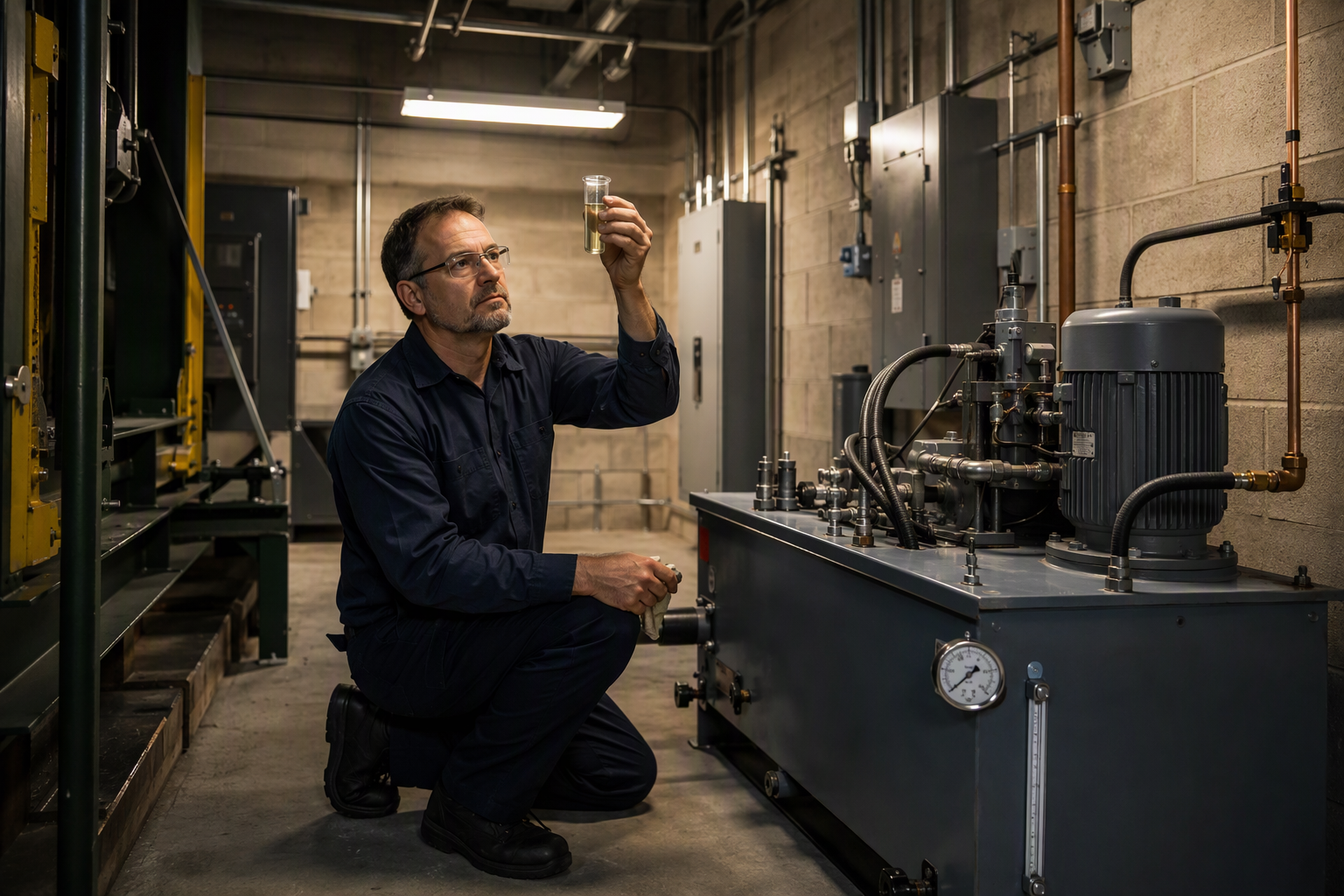
- Inspect and replace hydraulic fluid: Hydraulic elevator systems rely on fluid that maintains consistent viscosity across a range of temperatures. In Arizona, where summer temperatures push hydraulic fluid toward its upper operating threshold and winter nights push it in the opposite direction, confirming that the fluid specification is appropriate for the annual temperature range is essential. Degraded or incorrect-grade fluid can cause sluggish operation, increased pump motor wear, and potential valve failure.
- Check hydraulic hoses, cylinders, and seals for wear: Thermal cycling accelerates seal degradation. Pre-winter is the optimal time to inspect all hydraulic connections for seepage, cracking, or deformation before cooler temperatures reduce fluid pressure and make small leaks larger operational problems.
- Test and calibrate electronic control systems: Modern elevator control boards are sensitive to ambient temperature changes. Verify that control cabinet enclosures are properly sealed against dust — a year-round Arizona challenge — and that no moisture intrusion has occurred during monsoon season, which immediately precedes winter. Inspect all terminal connections for corrosion.
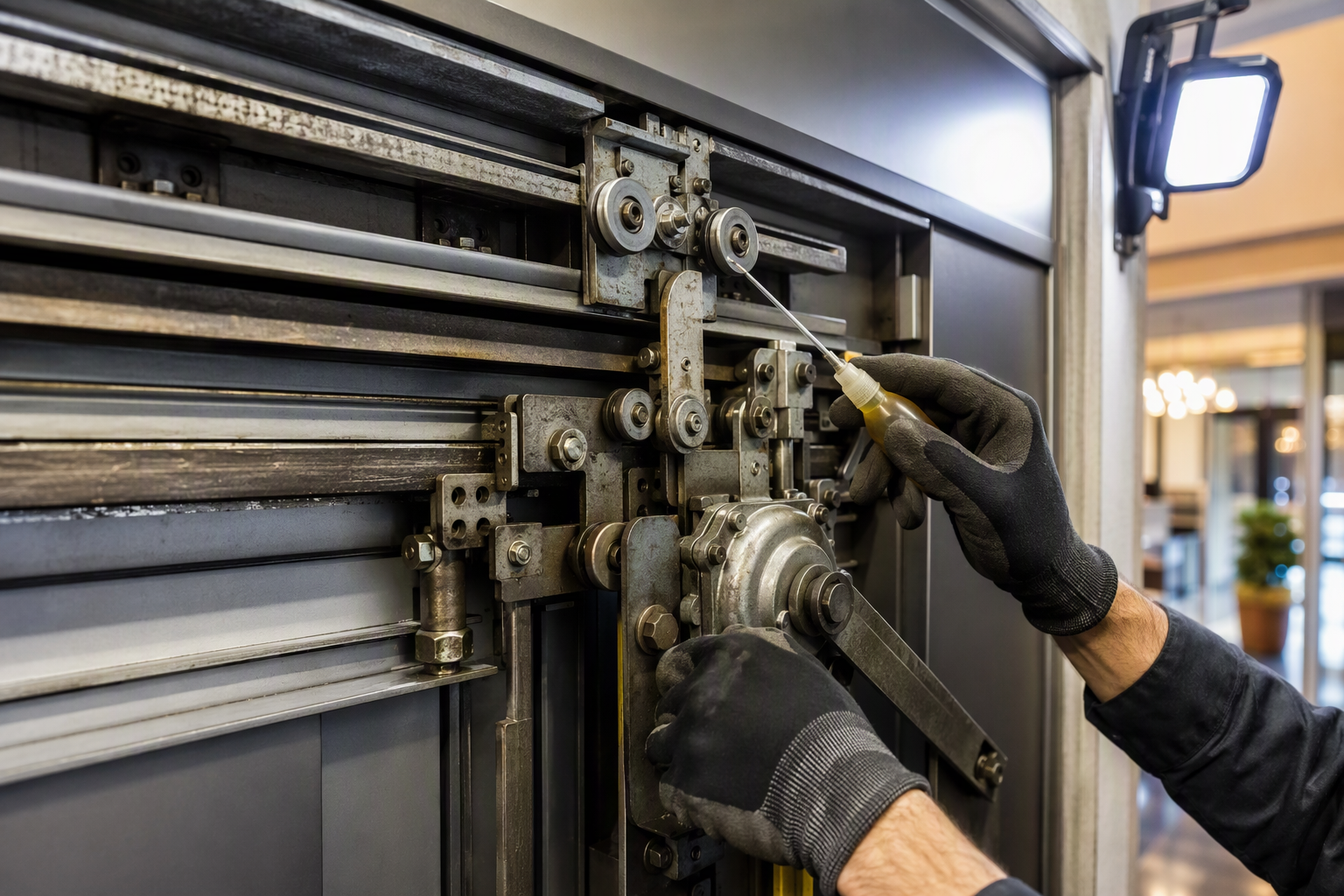
- Lubricate door operators, gibs, and hanger rollers: Door system failures are among the most common causes of elevator outages. Pre-winter lubrication of all moving door components, combined with adjustment of door closing speed and reopening sensitivity, reduces the probability of nuisance door faults that trigger the elevator’s safety shutdown.
- Test all safety devices per ASME A17.1 requirements: Safety circuits including door interlocks, car safeties, overspeed governors, buffer systems, and limit switches must be tested and verified functional. Per ASME A17.1, these devices must be maintained in operational condition at all times — pre-winter testing catches any degradation that occurred during the high-use summer period.
- Inspect the machine room for thermal management adequacy: Arizona machine rooms that were managed for heat during summer may need a reassessment for winter. In higher-elevation properties, machine rooms may require supplemental heating to keep hydraulic fluid within the manufacturer’s specified operating temperature range during cold overnight periods.
- Test the emergency lighting, communication, and alarm systems: Emergency cab lighting, the in-cab two-way communication system, and the alarm bell must all be verified operational. These systems are subject to accelerated battery degradation in Arizona’s heat and may enter winter with reduced reserve capacity.
- Verify that the pit is dry and free of debris: Arizona monsoon season runs through September and can leave residual moisture or debris in elevator pits. Before winter, the pit should be inspected for any standing water, evidence of intrusion, or debris accumulation that could interfere with safety devices or buffer systems located in the pit.
- Inspect wire ropes and sheaves (traction elevators): For traction elevator installations, wire rope lubrication and sheave groove condition should be assessed. Rope lubrication applied during pre-winter service maintains flexibility through temperature cycling and reduces the risk of accelerated groove wear during the winter operating period.
- Schedule and confirm the annual or periodic inspection with the AHJ: Building owners should confirm their current inspection status and schedule any required periodic tests that may be due. Operating an elevator with an expired or lapsed inspection certificate creates compliance exposure and potential liability. Arizona Elevator Solutions can assist in coordinating inspection readiness documentation.
What Happens If Pre-Winter Maintenance Is Skipped?
When pre-season maintenance is deferred, the consequences typically compound. A hydraulic system running on degraded fluid may manage through mild early-winter conditions but fail when temperatures drop sharply in late December or January. Door system faults that began as intermittent nuisances become persistent shutdowns. Safety circuit faults that would have been caught in a systematic inspection trigger emergency service calls at premium rates during peak holiday occupancy periods.
Beyond the operational disruption, deferred maintenance creates compliance risk. Under ASME A17.1, building owners carry ongoing maintenance obligations — not simply periodic inspection obligations. Documenting that maintenance was systematically deferred could expose building owners to liability in the event of a passenger incident.
Arizona Elevator Solutions approaches pre-winter assessments as a structured compliance and reliability service, generating documentation that supports building owners’ maintenance records and demonstrates due diligence under applicable standards.
How Does Arizona’s Desert Climate Create Unique Maintenance Challenges Compared to the Rest of the Year?
Arizona elevator systems face a genuinely distinctive annual cycle. Summer demands that cooling systems, hydraulic fluid specifications, and control board thermal management be optimized for sustained extreme heat. Monsoon season introduces unusual humidity spikes and potential pit flooding. Winter introduces the thermal cycling stress described above, combined in some regions with actual freeze risk.
The compounding effect is that Arizona elevators are never truly in a benign operating environment. A maintenance program that only responds to summer or only prepares for winter misses half the risk profile. Pre-winter maintenance is most effective when it is designed with knowledge of what the prior summer put the system through — which argues for a service provider with continuity of records on a given installation.
Does Arizona Require Specific Elevator Inspections on a Set Schedule?
Arizona’s elevator inspection requirements are administered through the state’s applicable Authority Having Jurisdiction. The base inspection intervals and testing requirements are drawn from ASME A17.1 and A17.3. Building owners should confirm their current inspection status and any upcoming required periodic tests — such as the five-year full-load safety test required for hydraulic elevators under ASME standards — to ensure that no required tests are overdue when winter begins.
Operating an elevator with lapsed inspection credentials in Arizona creates legal exposure for building owners and property managers, and may affect insurance coverage in the event of a claim.
What Are the Signs That an Elevator Needs Immediate Pre-Winter Attention?
Building managers who observe any of the following conditions should treat them as indicators that pre-winter maintenance is urgently needed rather than simply scheduled:
- Door hesitation, reversals, or slow closing that has worsened since summer
- Unusual noise from the machine room during startup, particularly in early morning when overnight temperatures have been lowest
- Sluggish response or leveling inaccuracy in hydraulic elevators
- Recurring fault codes on the elevator controller that reset without a clear root cause
- Visible oil seepage around hydraulic connections or under the power unit
- Emergency lighting that flickers or fails to illuminate during a test
- Any failure of the in-cab communication system during a check
- Evidence of water intrusion in the pit after monsoon season
Any of these conditions warrants a service call before seasonal temperature drops create additional stress on an already compromised system.
What Is the Typical Scope of a Pre-Winter Elevator Maintenance Visit?
A properly scoped pre-winter elevator maintenance visit covers the machine room, the hoistway, the pit, the car interior and roof, and the controller. The visit should generate written documentation of every item inspected, any deficiencies noted, corrective actions taken, and items deferred with a recommended timeline. This documentation serves as the building owner’s evidence of maintenance compliance under ASME A17.1 maintenance obligations.
Arizona Elevator Solutions structures pre-winter assessments to produce documentation that building owners can retain in their maintenance files and present to the AHJ or insurance carriers on request.
How Does ADA Compliance Factor into Winter Elevator Maintenance?
Under the Americans with Disabilities Act, buildings required to provide accessible vertical transportation must maintain that access. An elevator outage caused by deferred maintenance that renders a required accessible route unavailable creates exposure under the ADA beyond the ordinary disruption of service. Buildings with a single elevator serving upper floors where accessible restrooms, offices, or public accommodations are located face the highest risk from an extended outage.
Pre-winter maintenance that reduces the probability of winter breakdowns is therefore not only a mechanical reliability investment but also a component of ongoing ADA compliance management.
What Should Arizona Building Owners Look for When Selecting a Pre-Winter Elevator Maintenance Provider?
When evaluating elevator maintenance contractors for pre-winter service, Arizona building owners should consider the following qualitative factors:
- Familiarity with Arizona’s specific climate conditions — including the thermal cycling profile, monsoon-related pit moisture risk, and elevation-specific cold exposure for properties outside the Valley
- Documentation practices — the ability to produce written maintenance records that support compliance with ASME A17.1 maintenance requirements
- Scope of inspection — a pre-winter visit that does not include the pit, the hoistway, the controller, and the machine room is incomplete by industry standards
- Continuity of service records — providers who maintain historical records on a given elevator can identify trends that a first-time provider cannot
- Familiarity with the AHJ process — the ability to assist with inspection scheduling and readiness preparation
Arizona Elevator Solutions serves the Arizona market with maintenance programs designed around the specific environmental and regulatory context of the state.
What Industry Trends in 2025–2026 Are Affecting Elevator Maintenance in Arizona?
Several qualitative trends are shaping how elevator maintenance is approached heading into 2025 and 2026. Remote monitoring technology is becoming more prevalent, allowing building owners and service providers to receive early alerts about developing faults before they result in outages. This is particularly relevant for the Arizona winter scenario: systems that monitor hydraulic fluid temperature, door cycle counts, and control board performance can flag developing issues before the first cold snap triggers a failure.
The demand for documented maintenance compliance is also increasing, driven in part by growing awareness among insurers and risk managers of elevator-related liability. Building owners who can demonstrate systematic, documented maintenance programs are better positioned in both insurance contexts and in the event of any regulatory inquiry.
Sustainability considerations are also influencing maintenance decisions, with a growing focus on hydraulic fluid specifications that maintain performance across a wide temperature range while meeting environmental handling requirements. This is directly relevant to the pre-winter fluid inspection discussed above.
Arizona Elevator Solutions continues to incorporate these emerging practices into its maintenance service offerings, providing building owners with tools that address both current compliance requirements and the direction the industry is heading.
What Are the OSHA Requirements That Apply During Elevator Maintenance Work?
When elevator maintenance technicians are performing pre-winter service, the work environment is governed by applicable OSHA standards. Energy control (lockout/tagout) procedures must be followed when technicians work on elevator components that could be energized during service. Pit access involves confined space considerations under applicable OSHA rules. Fall protection is required for hoistway work. Building owners who engage maintenance contractors should confirm that the contractor’s technicians are performing work in accordance with OSHA requirements — a contractor’s OSHA violation during a service visit at a property creates exposure for the building owner as well.
How Far in Advance Should Pre-Winter Elevator Maintenance Be Scheduled in Arizona?
Given that Arizona’s temperature patterns typically begin their autumn shift in October, scheduling pre-winter elevator maintenance in September or early October provides the best window. This timing allows any identified deficiencies — hydraulic fluid replacement, seal repairs, or parts procurement for worn components — to be addressed before temperatures begin dropping at night. Last-minute scheduling in November or December risks parts availability delays and compressed timelines that may result in incomplete corrective action before cold weather arrives.
For properties with multiple elevator units, staggered scheduling may be required, which argues even more strongly for early planning and contact with a maintenance provider well before the season changes.
What Documentation Should Building Owners Retain After Pre-Winter Maintenance?
Following a pre-winter maintenance visit, building owners should retain:
- A written maintenance report specifying every item inspected, the condition found, and any action taken
- Records of any parts replaced, including specifications for fluids, lubricants, or components
- Documentation of safety device test results
- Any deficiency notices with recommended follow-up timelines
- Current inspection certificates from the AHJ
These records form the maintenance log that ASME A17.1 maintenance obligations contemplate and that building owners may need to produce in any compliance, insurance, or legal context.
Summary: Pre-Winter Elevator Maintenance Checklist for Arizona Properties
The following table summarizes the key maintenance tasks, the system area each addresses, and the primary compliance reference applicable in Arizona.
| Maintenance Task | System Area | Applicable Standard |
|---|---|---|
| Hydraulic fluid inspection and replacement | Hydraulic power unit | ASME A17.1 |
| Seal, hose, and cylinder inspection | Hydraulic system | ASME A17.1 |
| Control system and board inspection | Electronic controls | ASME A17.1 |
| Door operator lubrication and adjustment | Door systems | ASME A17.1 |
| Safety device testing (interlocks, governor, buffers) | Safety systems | ASME A17.1 |
| Emergency lighting and communication test | Emergency systems | ASME A17.1 / ADA |
| Pit inspection for moisture and debris | Pit | ASME A17.1 |
| Wire rope and sheave inspection (traction) | Suspension system | ASME A17.1 |
| Machine room thermal management review | Machine room | ASME A17.1 |
| AHJ inspection scheduling and certificate confirmation | Compliance | ASME A17.3 |
Ready to Protect Your Elevator Through Arizona Winter?
Arizona Elevator Solutions provides comprehensive pre-winter elevator maintenance assessments for commercial, residential, and institutional properties throughout Arizona. Every assessment is structured around the maintenance requirements of ASME A17.1 and A17.3, documented to support building owners’ compliance records, and tailored to the specific environmental conditions that Arizona’s climate creates for elevator systems.
Do not wait for the first cold night of the season to discover that deferred maintenance has become an emergency. Pre-winter preparation is the most cost-effective investment an Arizona elevator owner can make.
Contact Arizona Elevator Solutions for a free elevator assessment: 480-557-7600
Need elevator service you can rely on? Arizona Elevator Solutions is ready to help.






